The first apartment. The first house. The first time you stand in an empty room and feel the full weight of its possibility — and its blankness. Decorating for the first time is equal parts exciting and paralyzing, and the question nearly everyone asks is the same: where do I even start?
The answer, counterintuitively, is not with furniture. It starts with understanding how you actually live: which rooms you gravitate toward, how light moves through your space at different hours of the day, what textures and materials make you feel genuinely at ease. The rooms that look considered were never assembled in a single weekend trip to a showroom. They were arrived at — slowly, deliberately, one decision at a time.
What follows is a room-by-room guide for first-time decorators. Not a rulebook, but a starting point.
The Living Room: Find Your Anchor
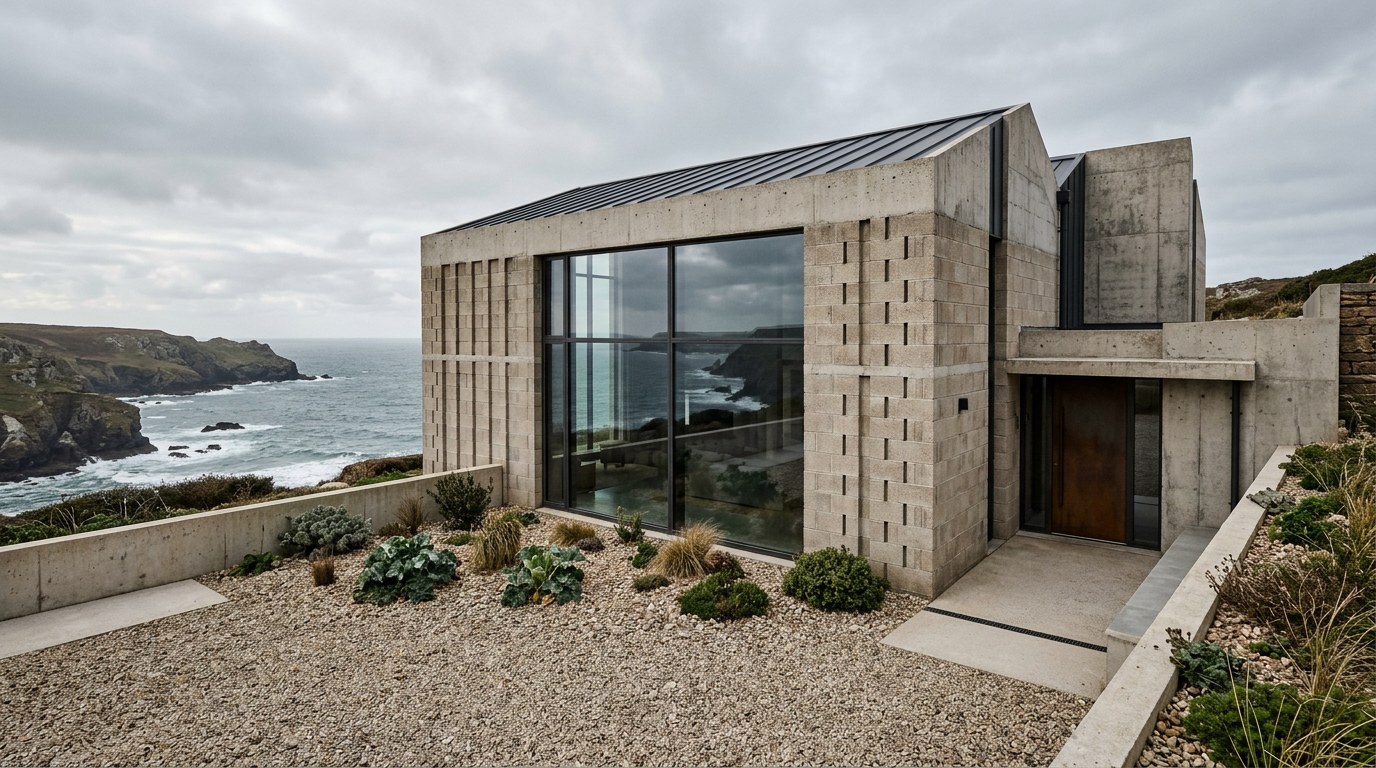
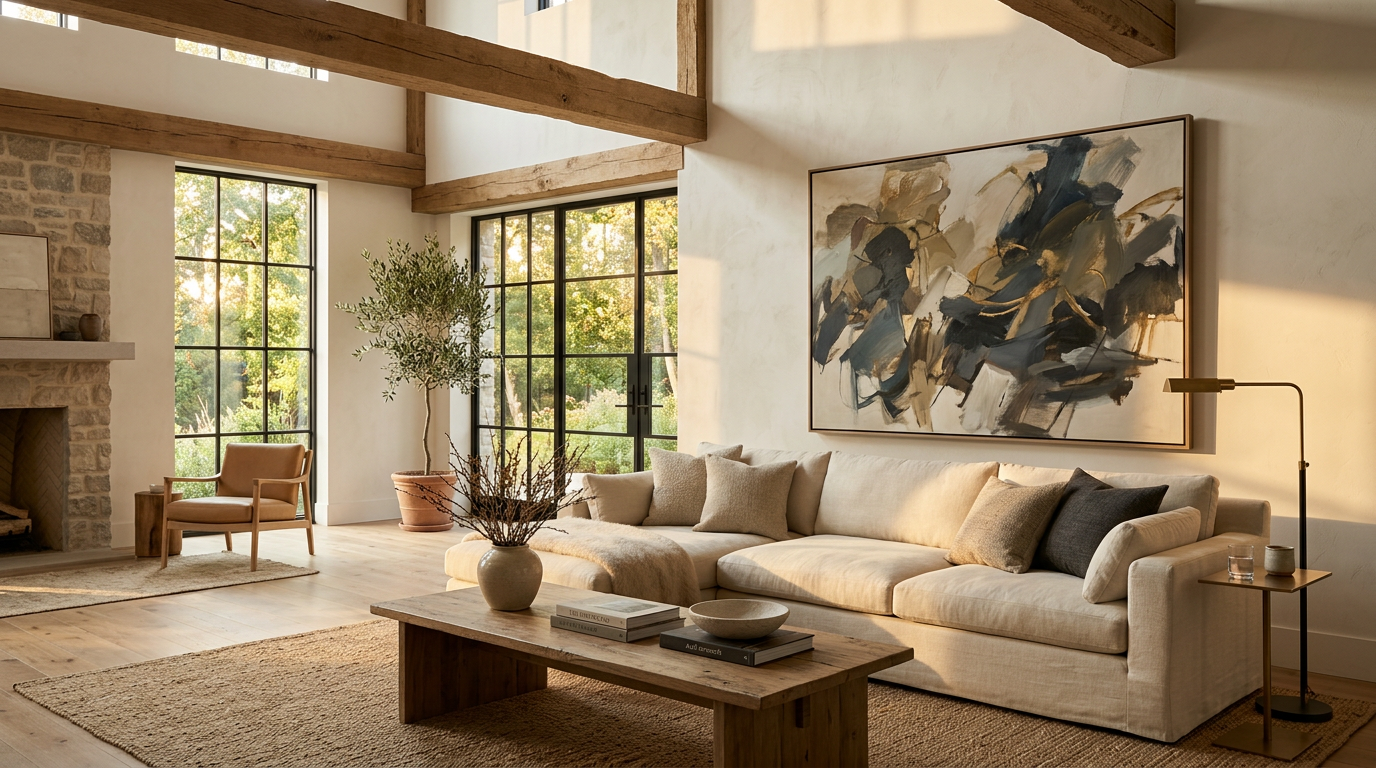
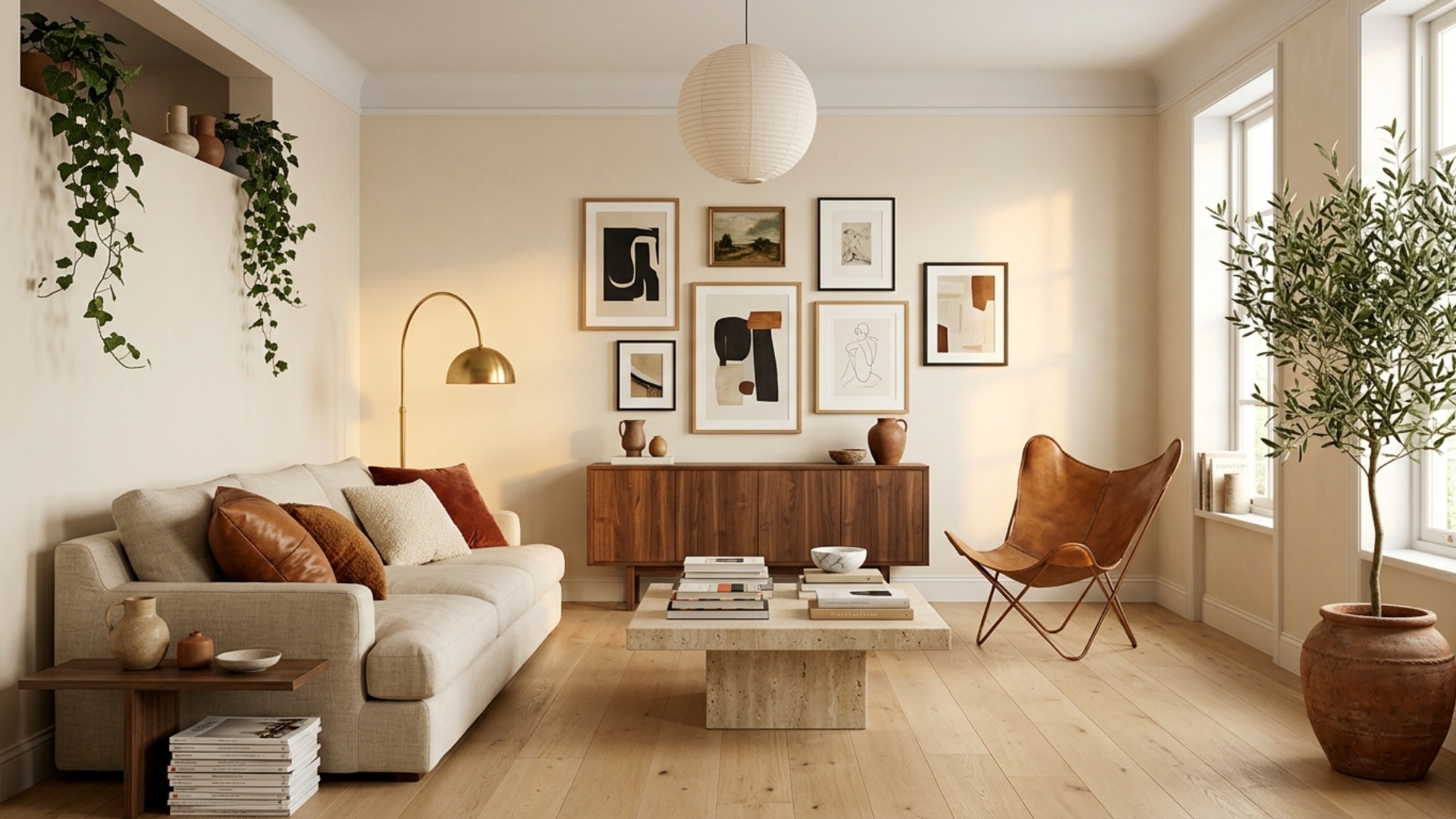
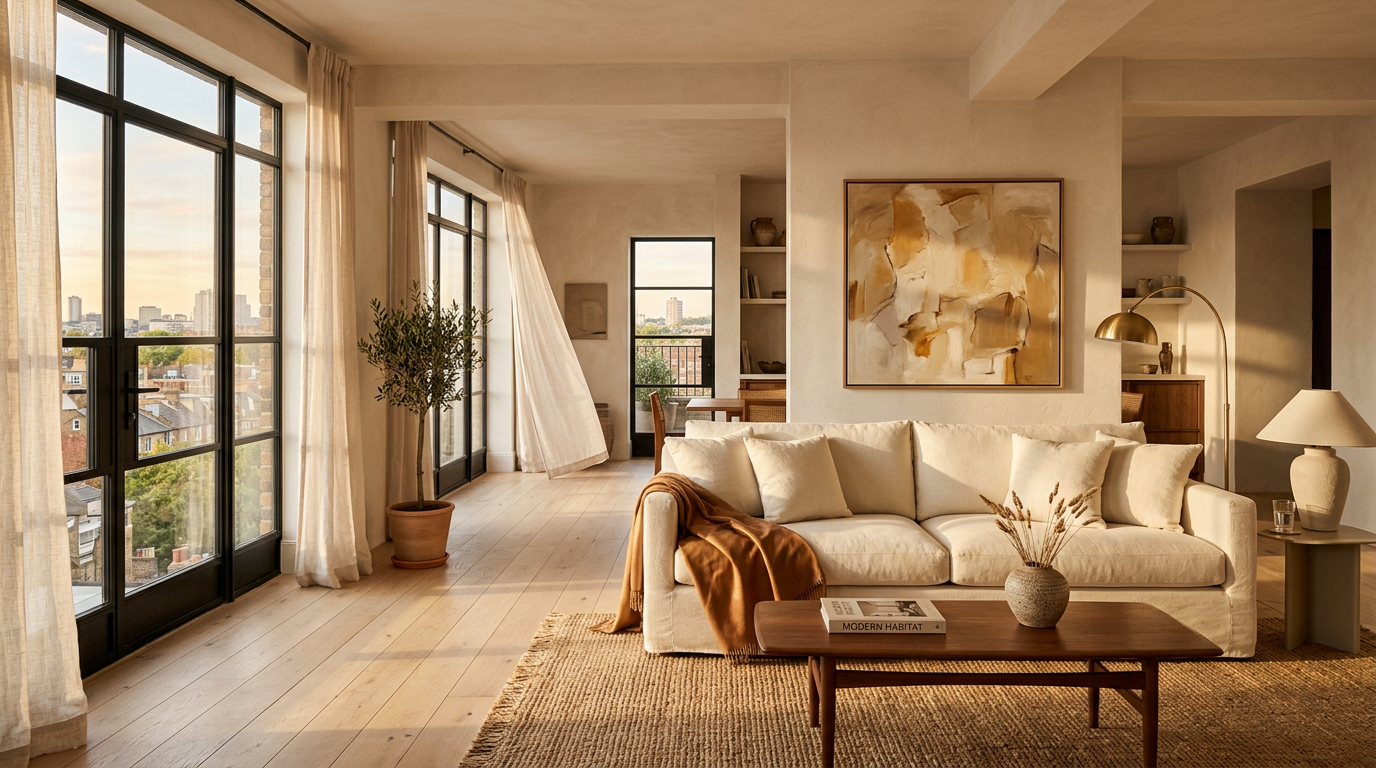
The living room is the room where everything is on display — how you live, what you value, how you want guests to feel. It is also, for most first-time decorators, the most daunting, because it demands so much. Start with one anchor piece: a sofa you genuinely love, a rug that establishes the room's register, a single piece of art you'd mourn if it disappeared. Everything else arranges itself around that first commitment.
Think about scale before you think about style. An undersized sofa in a generous room looks apologetic. A rug that doesn't reach the front legs of the furniture reads as an afterthought. Study how architects resolve proportion — rooms where one deliberate material or form commands the space while everything else quietly recedes. Browse Dezeen's interiors archive or Architectural Digest not to copy, but to train your eye on what scale actually means in a room.
Once you have your anchor and your proportions, resist the urge to fill. The best living rooms have breathing room deliberately built into them. An empty corner is not a failure — it is a decision, and one of the better ones you can make.
The Bedroom: Begin with the Bed
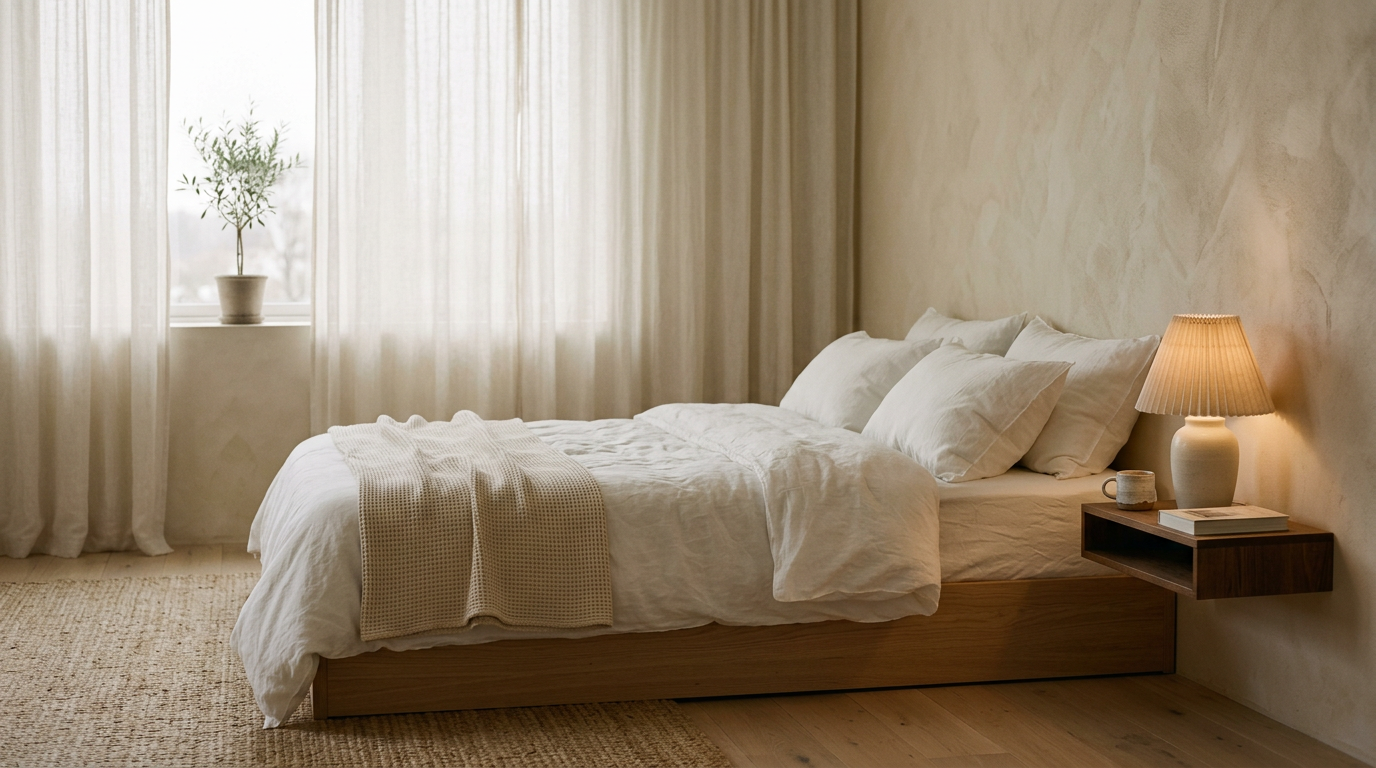
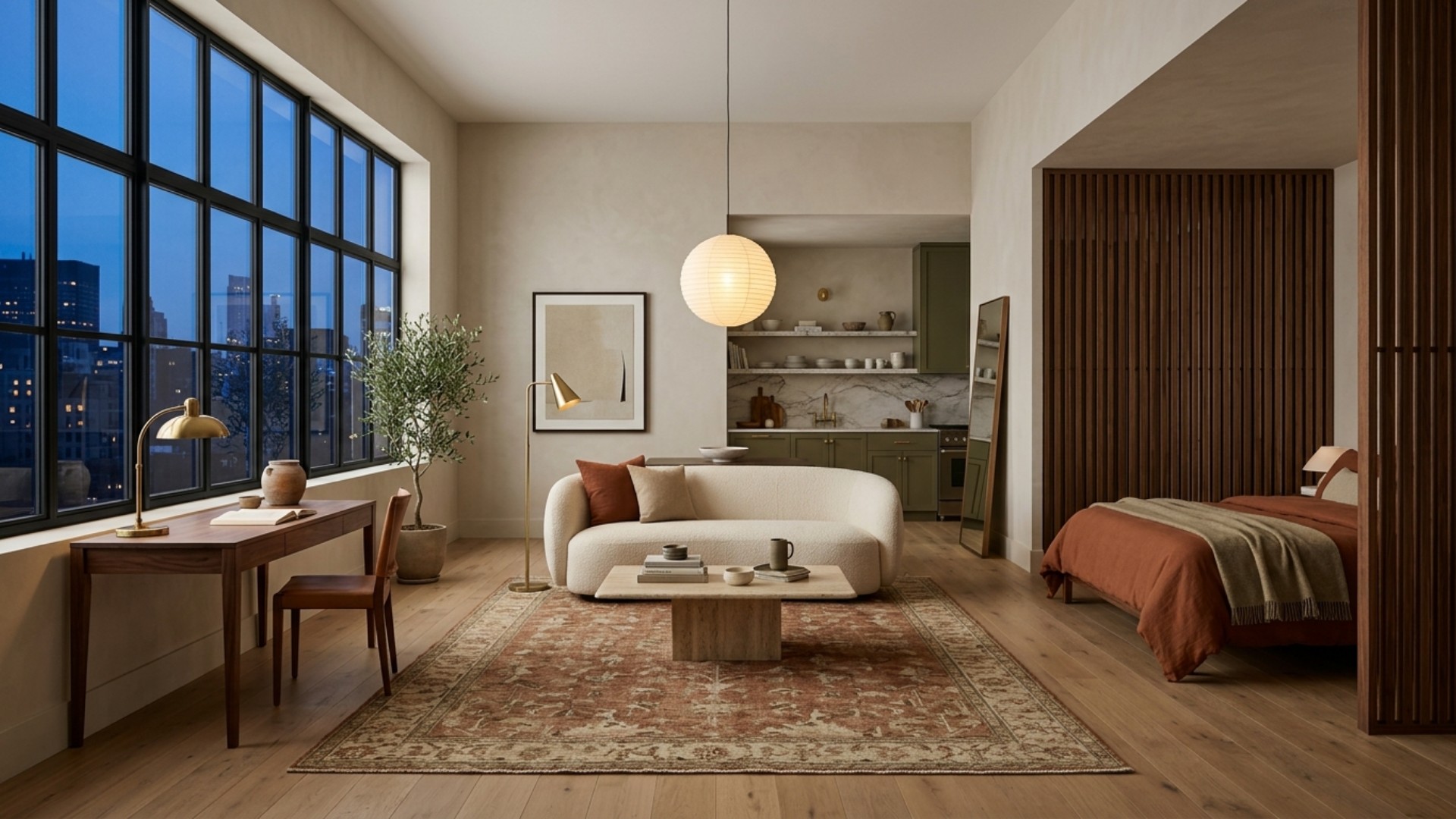
Sleep is the function; sanctuary is the aspiration. The bedroom is the most personal room in the house, and the one where first-time decorators most often over-decorate — layering accessories to compensate for an undefined direction. Start with the bed. Not because it is the largest piece of furniture, but because it sets the emotional tone for everything else in the room.
Invest in your mattress, your linen, and your lighting before anything else. These are the surfaces you interact with daily. A beautifully made bed in an otherwise spare room communicates more restraint and intention than a room full of accent pieces. The best residential architecture — from compact mountain retreats to considered city apartments — achieves intimacy through material honesty rather than decoration. Dezeen's compact bedrooms lookbook is a useful primer on how architects make small spaces feel expansive.
Keep your palette narrow. Two or three materials — a warm textile, a natural wood surface, a simply painted wall — will always outperform a room trying to do too much at once. The bedroom rewards simplicity more than any other room in the house. Edit until it feels right, then stop.
The Kitchen: Function Before Fantasy
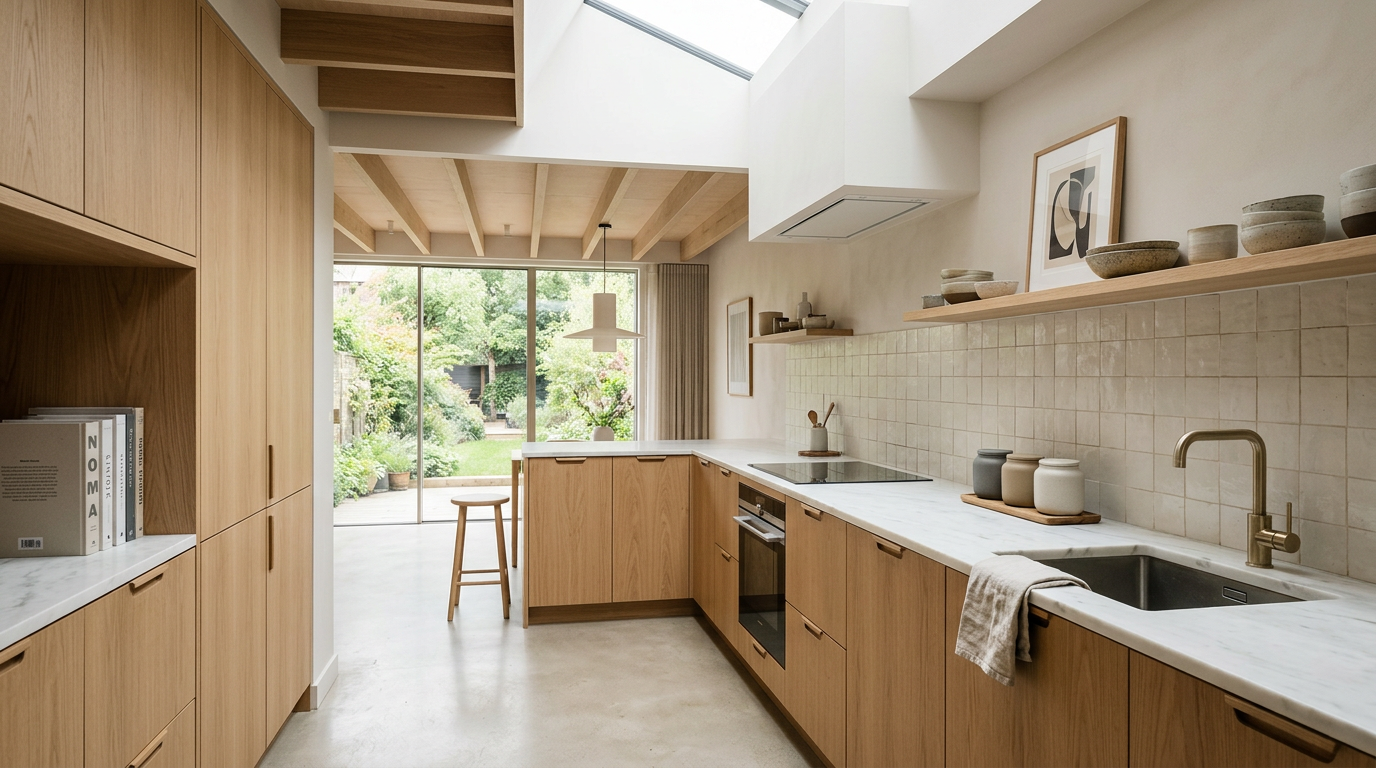
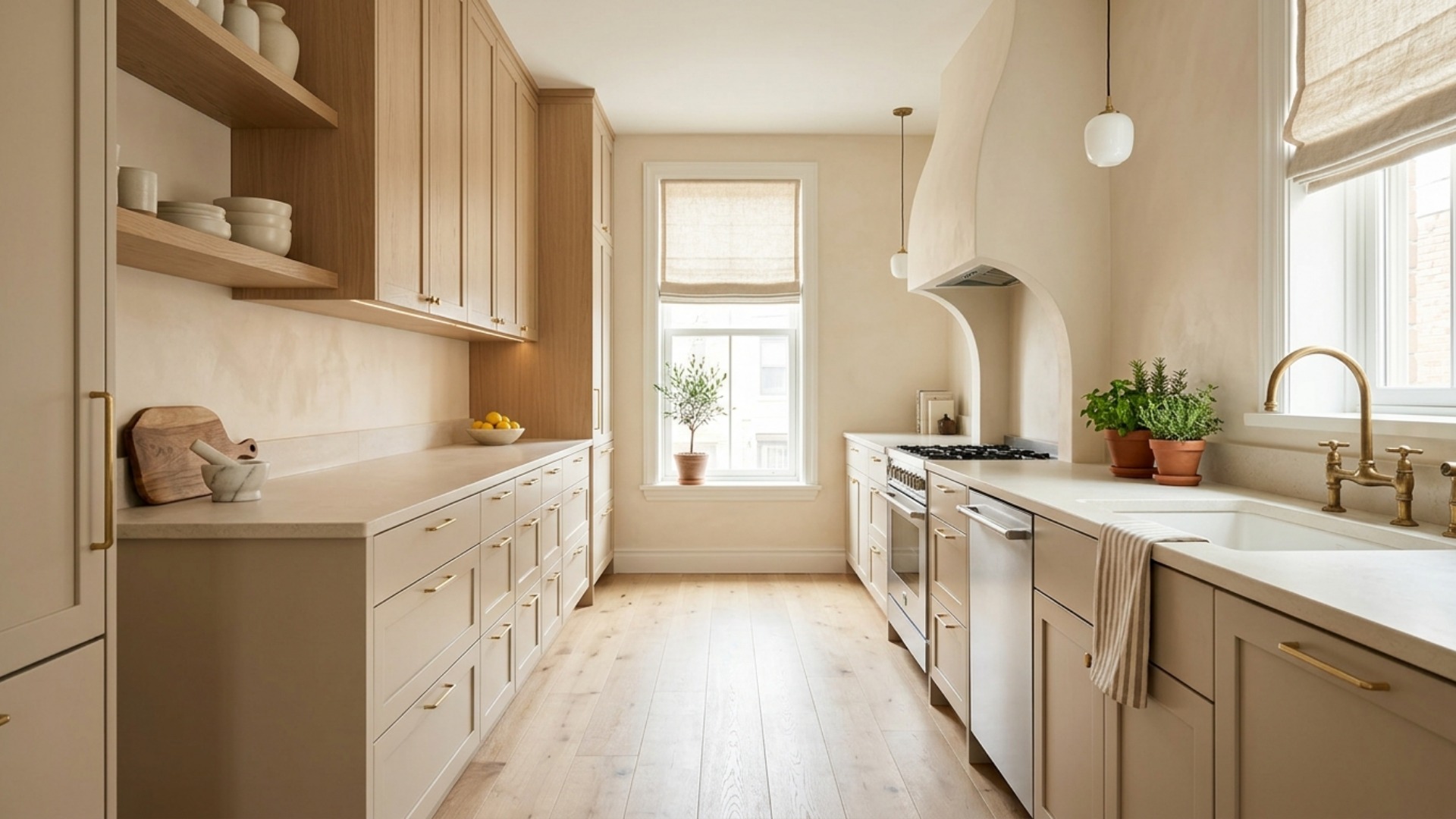
The kitchen is the room where most first-time decorators get seduced by the wrong things — the unlacquered brass tap, the zellige tile, the open shelving styled to within an inch of its life. These are finishing details. Before any of that, think about workflow. Where is your fridge, your sink, your hob? Do they operate in a logical sequence? The most beautiful kitchen in the world is a misery if its layout is broken.
Start with two decisions: cabinetry finish and countertop material. These define the room more than anything else you will choose. The warm-toned wood kitchens in Dezeen's natural wood lookbook show how a single material choice transforms a utilitarian space into something genuinely nourishing. Studio Ellsinger's Hee House in Sweden is a masterclass in restraint — pale timber, clear forms, nothing that doesn't earn its place.
If budget is a constraint, invest in hardware and lighting before finishes. A well-lit kitchen with simple cabinetry and considered handles will outperform an expensive kitchen that is poorly lit every time. The bones matter more than the surface. Get those right first.
The Dining Room: Set the Mood
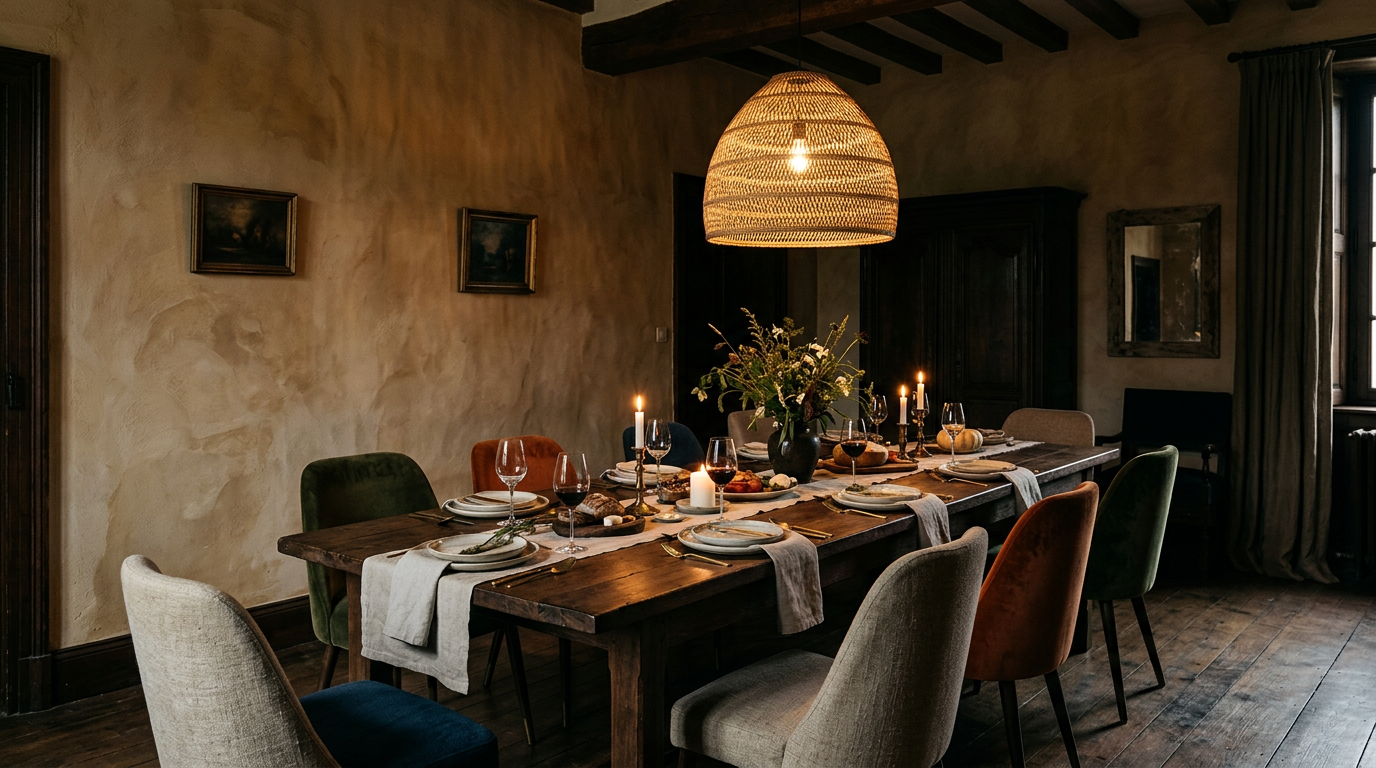
The dining room asks something particular of the people inside it: to sit down, to be present, to linger. More than any other room in the house, it is designed for a specific kind of time — unhurried, social, intentional. The lighting matters here above all else. A bare overhead bulb will undermine even the most considered furniture arrangement. A pendant hung low over the table, warm and directional, changes the room entirely.
Don't be afraid of mismatched chairs. The dining rooms that feel most alive achieve their character through tension and contrast rather than uniformity — a sense that the room has been inhabited and curated over time, not ordered in a single afternoon. Dezeen's mismatched dining chairs lookbook is an excellent primer on how to make the eclectic feel intentional rather than accidental.
Choose a table that can seat more than you regularly need. The dining room earns its keep through generosity. A round table softens a room and equalises conversation; a long, rectangular one commands its space differently. Both are valid. The choice is simply about how you want to inhabit the room — and the kind of evenings you want to have in it.
A Final Note: Taste Is a Practice
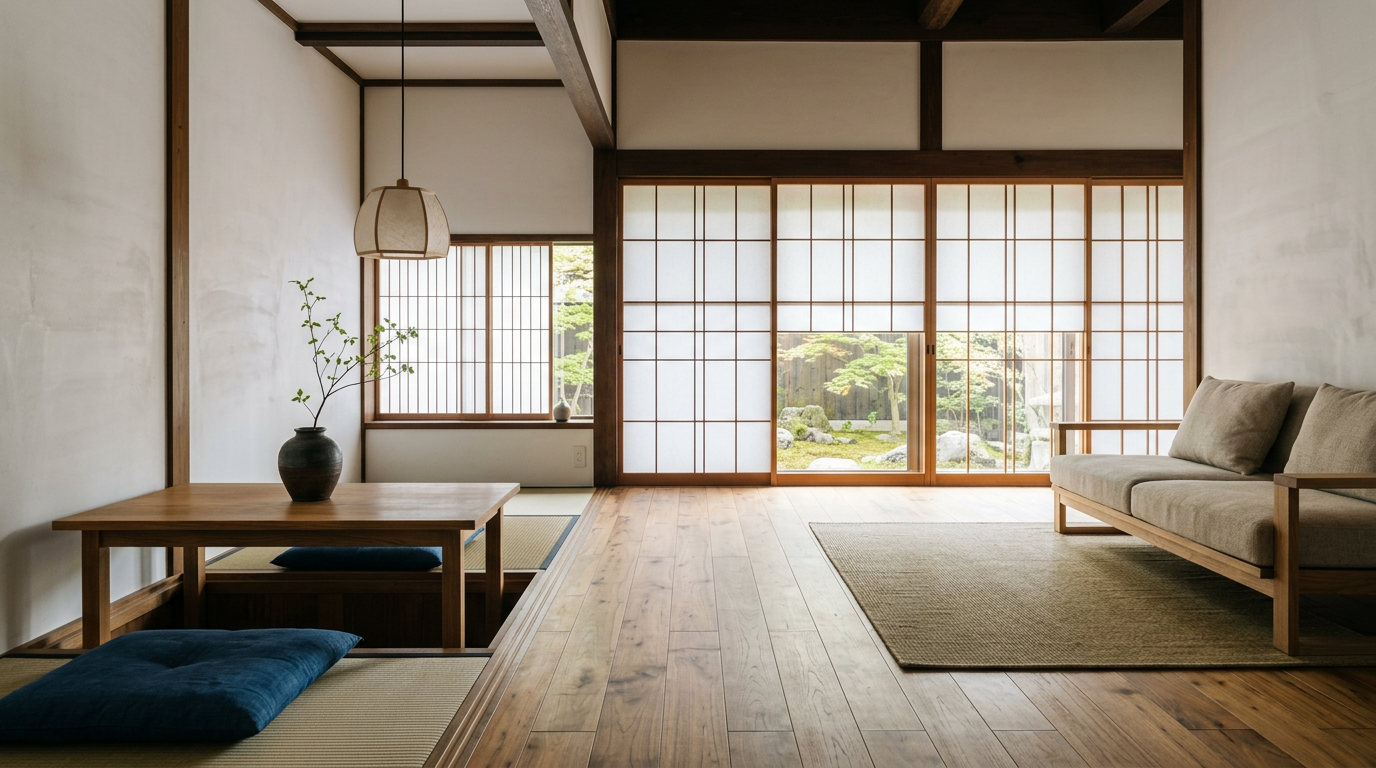
The rooms that feel most like themselves didn't happen in a weekend. They accumulated — through a painting bought before the walls were chosen, a chair sourced from an estate sale, a lamp that was always too good to leave behind. Taste is not innate. It is a practice, refined through looking, editing, and occasionally getting things wrong and learning something from it.
The best references aren't trend reports or showroom catalogues. They're archives. Spend time in 1stDibs' The Study, in Architectural Digest's decades of editorial photography, in the considered residential work documented by Dezeen. Not to copy, but to sharpen your instincts. Notice what you keep returning to across different rooms, different periods, different countries. That's your taste, speaking more clearly than any mood board ever could.
And when in doubt: do less. The most considered homes are the ones where every object has been chosen, every surface edited. Restraint is not deprivation — it's confidence. Start with one room, make one good decision, and let it lead you. When you're ready to visualise your spaces before committing to anything, Framehouse can help you see it clearly first.