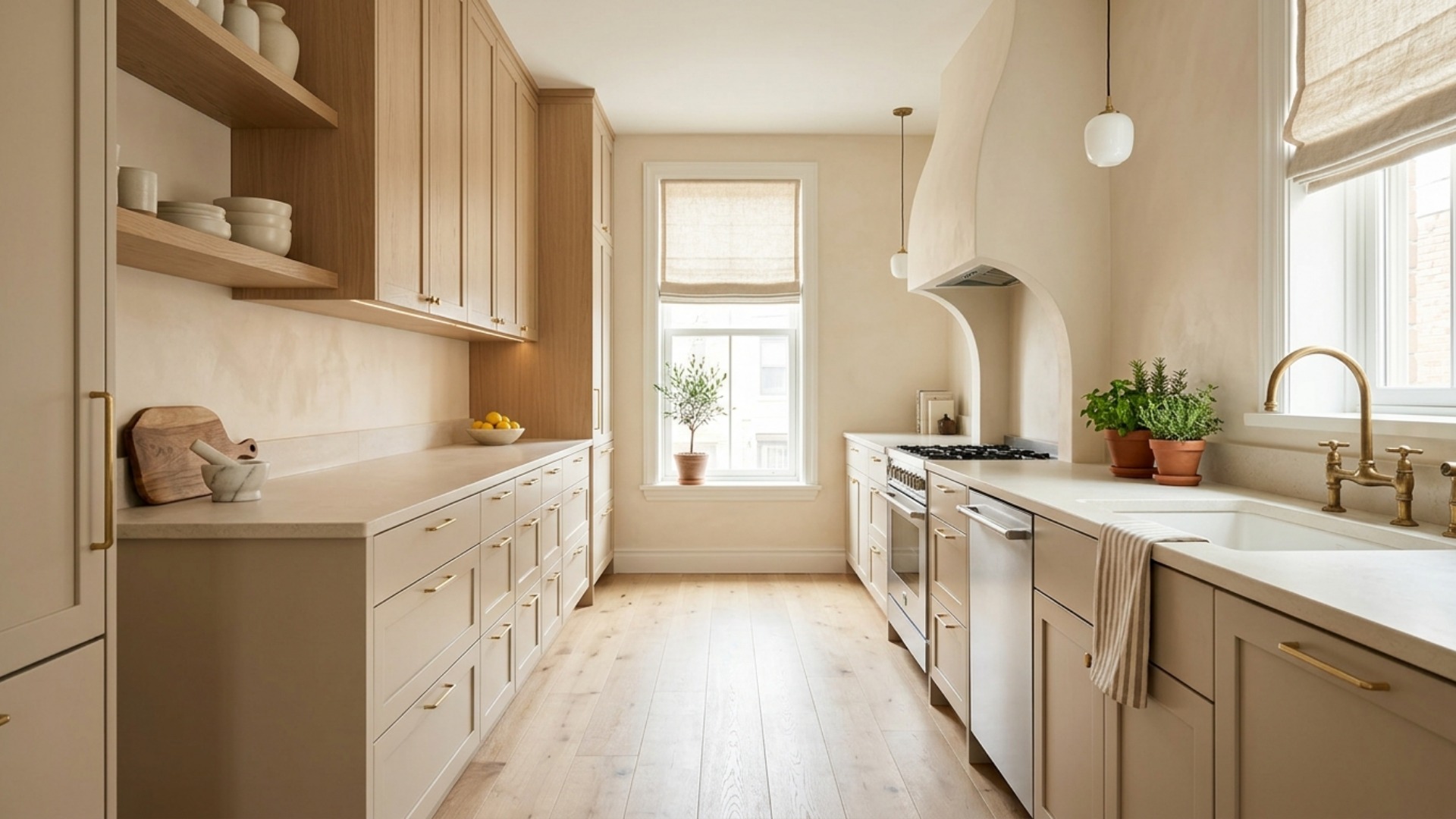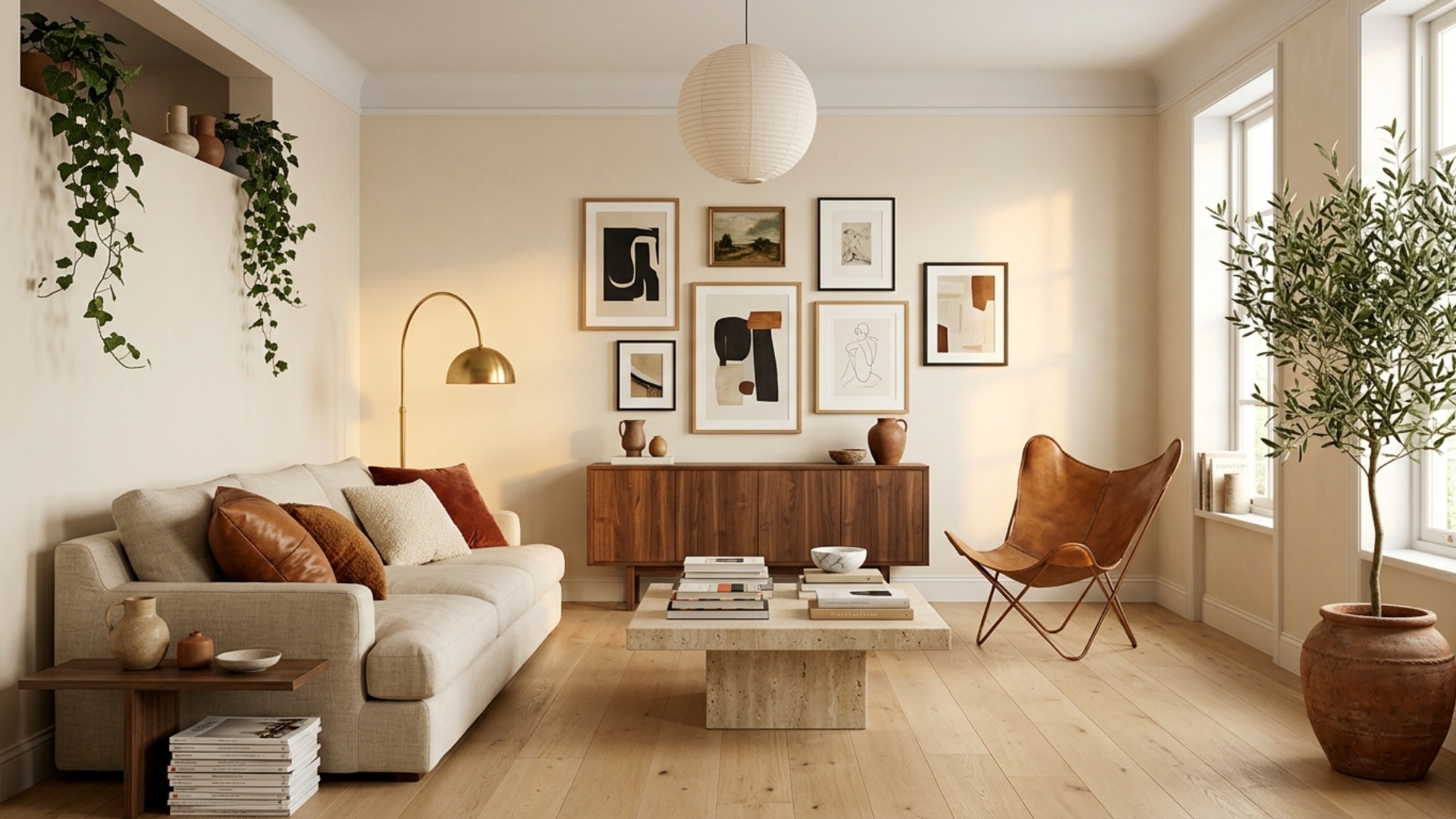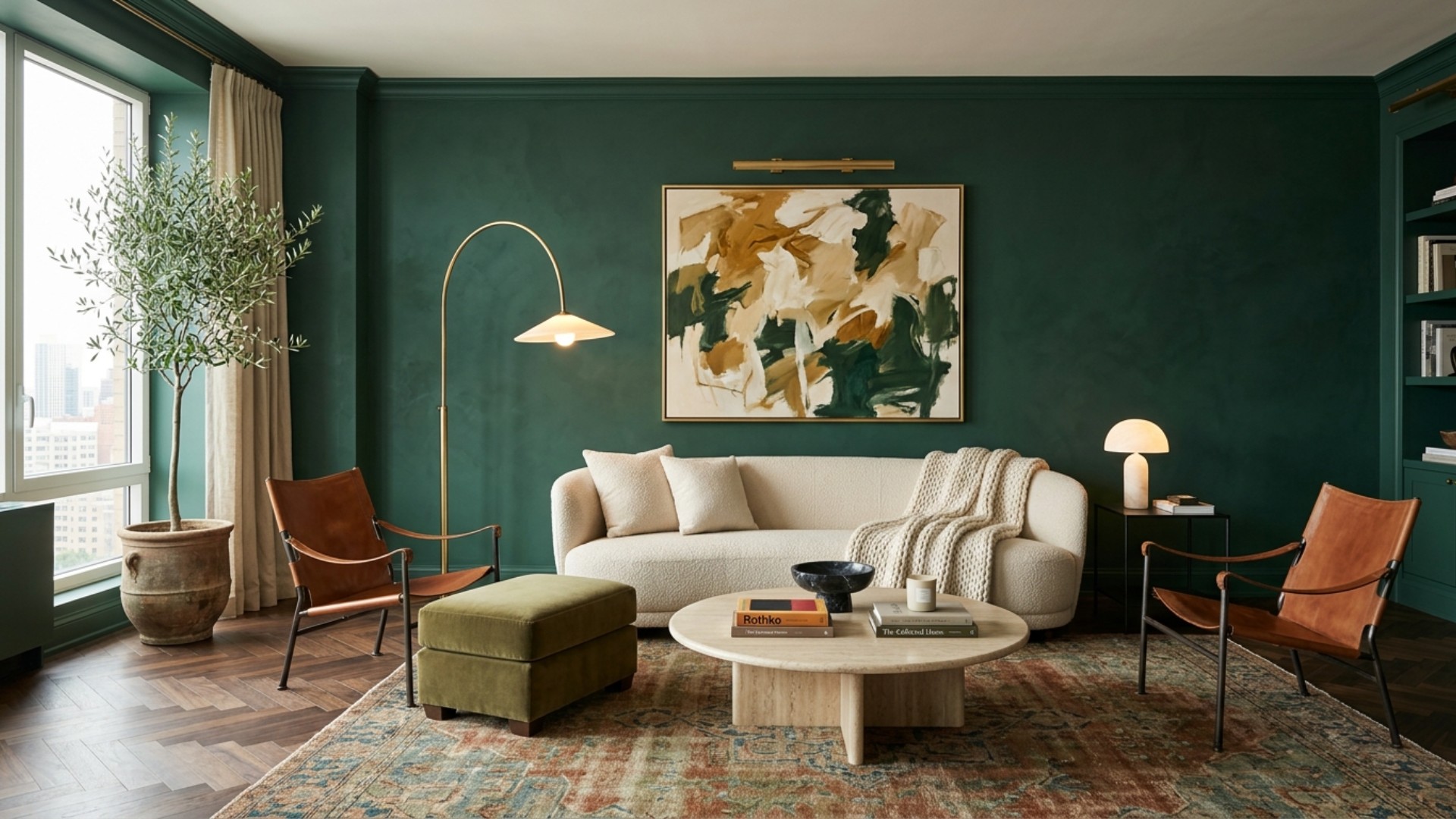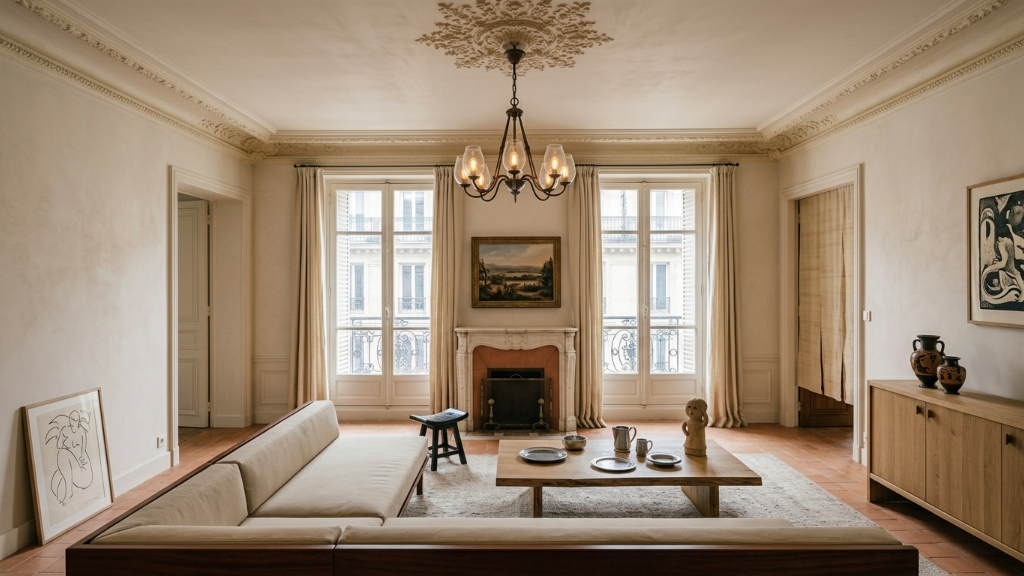
A small apartment is not a problem to be solved. It is a design brief with strong opinions. Every square foot has to earn its keep, every purchase has to justify its place, and the reward is a home that feels deliberate instead of accidental. Encouragingly, the average American studio now measures around 457 square feet, and the people who live beautifully in that footprint are not magicians. They simply know the moves.
Studios and one-bedrooms now make up more than half of all new apartments going up, so small-space style is not a niche pursuit. It is the main event. The constraint is the secret weapon here: a tight footprint forces clarity, and clarity is what makes a room look designed rather than merely filled.
Below are 15 decorating moves that genuinely work, grouped into the five areas where small rooms are won or lost. None of them require knocking down a wall, and most can happen over a single free weekend. The result is a place that reads as curated, calm, and quietly luxurious, no matter what the lease says about square footage.
Zone It Like You Mean It
The quickest way to make one room feel like several is to give every function its own clear address. You are not building walls, you are drawing invisible lines the eye respects. Do this well and a single room can hold a bedroom, a lounge, and a workspace without any of them stepping on the others.
1. Anchor each zone with a rug
A rug beneath the bed and another under the sofa, and suddenly a studio has a bedroom and a living room with no construction required. Size up rather than down. A rug that is too small makes the whole area shrink along with it.
2. Let an open shelf do a wall's job
A see-through shelving unit divides a space while light keeps traveling through it. It separates the sleeping nook from the lounge and stores your books, plants, and ceramics in the same elegant gesture.
3. Float the furniture off the walls
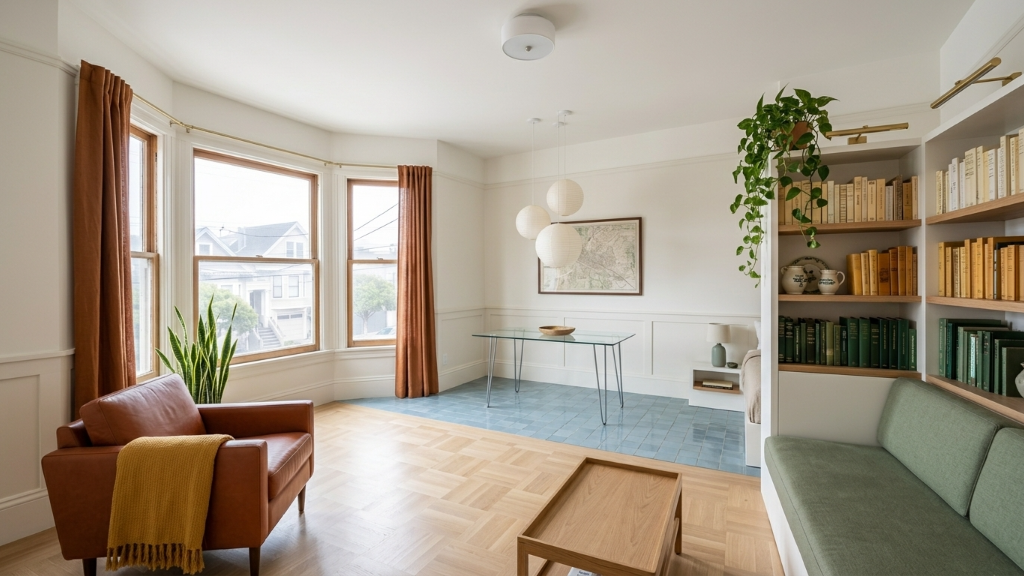
Pushing everything to the perimeter is the oldest small-space reflex, and it rarely flatters. Pulling the sofa a few inches inward creates a defined seating area and, counterintuitively, makes the room read larger.
Look Up: The Vertical Advantage
When you run out of floor, you still have walls. Height is the square footage nobody charges you for, and using it is the fastest way to add drama without adding clutter. Most small apartments waste the top third of every wall, which is exactly where the easy wins are hiding.
4. Hang curtains high and wide
Mount the rod close to the ceiling and extend it well past the window frame. The eye reads the entire wall as window, the ceilings feel taller, and the whole room instantly looks more expensive than it is.
5. Take storage all the way up
Floor-to-ceiling shelving draws the gaze upward and can triple your storage without claiming another inch of floor. Keep the lower shelves tidy and the highest ones light and sculptural so the unit feels like architecture, not a stockroom.
6. Lead the eye up with art
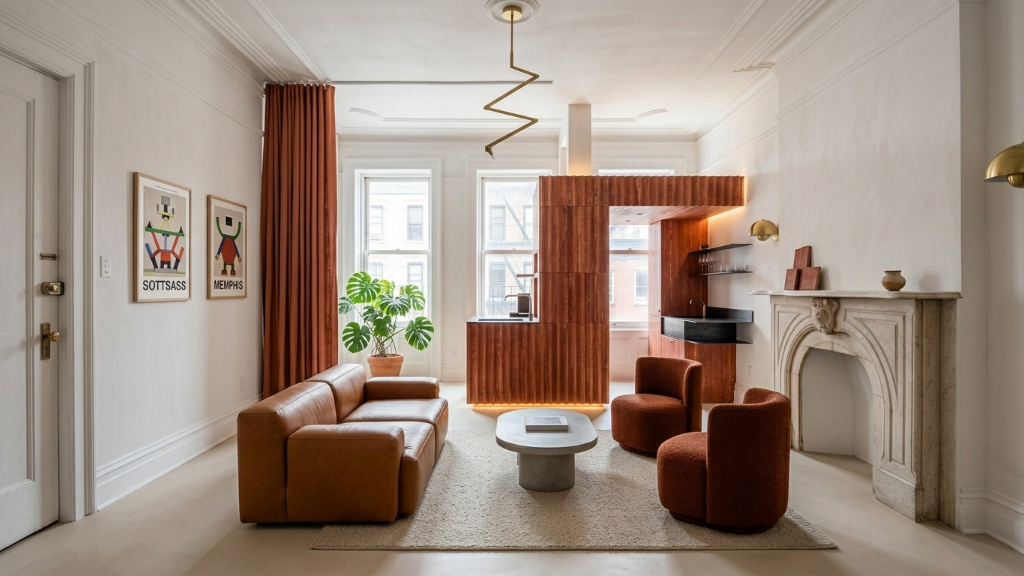
A tall vertical piece or a stacked gallery column emphasizes height. In a snug room, one confident large work almost always beats a timid scattering of small frames.
Furniture That Earns Its Square Footage
In a small home, every piece should do at least two jobs, and ideally look good doing them. Given that roughly a third of Americans rent self-storage just to manage the overflow, furniture that hides clutter quietly pays for itself many times over.
7. Buy double-duty pieces
A storage ottoman, a lift-top coffee table, a bed frame with drawers underneath. Each one swallows the everyday clutter that makes small rooms feel chaotic, and hands you a calmer space in return. A nesting set or a drop-leaf table flexes from solo coffee to dinner for six.
8. Choose legs you can see under
Sofas and chairs raised on slim legs let light and floor flow beneath them. Visible floor equals perceived space, which is precisely why leggy furniture always feels airier than a skirted block sitting flush to the ground.
9. Scale to the room, not the showroom
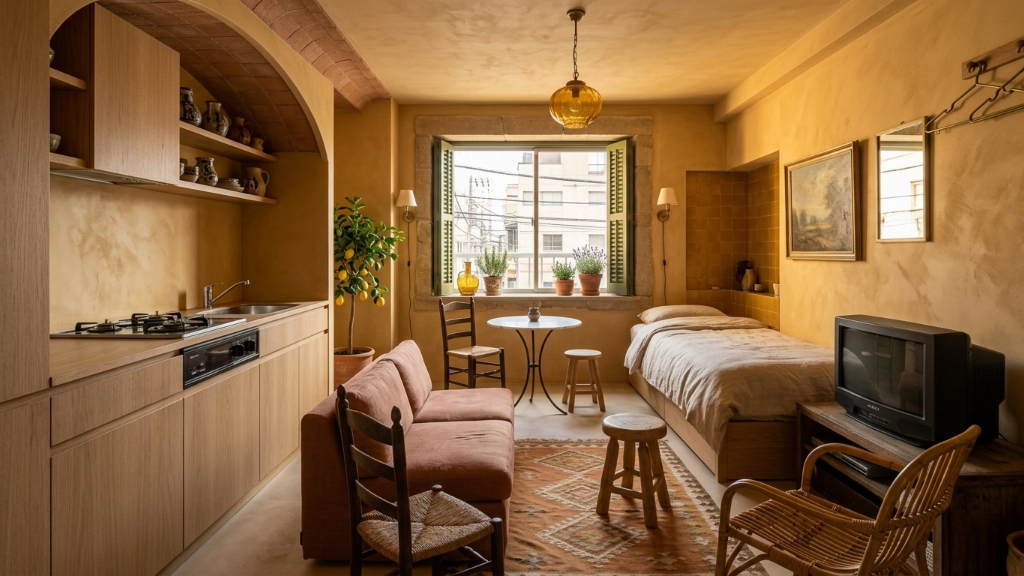
An overstuffed sectional will bully a small living room. Showroom lighting and cavernous floors make everything look smaller than it is, so measure your space and choose pieces in proportion to it, leaving a little breathing room around each one.
Light, Mirrors, and a Little Optical Magic
Light is the cheapest renovation there is. Mirrors are the second cheapest. Together they can make a modest room feel twice its size before you spend a cent on new furniture, and they reward a little experimentation.
10. Layer your lighting
One overhead fixture flattens everything. Add a floor lamp, a table lamp, and a sconce, and you build depth, warmth, and the impression of a larger, more considered space that unfolds in pools of light. Aim for at least three sources in any room you actually live in.
11. Hang a generous mirror
A large mirror placed opposite or beside a window bounces daylight around and visually doubles the floor area. It is the single most reliable trick for making a small room feel genuinely open, and a leaning floor mirror adds height in the bargain.
12. Keep windows bare or barely dressed
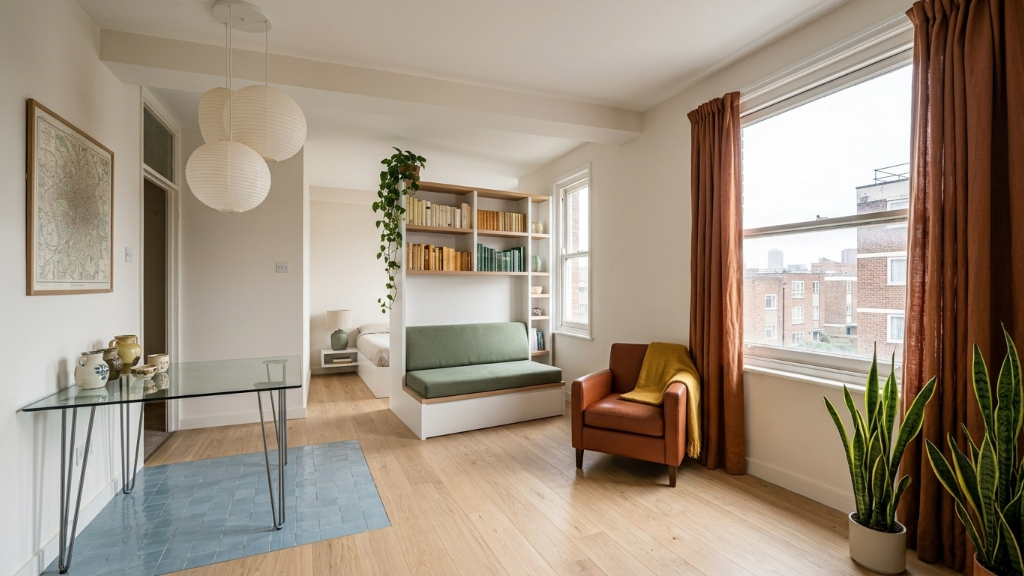
Heavy drapery eats light, and with it, the sense of space. Sheer panels or a clean roller shade let the daylight do its quiet expanding work while still giving you privacy when you want it.
Color, Texture, and the Finishing Flourishes
The final ten percent is where a small space tips from merely functional to genuinely stylish. This is the part people feel the moment they walk in, even when they cannot quite name why a room works.
13. Commit to a tight palette
Two or three colors carried across the whole apartment make the space feel cohesive and calm. A busy, many-colored room reads as cluttered even when it is spotless and perfectly organized. Pick a base, a secondary, and one accent, then repeat them in the textiles, the art, and the smaller objects.
14. Add texture instead of more stuff
Boucle, linen, rattan, a chunky knit throw. Texture brings richness and warmth without adding visual noise, which is exactly what a small room wants more of and a crowded one wants less. When you cannot add square footage, add depth you can feel.
15. Edit, and then edit again
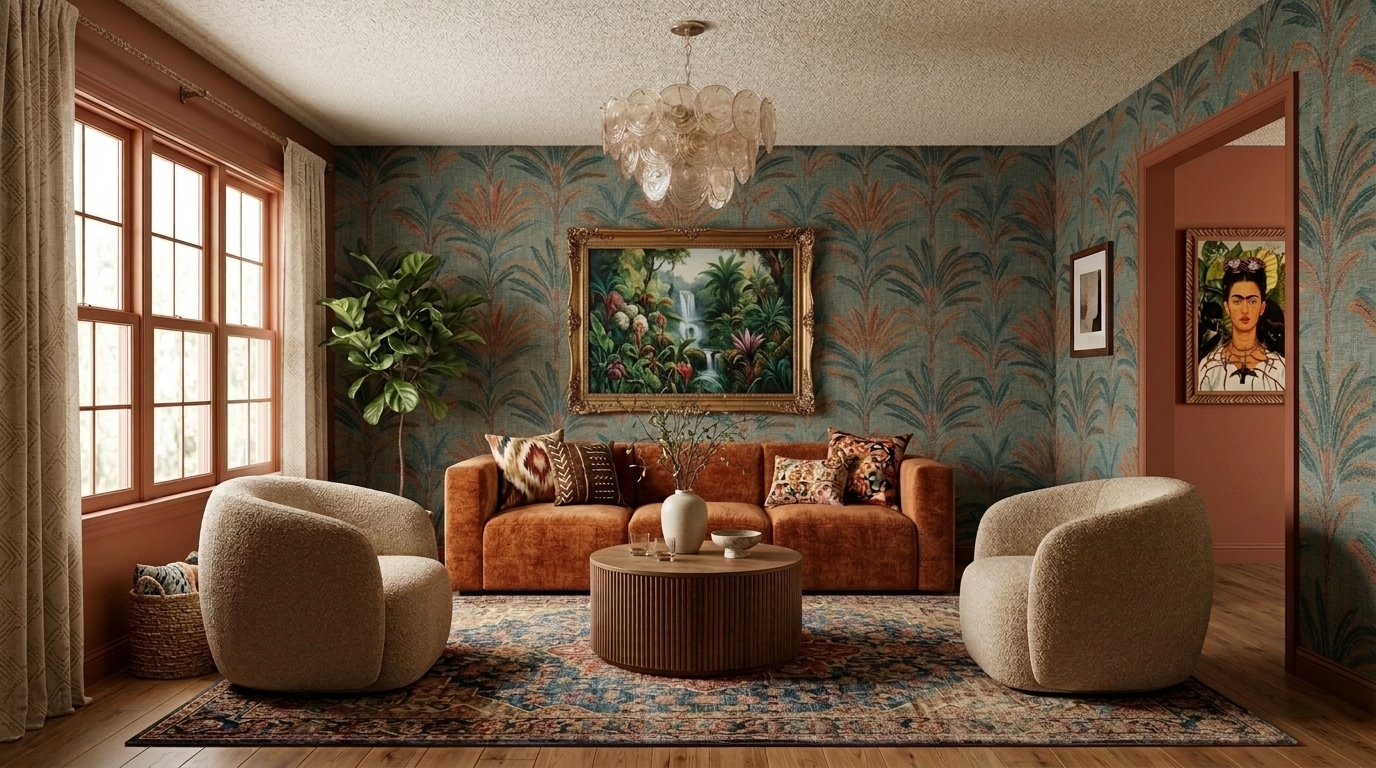
The most powerful small-space move is restraint. A few pieces you genuinely love, displayed with room to breathe, will always outclass a surface crowded with things you merely like. Clear the coffee table, thin the shelves, and let the best objects actually be seen.
Small-Space Questions, Answered
What color should I paint a small apartment?
Soft, light tones like warm white, greige, and pale sage reflect light and recede, which makes the walls feel farther away. If you crave drama, paint a single accent wall or go deliberately dark in a windowless nook, where coziness, not openness, is the goal.
How do I make a studio feel like separate rooms?
Use rugs, an open shelf, a slim console, or a shift in lighting to mark where one zone ends and the next begins. You are creating visual boundaries, not building walls, so the room still breathes as a whole.
Is it better to have fewer big pieces or more small ones?
Fewer, larger pieces almost always win. A scattering of tiny furniture chops the room into busy fragments, while a few well-scaled pieces give the eye somewhere to rest and the floor somewhere to show.
How can I tell if an idea will work before I buy?
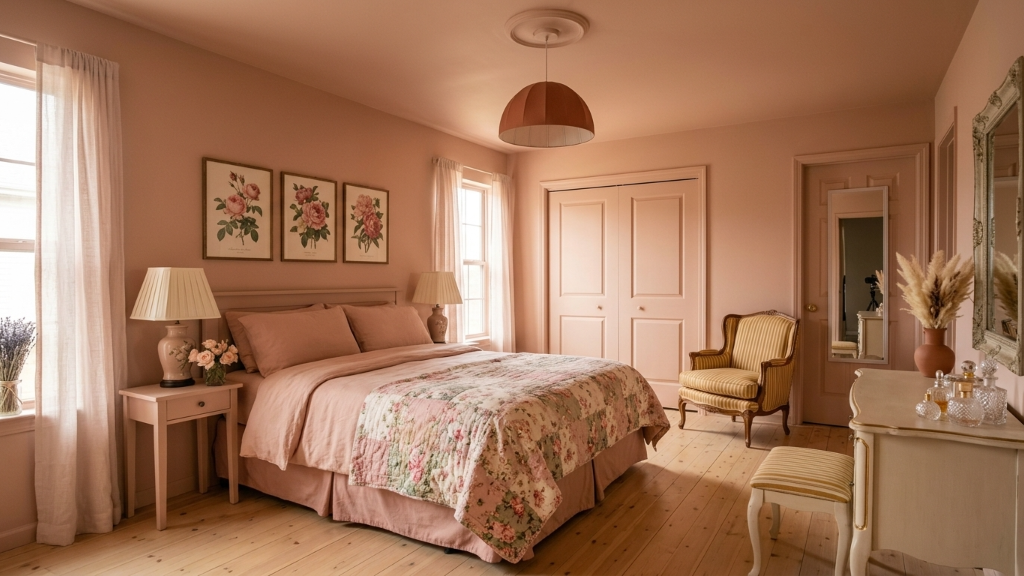
This is where it pays to preview. Instead of guessing whether a sectional fits or a color lands, you can see it first. Upload a photo of your room to Framehouse, choose a direction, and watch your space reimagined in minutes, complete with a plan to make it real. Plans start at $89, your photos stay private, and you stay firmly in the driver's seat, no designer appointment required.