Ferran Torres, 106th minute, one nil. Spain has just taken its second World Cup, sixteen years after the first, and somewhere in Madrid a very large quantity of cava is being opened at an inadvisable hour. Congratulations, Spain. You have the trophy, the golden generation, and Lamine Yamal.
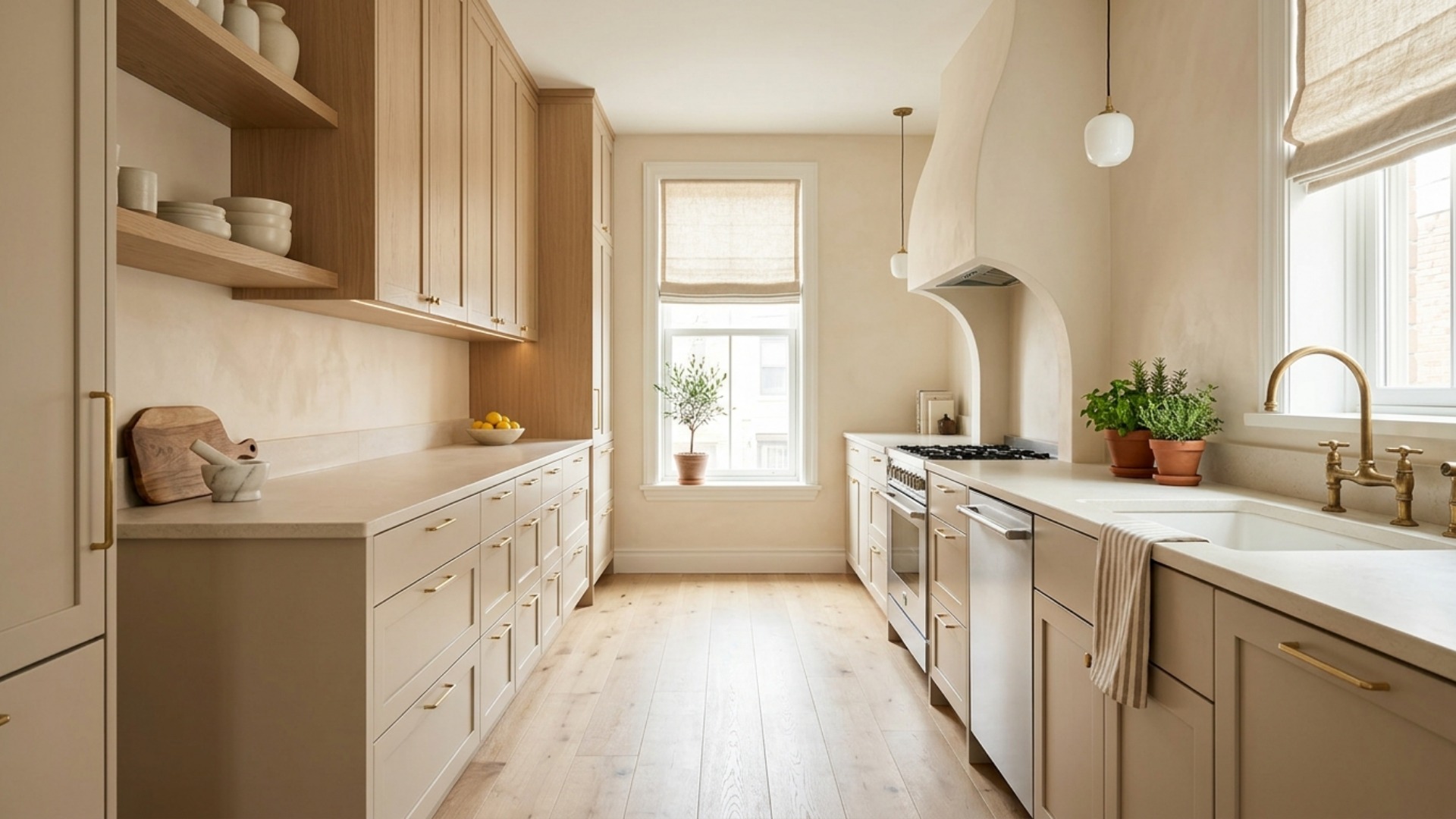
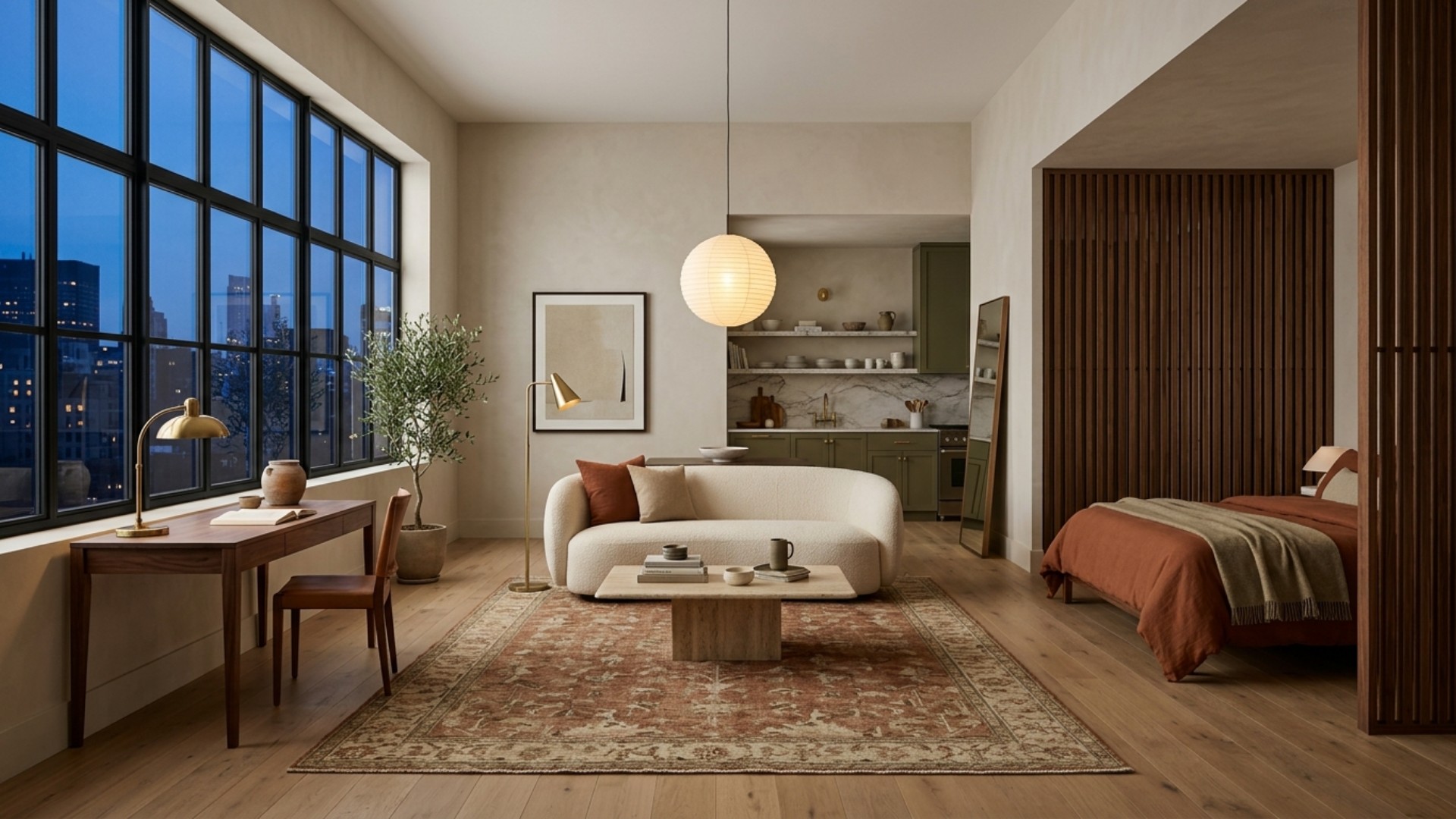
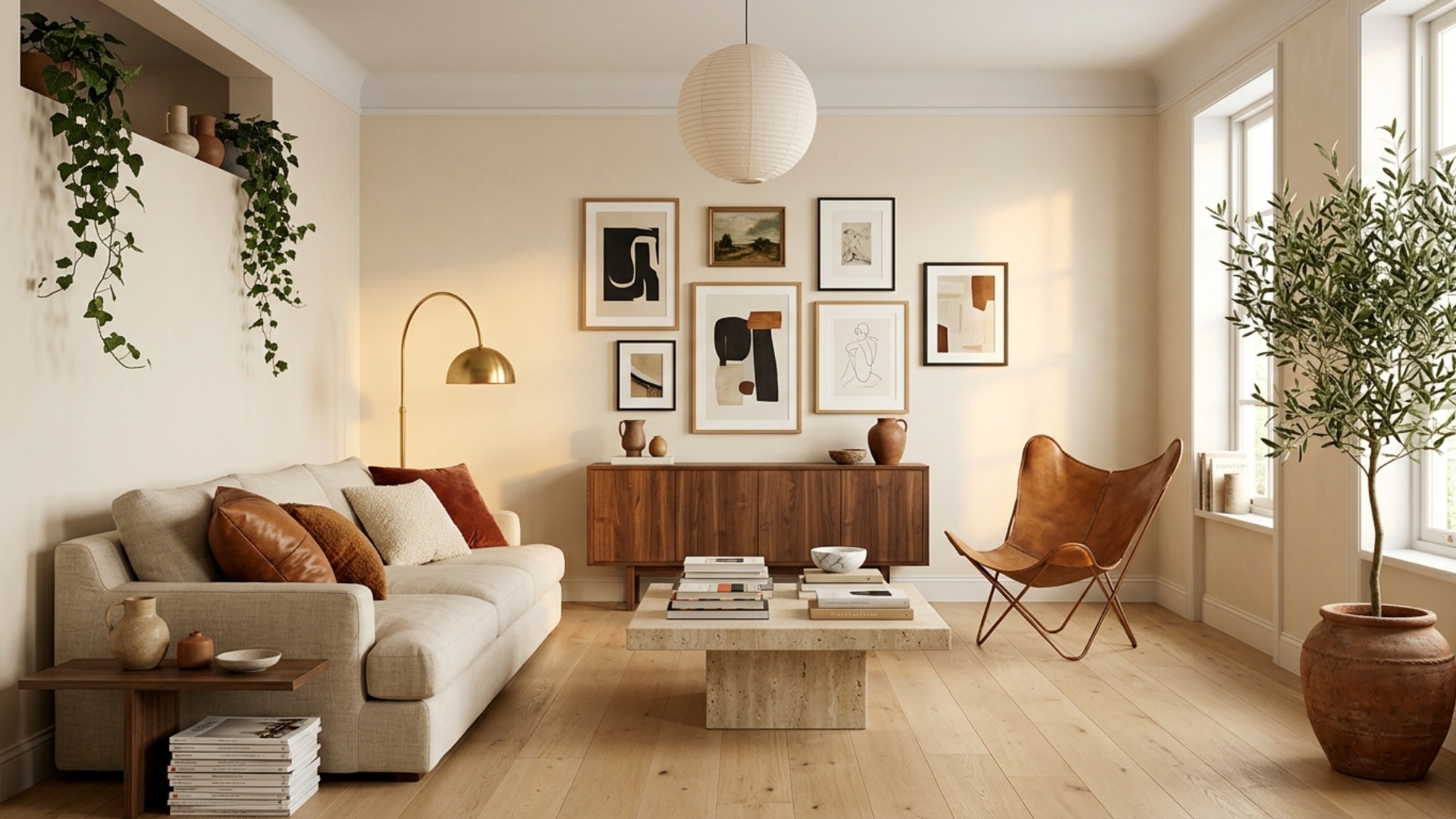
You also, and we say this with total sincerity, have the best houses in Europe. Spain is a country that figured out light, shade, and the pleasure of a cool tiled floor in August several centuries before the rest of us caught on. And it is not one look but five or six, because a whitewashed finca on Ibiza and a concrete villa on an Atlantic cliff are barely on speaking terms. So here is the tour, region by region. Bring a notebook.
Madrid: Grand Bones, Modern Attitude
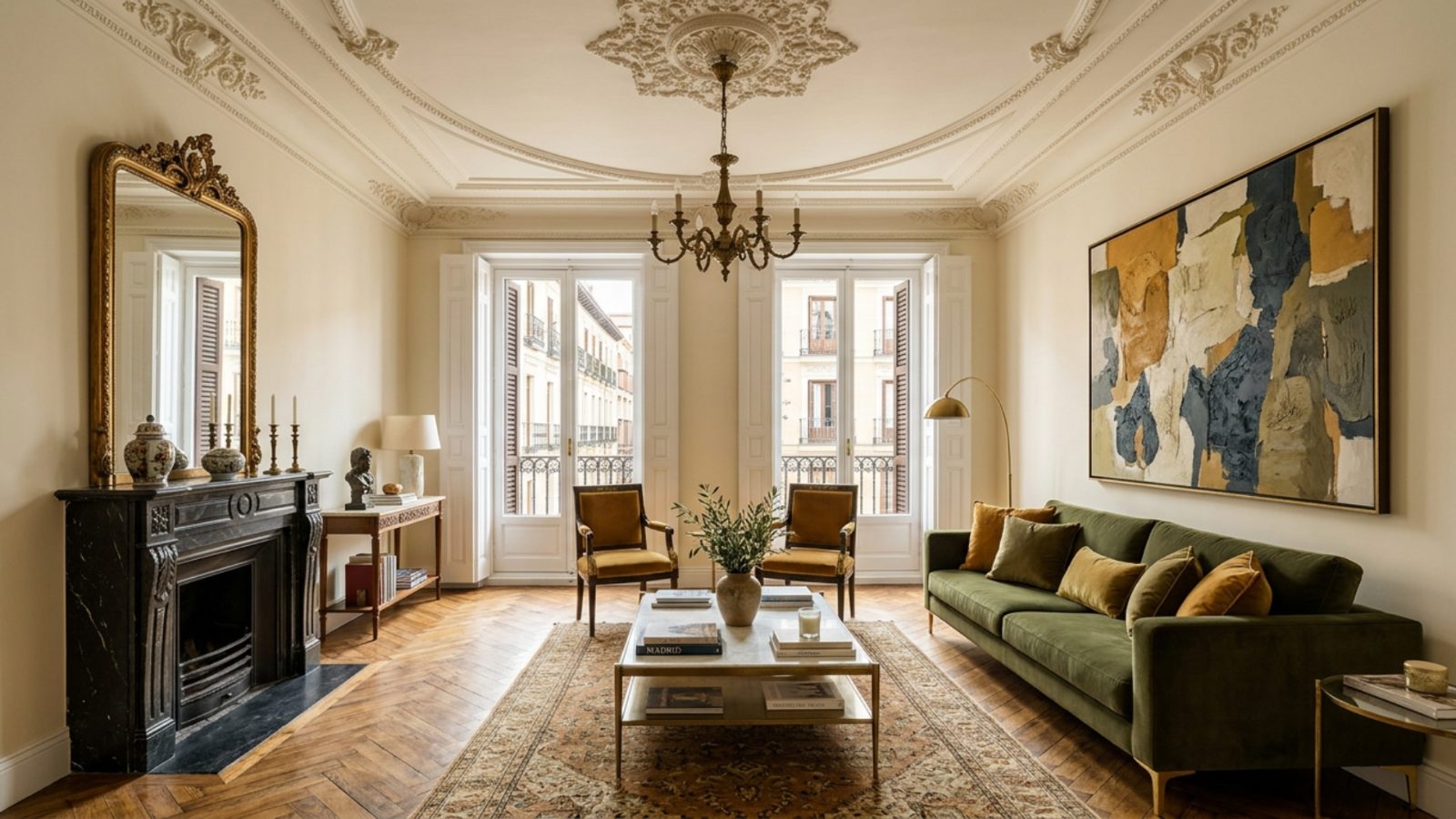
Madrid does not do beach house. The capital's signature interior lives in a nineteenth-century Salamanca or Chamberí building, and it comes with serious architecture already installed: ceilings you could fly a kite in, ornate plaster moldings, herringbone parquet, and tall shuttered balcony doors made for a city that treats 10pm as the start of the evening.
The modern Madrid move is to leave all of that alone and be quite bold with everything else. A velvet sofa in a deep, confident color, a contemporary artwork that would horrify your grandmother, brass and marble handled without apology. The result is glamorous but never precious, because the grandeur is in the bones and the furniture is free to have opinions. If your own place has good architectural detail, this is your lesson: stop fighting it, start playing against it.
Ibiza and the Balearics: Barefoot, Sculptural, Serene
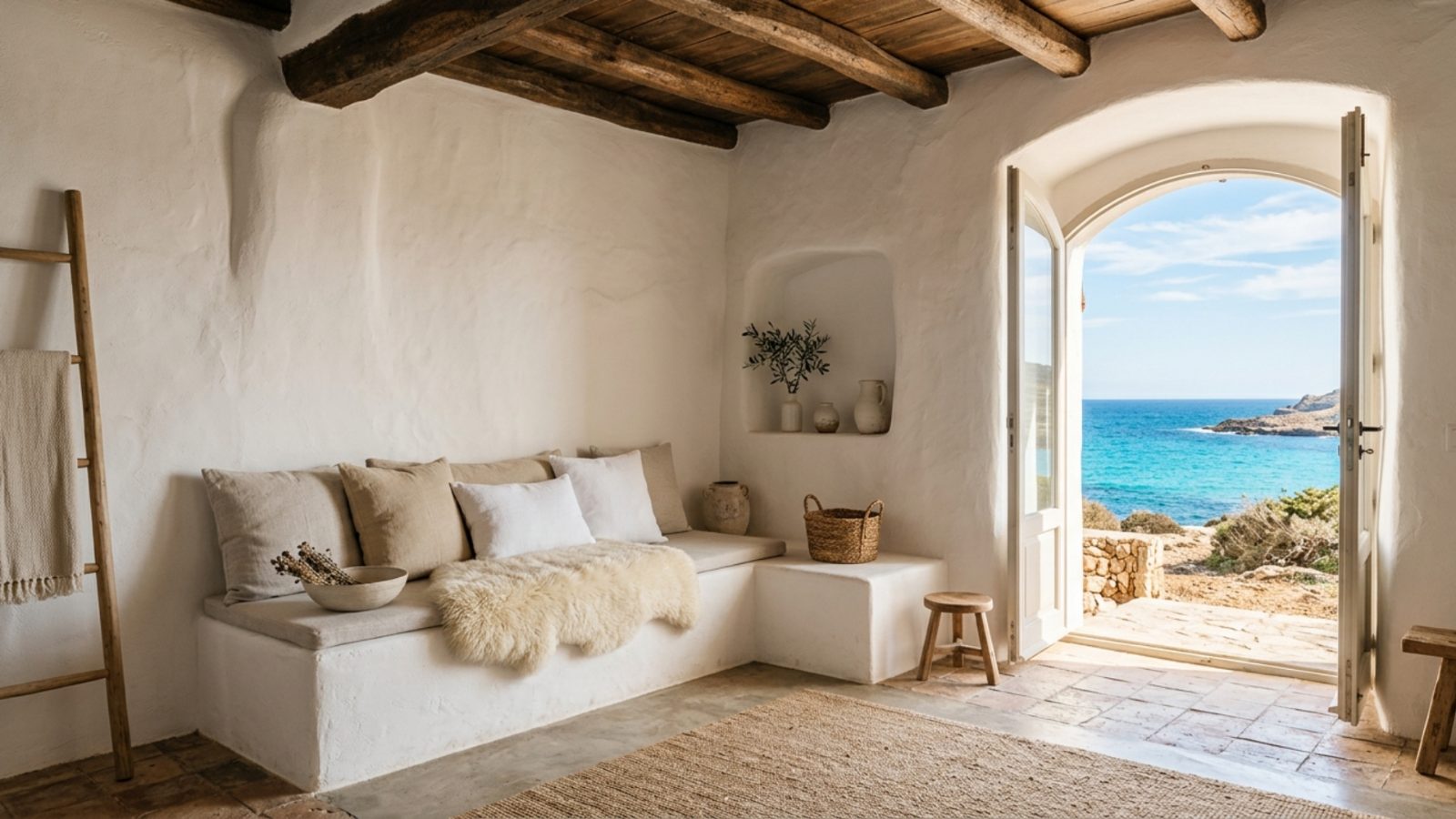
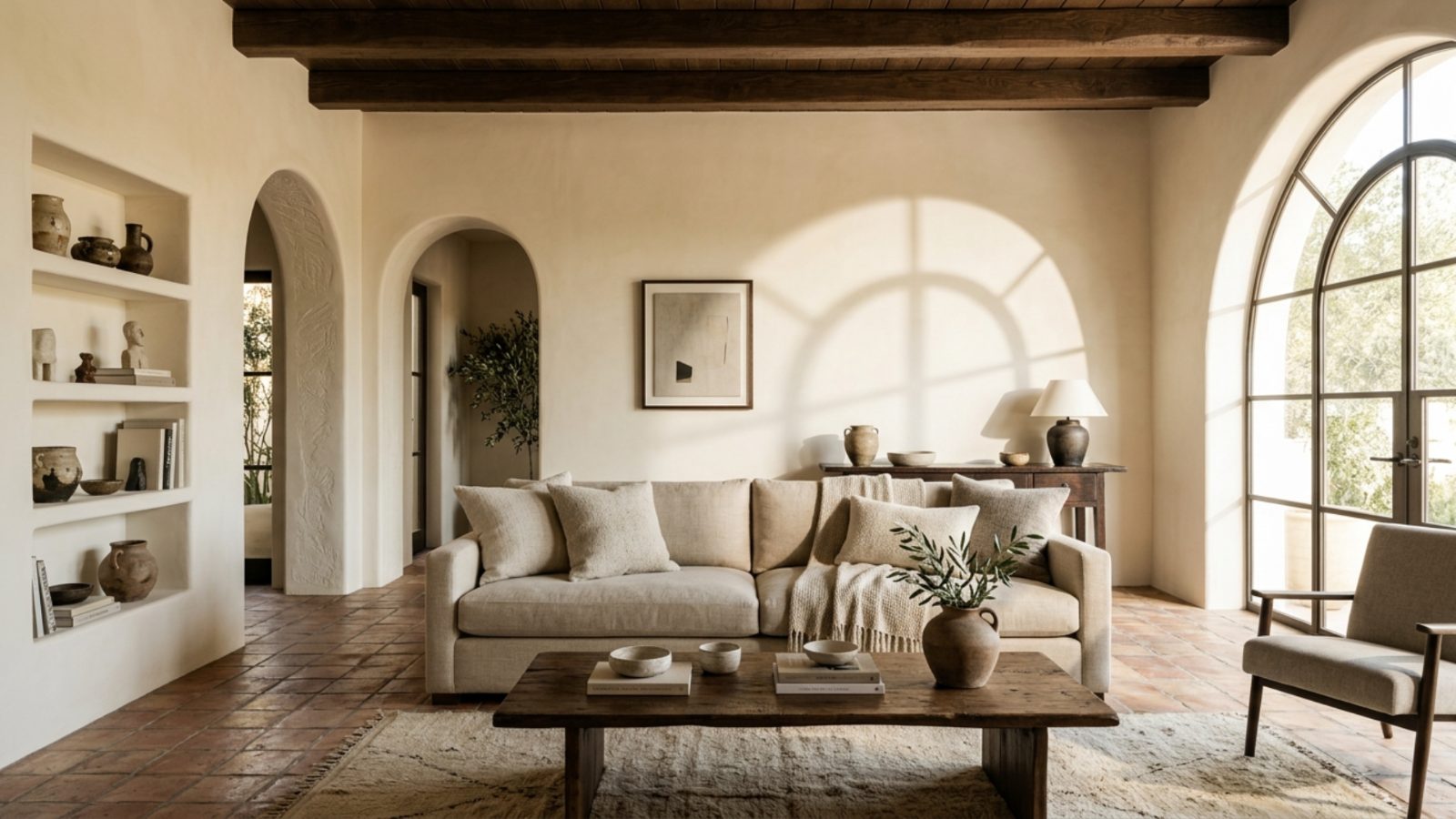
Then there is Ibiza, which invented a whole aesthetic largely by accident. The traditional finca is thick-walled, low, and hand-built, and the walls are not flat so much as sculpted, curving into benches, niches, and soft arched doorways that look poured rather than constructed. Everything is whitewashed, which keeps the interior blessedly cool and makes the light do extraordinary things.
The palette is essentially sand and bone: bleached white plaster, rough juniper beams, undyed linen, a sheepskin, some honest ceramics. Nothing shiny, nothing fussy, nothing you would be afraid to sit on in a wet swimsuit. This is the strain of Spanish design the rest of the world has been quietly copying for a decade, and it works anywhere you want a room to feel calm, tactile, and about fifteen degrees cooler than it is.
Andalusia: Courtyards, Arches, and Moorish Bones
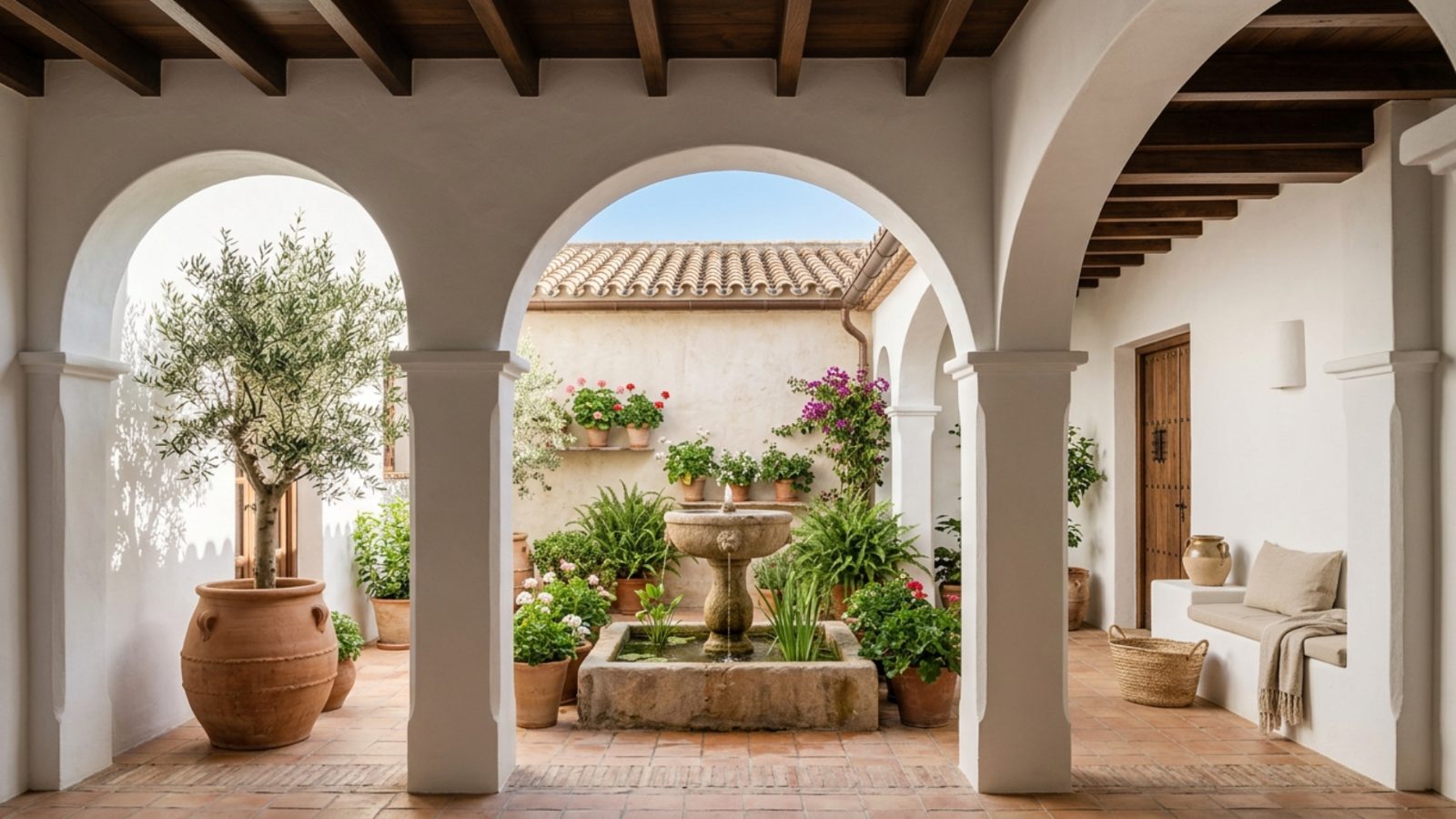
Head south and the influence changes entirely. Eight centuries of Moorish architecture left Andalusia with a design vocabulary nobody else has: horseshoe arches, intricate tilework, wrought iron, and above all the patio, the interior courtyard that turns a house inward around a fountain and a few pots of geraniums.
The genius here is climate control disguised as romance. Whitewashed walls bounce away the Seville heat, thick masonry holds the cool, and the courtyard pulls light and air into the center of the plan while the fountain does the rest. Steal the parts you can: a deep arched opening instead of a plain doorway, terracotta underfoot, a little glazed tile where you would otherwise have put nothing, and the general principle that a house should have a green, shaded heart.
Barcelona: Modernisme Meets the Present
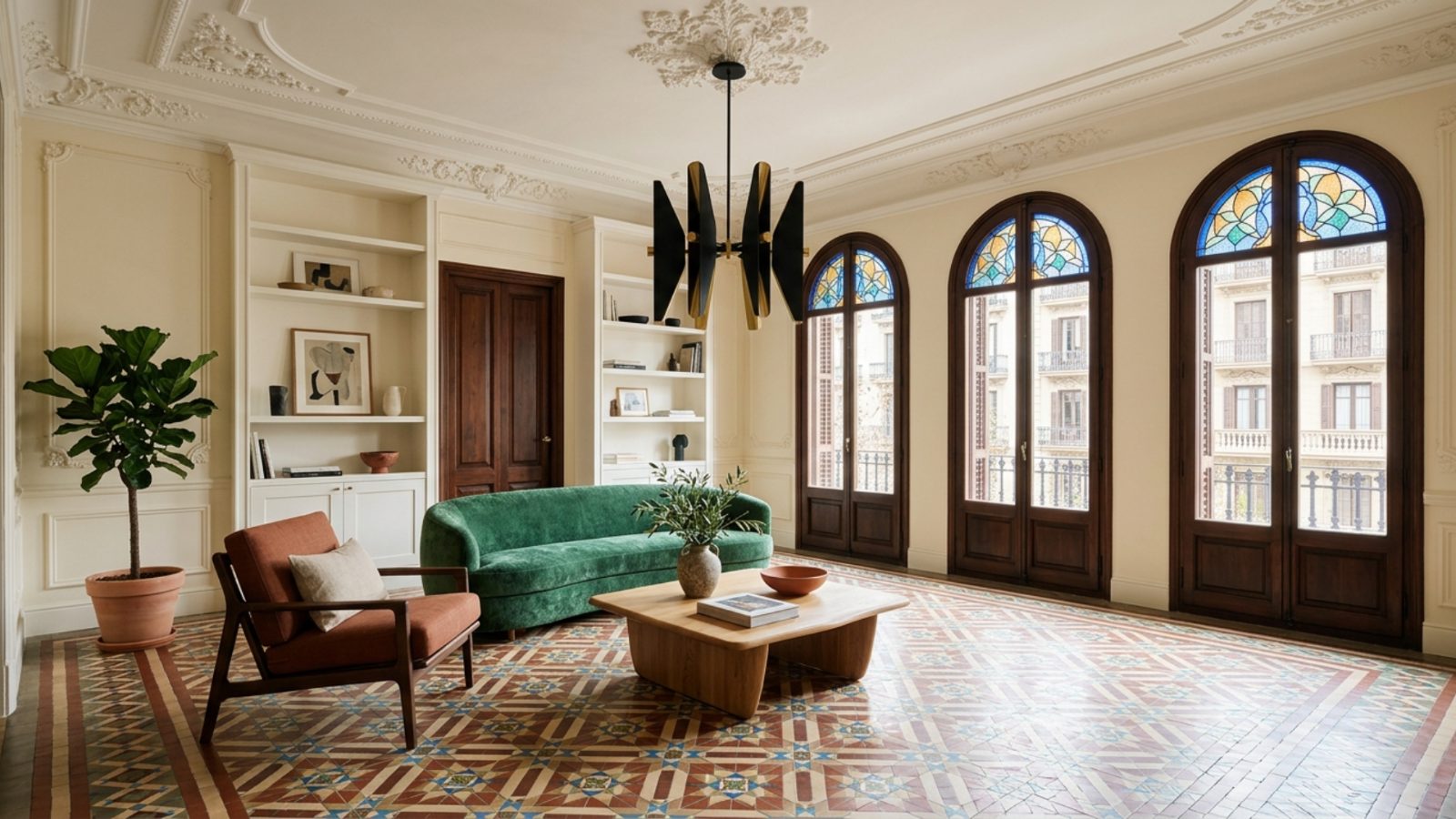
Barcelona is Spain at its most decorative, and entirely unembarrassed about it. The Eixample apartments are Modernisme territory, which means original hydraulic cement floor tiles in dizzying geometric patterns, sculpted ceiling plasterwork, and stained glass throwing colored light across the room by mid-afternoon. Gaudí was not an anomaly. He was the local weather.
What makes the contemporary Barcelona interior so good is restraint in the furnishing. When the floor is already performing a full concerto, the sofa should hum quietly. Designers there pair those wild encaustic tiles with spare modern pieces and one strong contemporary light fixture, letting the historic surfaces be the entire personality. It is a useful rule far beyond Catalonia: when the architecture is loud, the furniture should be a very good listener.
The North: Concrete, Stone, and Serious Modernism
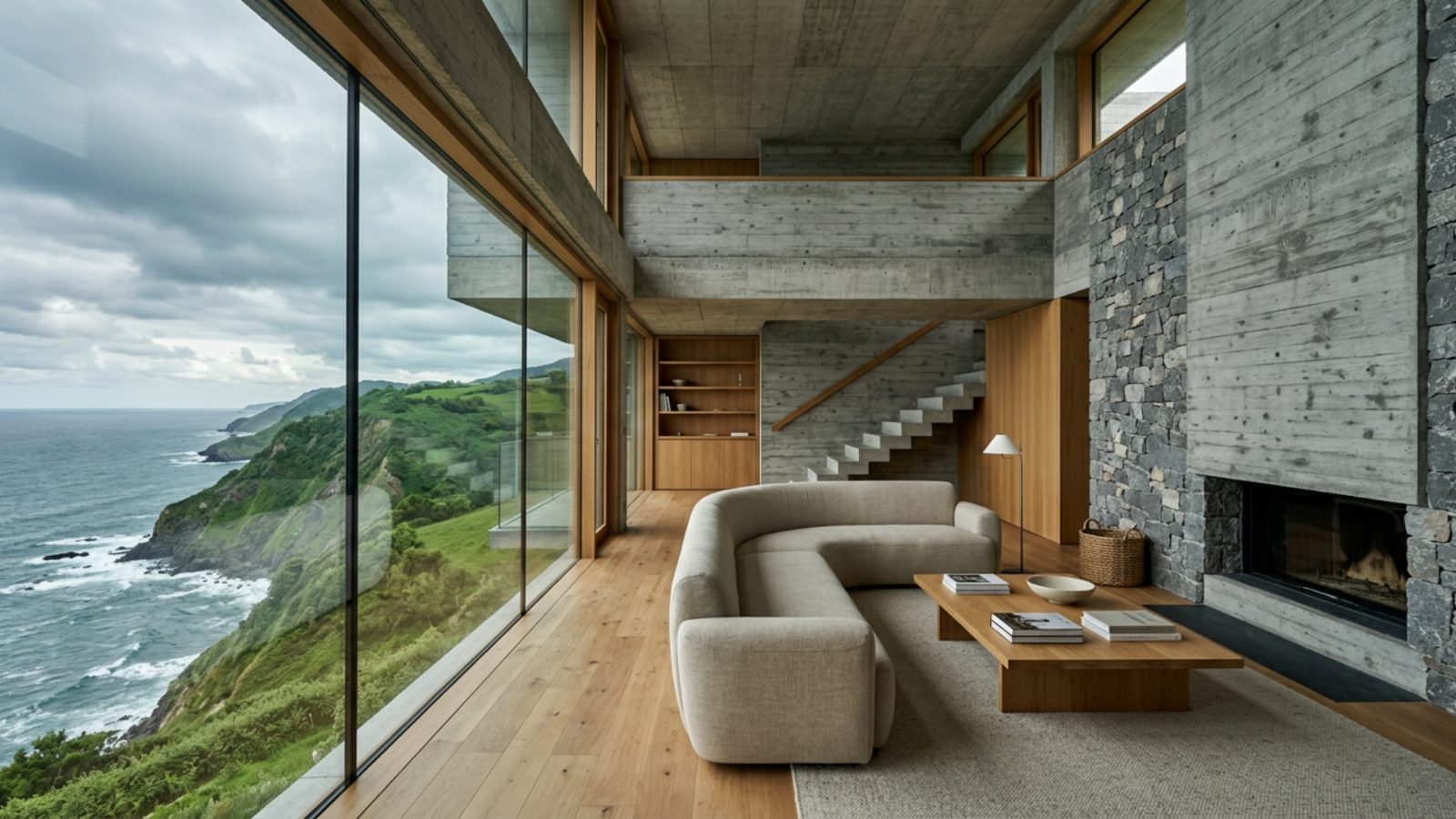
Now for the plot twist. Spain also builds some of the most severe, spectacular contemporary architecture on the planet, and most of it is in the green, rainy north. The Basque Country and Galicia trade terracotta for local grey stone, board-formed concrete, and enormous panes of glass aimed at an Atlantic cliff.
These are not cold houses, though, and that is the trick worth learning. The raw shell gets warmed from within: oak joinery, a sculptural sofa in soft wool, deep-set windows that frame the landscape like art. Bilbao has spent thirty years proving that bold modern building and a warm interior life are not opposites. If your taste runs more concrete than courtyard, this is your Spain.
How to Bring Spain Home
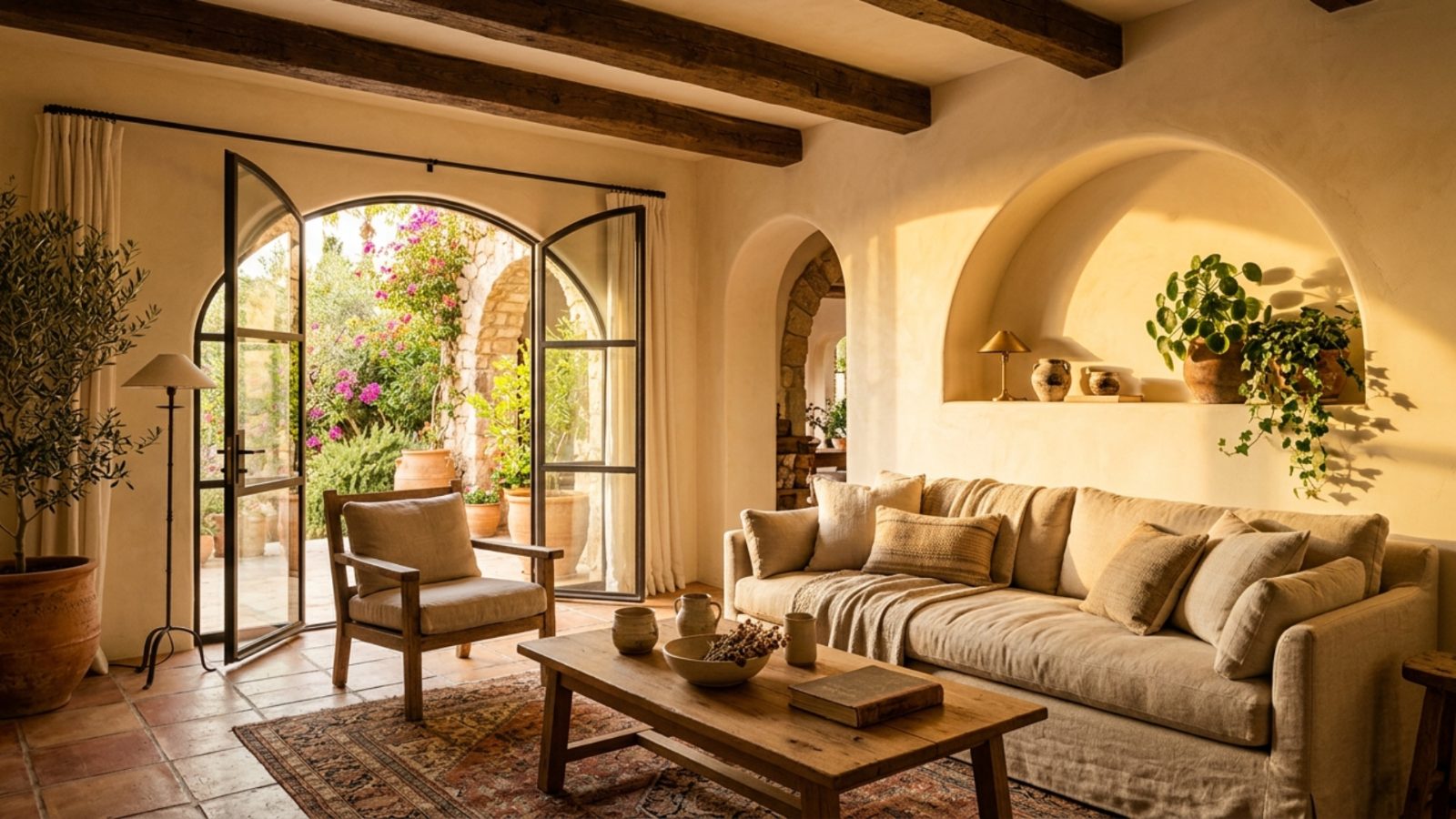
Wherever you land on the map, the through-line is consistent: honest materials, walls with a little texture and warmth rather than flat builder white, arches wherever an arch can reasonably be introduced, real wood overhead, terracotta or stone underfoot, and a deep respect for what the sunlight is doing at five in the afternoon. It is a way of living translated into rooms, which is exactly why it travels so well.
The trophy, unfortunately, is spoken for. The interiors are fair game.
See your room reimagined in modern Spanish style with Framehouse, free to start.