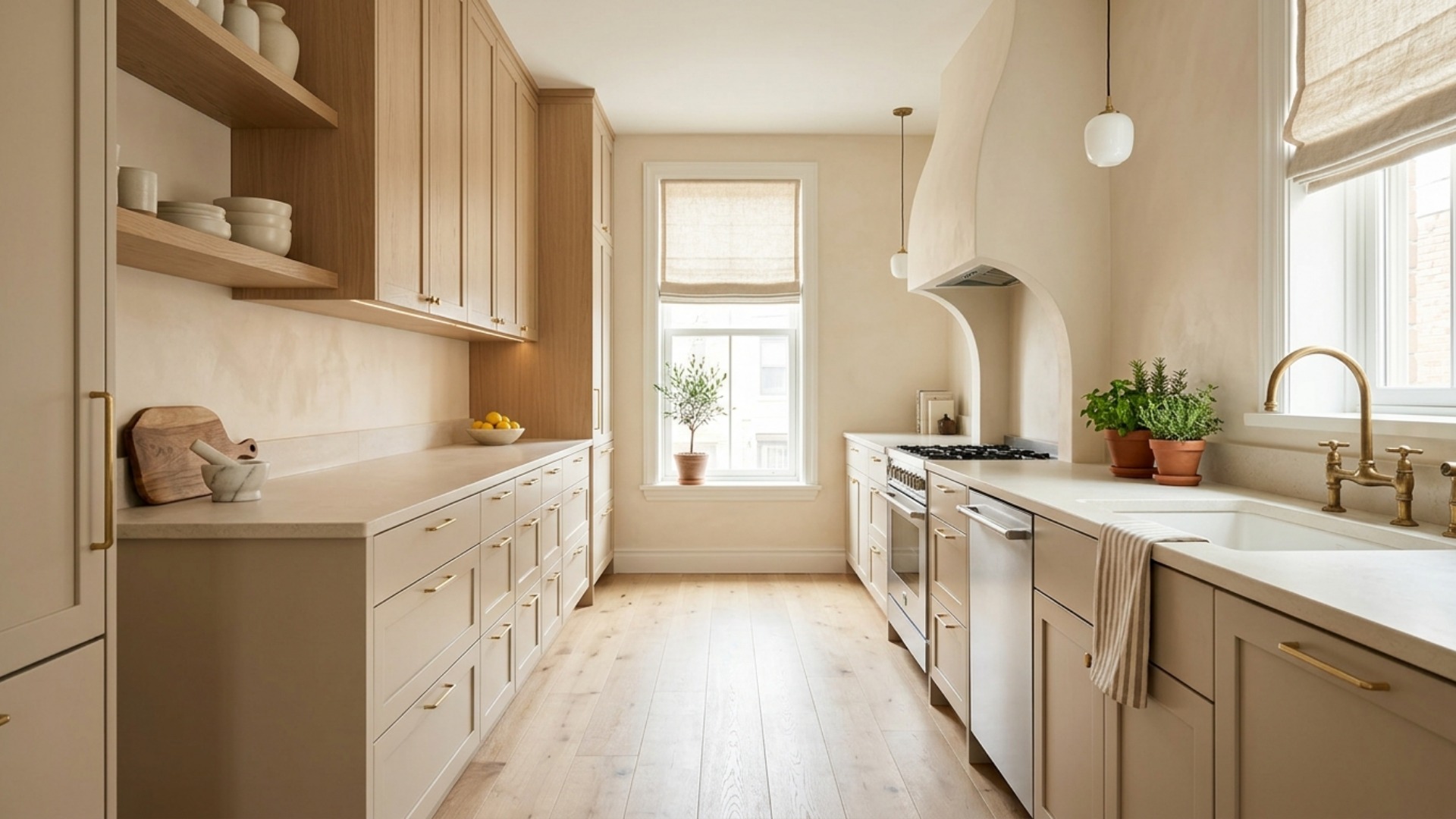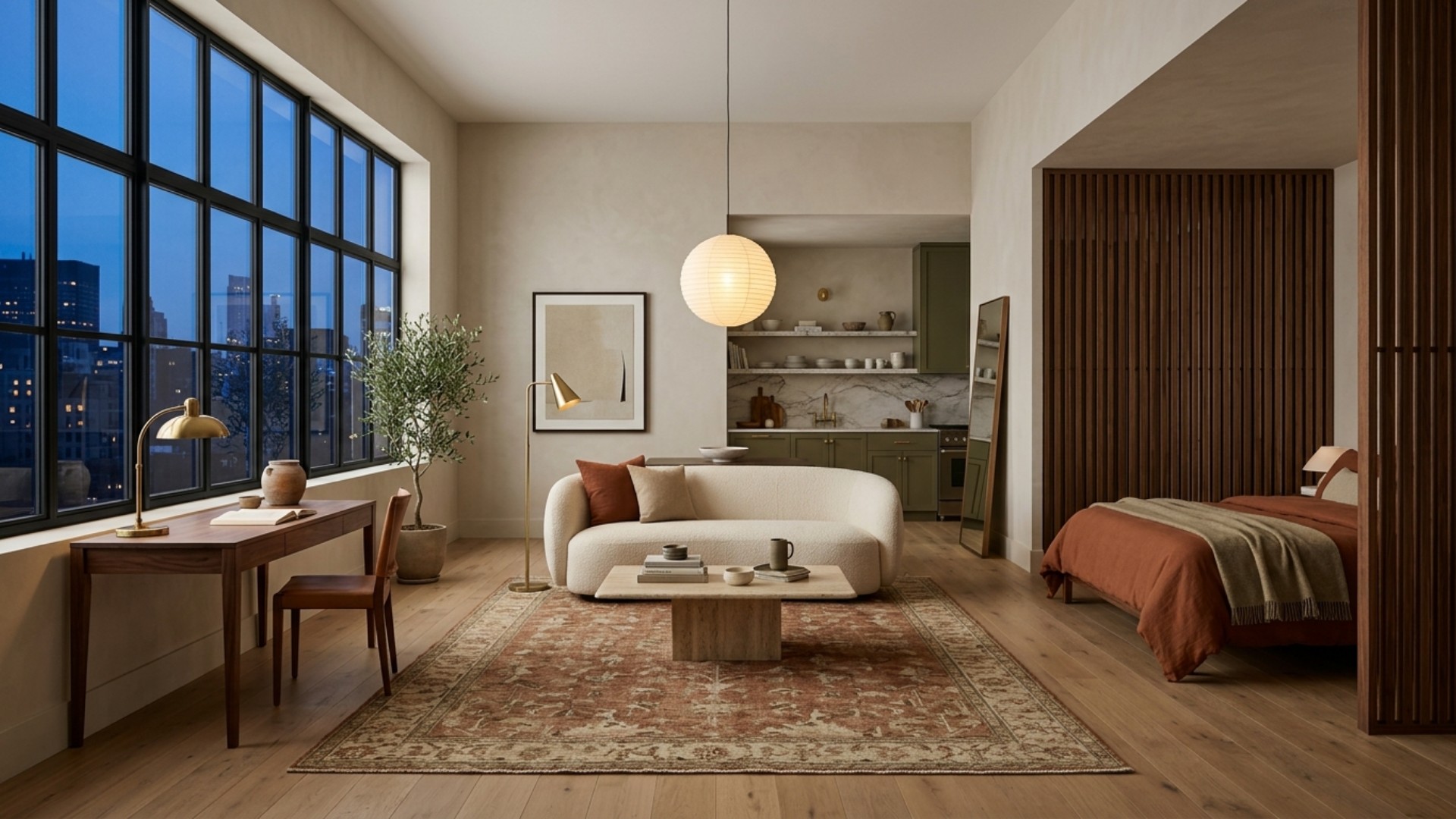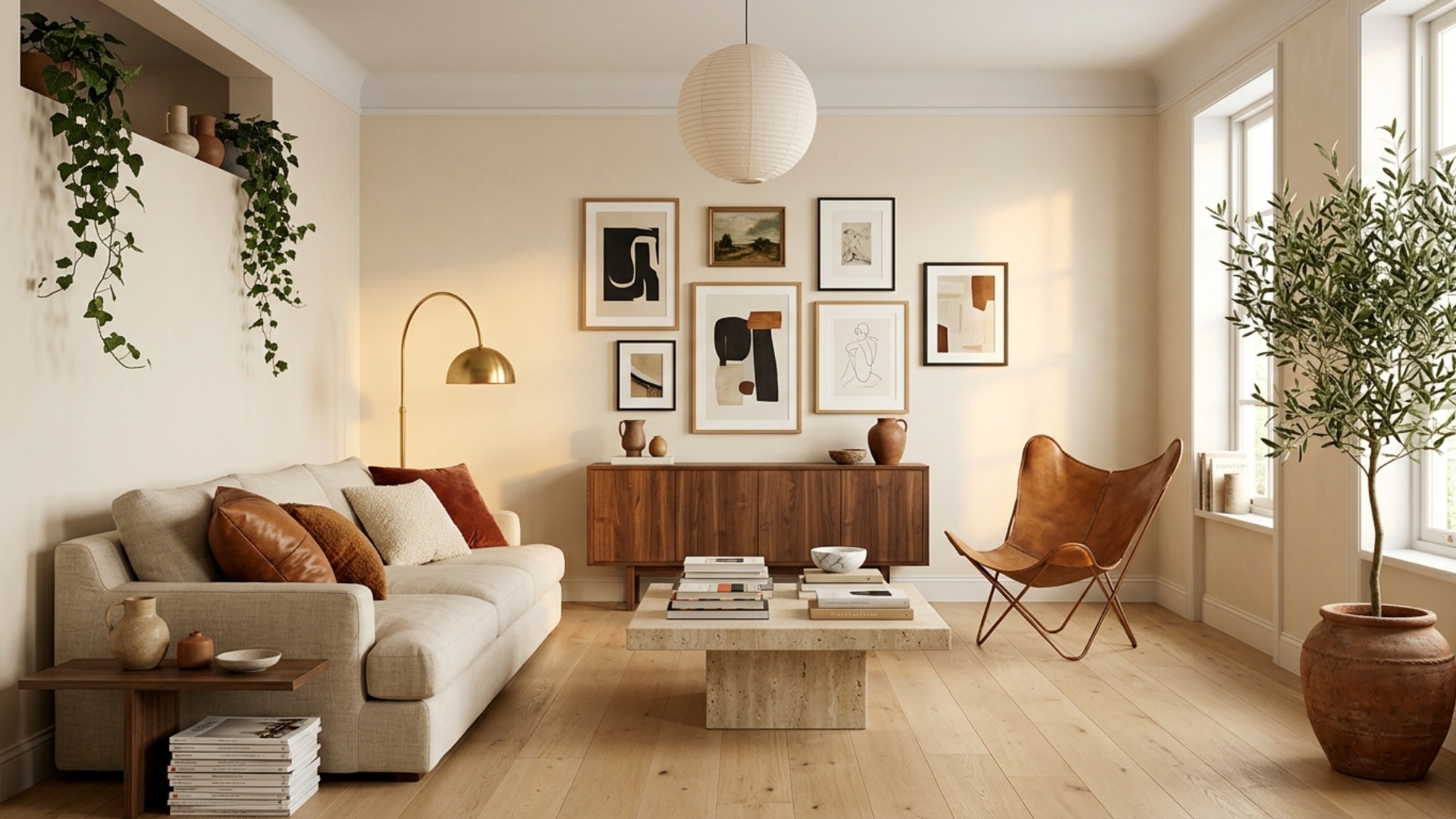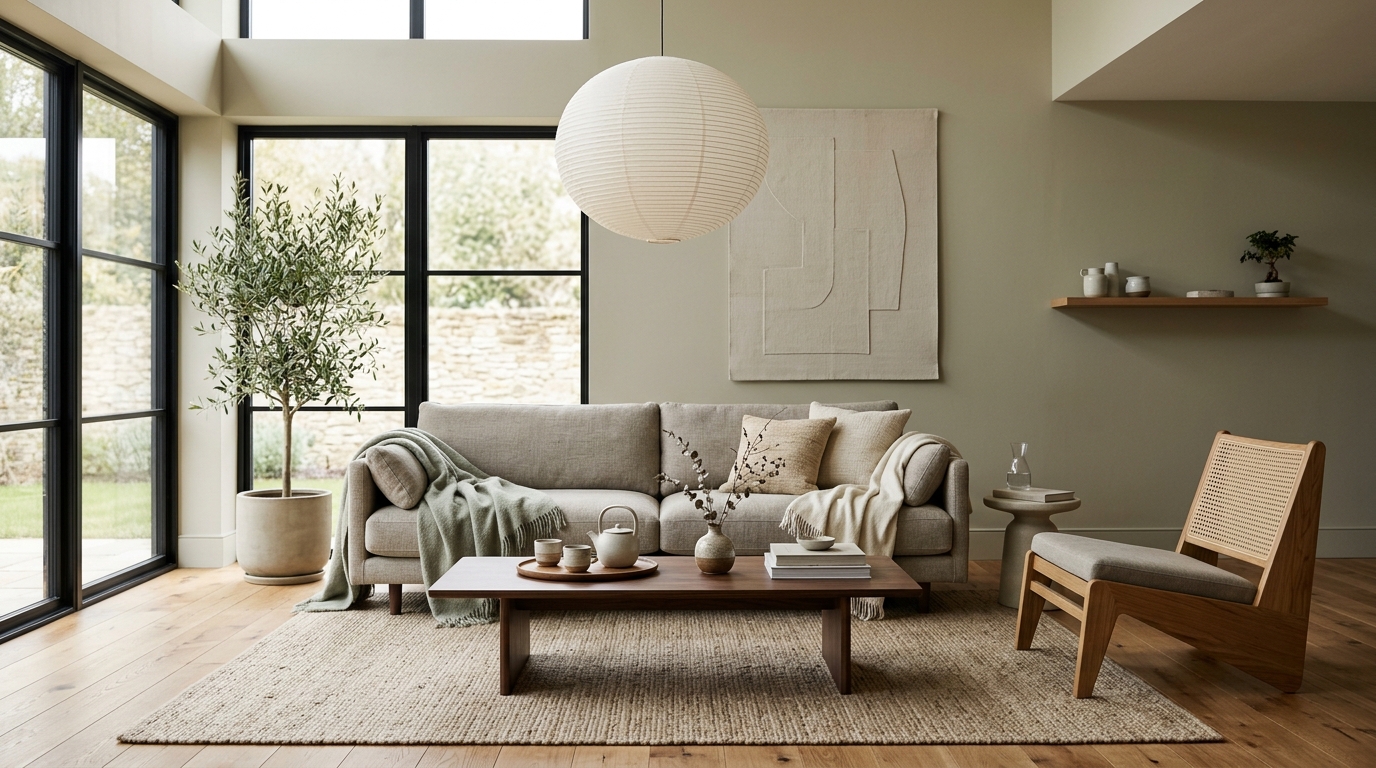
Somewhere between a Kyoto tea house and a sun-low Copenhagen apartment, a third room quietly appeared. It has the bare-boned serenity of Japanese design and the soft, sock-footed warmth of a Scandinavian winter, and it has a name that sounds like a portmanteau because it is one: Japandi.
It is the most grown-up look in interiors right now, and also one of the most forgiving. Japandi rewards restraint over shopping sprees, patina over polish, and a good long exhale over a busy gallery wall. It is the rare aesthetic that asks you to buy less and notice more. Below is what the style actually is, the palette and materials that make it hum, the lighting that gives it a glow, and exactly how to bring its calm-luxury mood into a room you already live in.
Wabi-Sabi Meets Hygge: What Japandi Actually Is
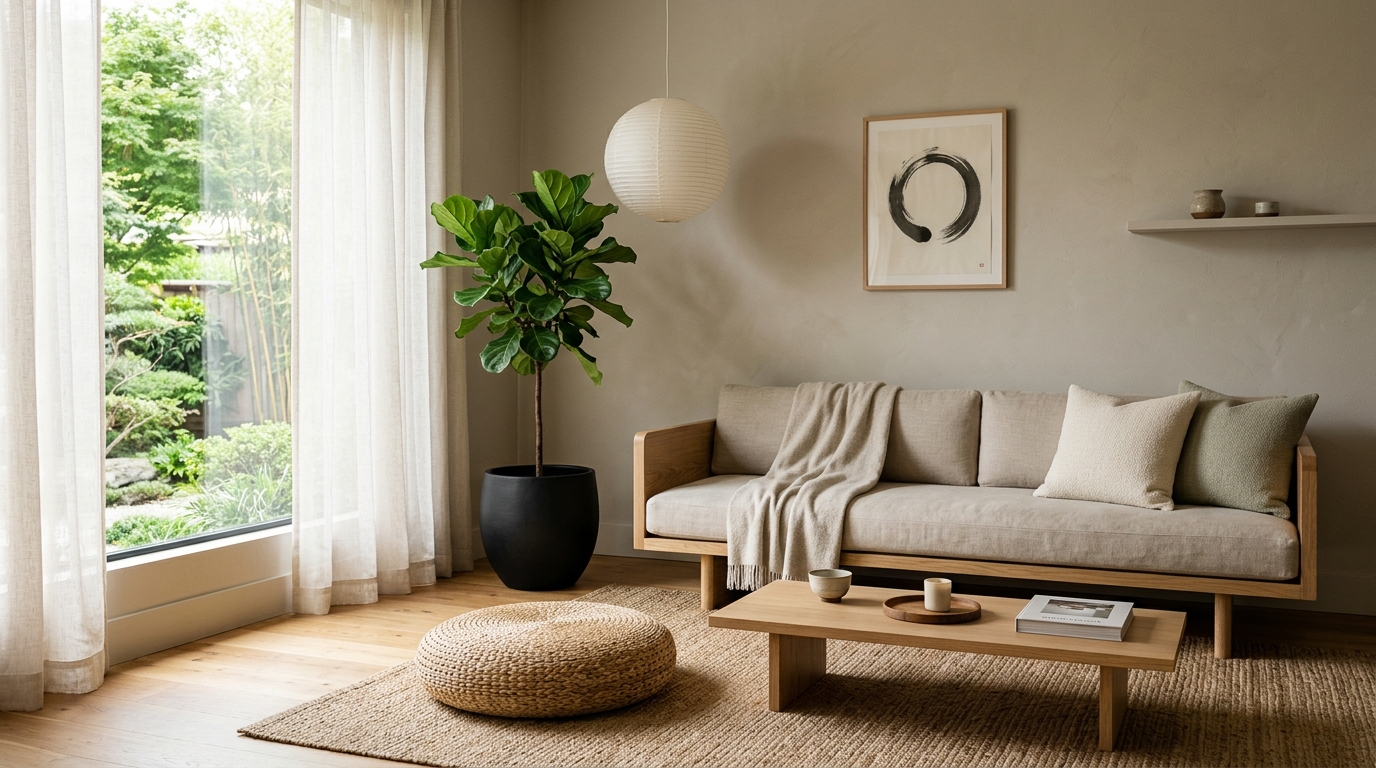
Japandi is the marriage of two philosophies that turn out to be soulmates. From Japan comes wabi-sabi, the appreciation of imperfection, impermanence, and the quiet beauty of a chipped bowl or a weathered beam. From Scandinavia comes hygge, that untranslatable coziness built on warmth, comfort, and good light. The word first circulated in the design press around 2019, but the conversation it describes is far older, and in 2026 it has matured into something designers now call "quiet luxury with purpose."
What that means in a real room: nothing is loud, but nothing is cold either. Where strict minimalism can read as a showroom nobody is allowed to sit in, Japandi is minimalism with a heartbeat. Every object earns its place, every surface invites a hand, and the whole space feels carefully edited rather than simply emptied out. The result is a home that photographs like a magazine but lives like a favorite sweater.
The Palette: Greige, Clay, and a Whisper of Charcoal
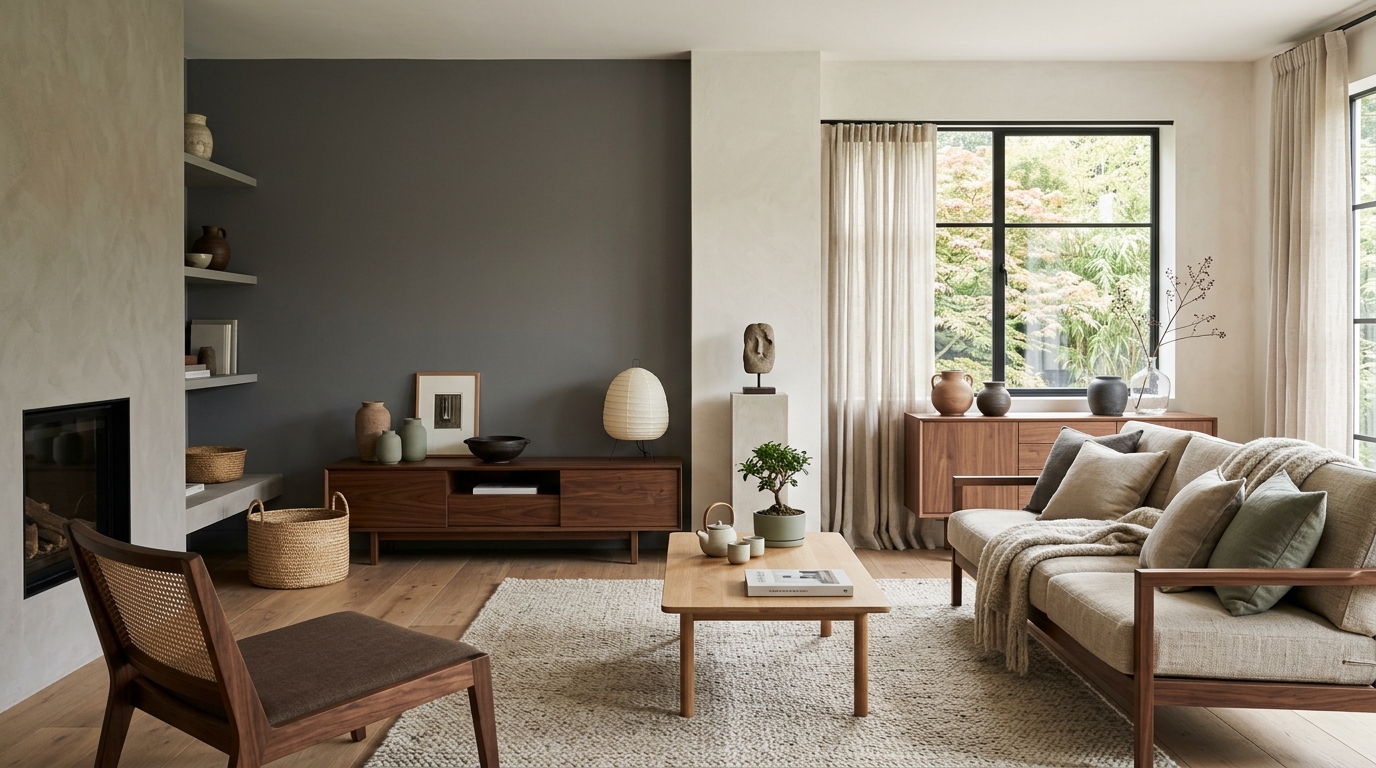
Color is where Japandi shows its discipline. The foundation is a grounded, earthy range: warm white, sand, greige (roughly the #C4B5A5 to #B8A898 zone, if you like your neutrals with a hex code attached), clay, muted sage, and soft charcoal. Choose three or four, then repeat them around the room until the scheme feels inevitable rather than decorated. A quick test: if you can name every color in the room in one breath, you are on the right track.
The bigger 2026 shift is toward depth. Pale oak and all-white schemes are giving way to walnut, espresso, and even Shou Sugi Ban, the Japanese technique of charring wood to a smoky, tactile finish. "Dark Japandi," built on inky walls and deep rust, is having a genuine moment. The trick is contrast with warmth: a charcoal wall reads luxurious rather than gloomy when it is wrapped in linen, wood, and low golden light.
Materials Tell the Truth
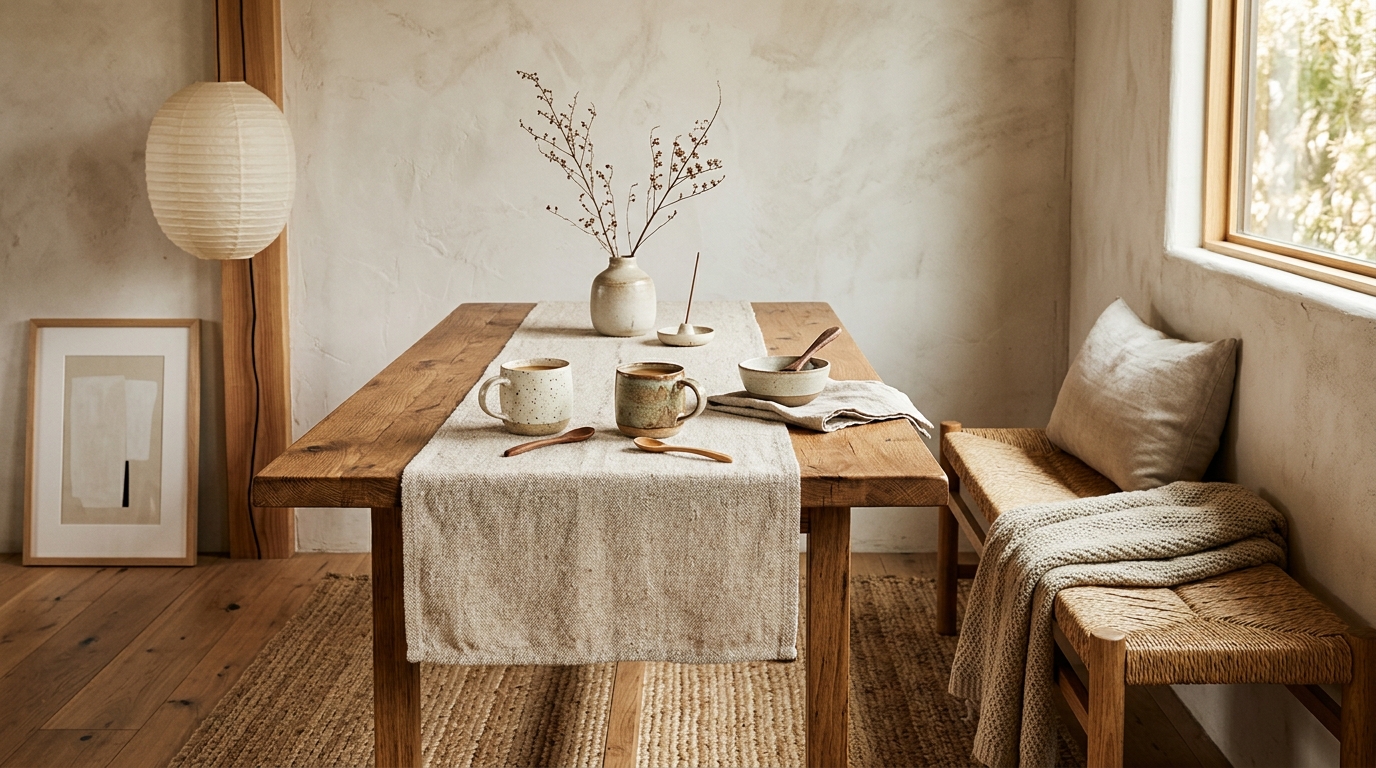
If Japandi has one non-negotiable rule, this is it: materials should be honest. Wood should look like wood, never lacquered, never high-gloss. White oak, with its honey tone and tight grain, is a house favorite, but any timber that wears its character openly belongs here. Around it, layer the naturals: linen and wool for softness, stone and clay for weight, ceramics and rattan for texture.
This honesty is what keeps a restrained room from tipping into austere. A terracotta-and-cream scheme sounds almost too simple until you build it from a nubby linen duvet, a hand-thrown mug, a jute rug, and a raw plaster wall. Same two colors, a dozen different textures, and suddenly the room has a depth you can practically feel with your eyes closed. Touch, it turns out, is the sense Japandi cares about most.
Low, Slow, and Full of Air
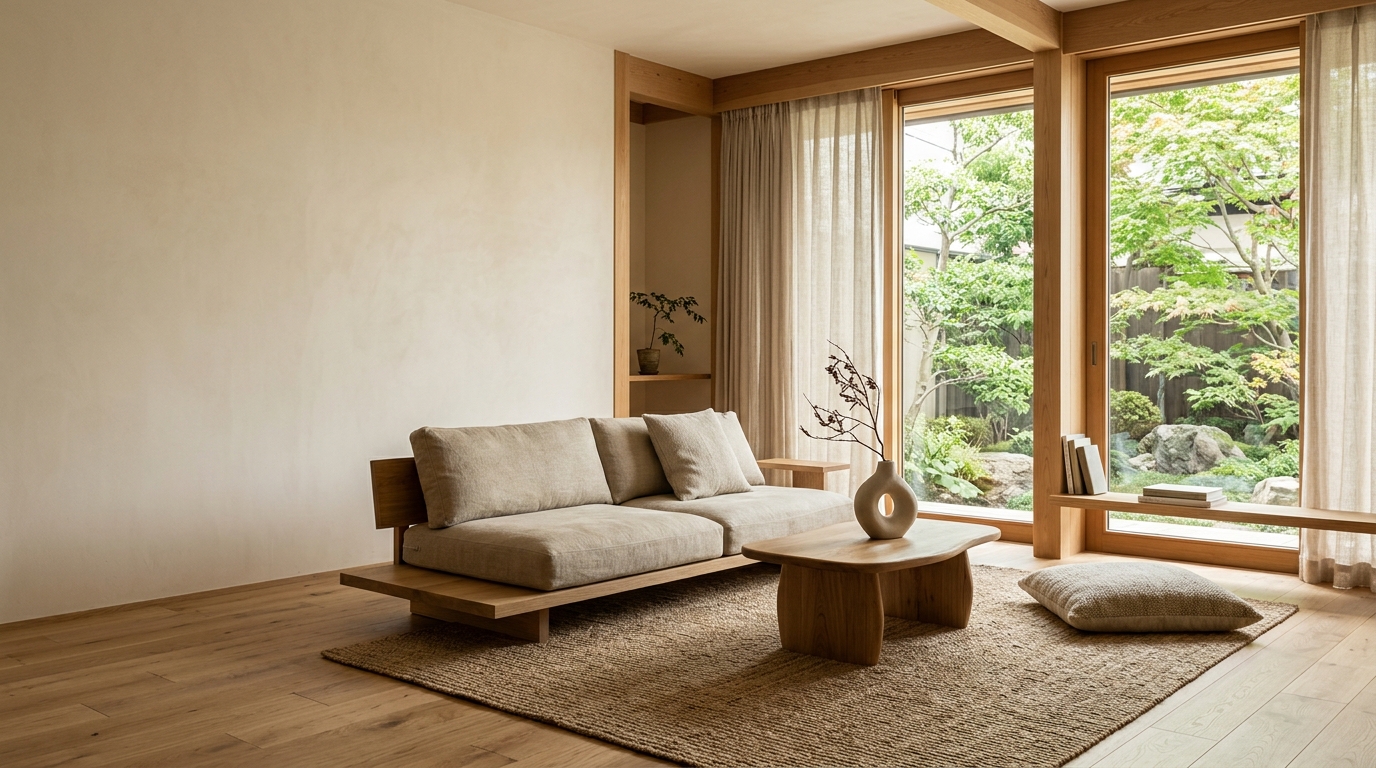
Japandi furniture sits close to the floor. Platform beds, low-slung sofas, and tables around 35 to 40 centimeters high pull the eye downward, which makes ceilings feel taller and rooms feel calmer. Silhouettes stay clean and slightly organic, with the occasional soft curve to keep all those straight lines from feeling severe.
Just as important is what you leave out. The Japanese concept of ma, the beauty of negative space, is the quiet discipline that ties the whole look together. Aim for one bare wall per room and no more than a handful of objects on any open shelf. Empty space here is not a gap waiting to be filled; it is part of the design, and arguably the most sophisticated part. Give your best pieces room to breathe and they will thank you by looking twice as considered.
Lighting the Japandi Way
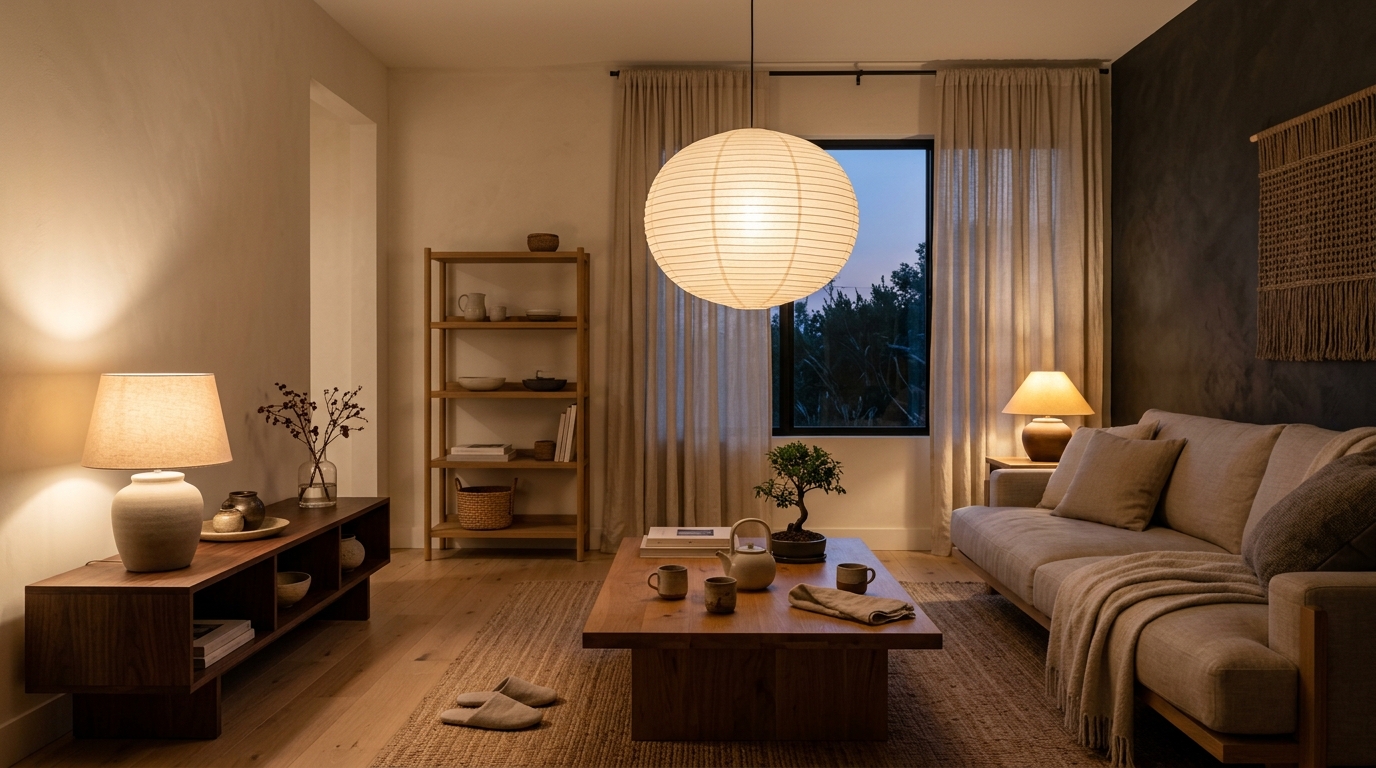
Overhead glare is the sworn enemy of calm, so Japandi lights a room in soft, warm layers instead. Think 2700K bulbs, table lamps at eye level, and the quintessential rice-paper pendant, a Noguchi Akari lantern or one of its many descendants, casting a diffused glow that flatters every material in the room.
Build light the way you build texture: in gentle overlaps rather than from one bright ceiling source. A paper pendant, a low lamp, a single candle, and a slice of afternoon sun through a linen curtain. Put the important lights on dimmers so the room can shift from morning clarity to evening hush. The goal is a space that feels like early evening even at high noon, the hour when everything and everyone looks their best.
Japandi, Room by Room
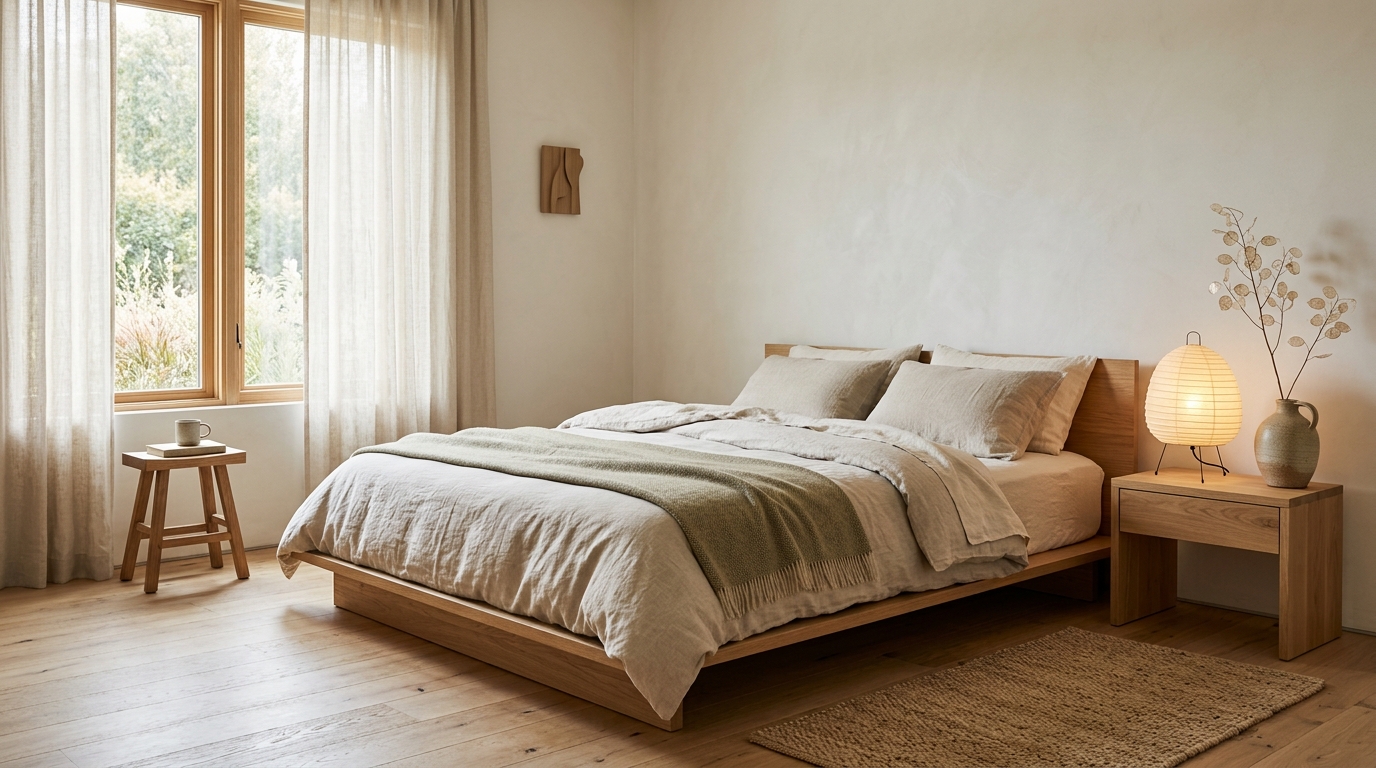
The style flexes beautifully depending on where it lands. A Japandi bedroom is arguably the purest expression: a low platform bed dressed in stonewashed linen, a paper lantern on a dimmer, a single ceramic vessel, and a floor left mostly bare so the morning feels unhurried. It is a room built for sleep and slow coffee, not for storing your whole life.
A Japandi living room does more work, so it leans a touch warmer and more layered. Anchor it with a low oak or walnut coffee table, a linen sofa, a jute or wool rug, and one sculptural chair with a presence all its own. Keep the media clutter hidden, let a leafy plant or a bare branch stand in for artwork, and the room reads as calm without ever feeling off-limits.
How to Get the Look at Home
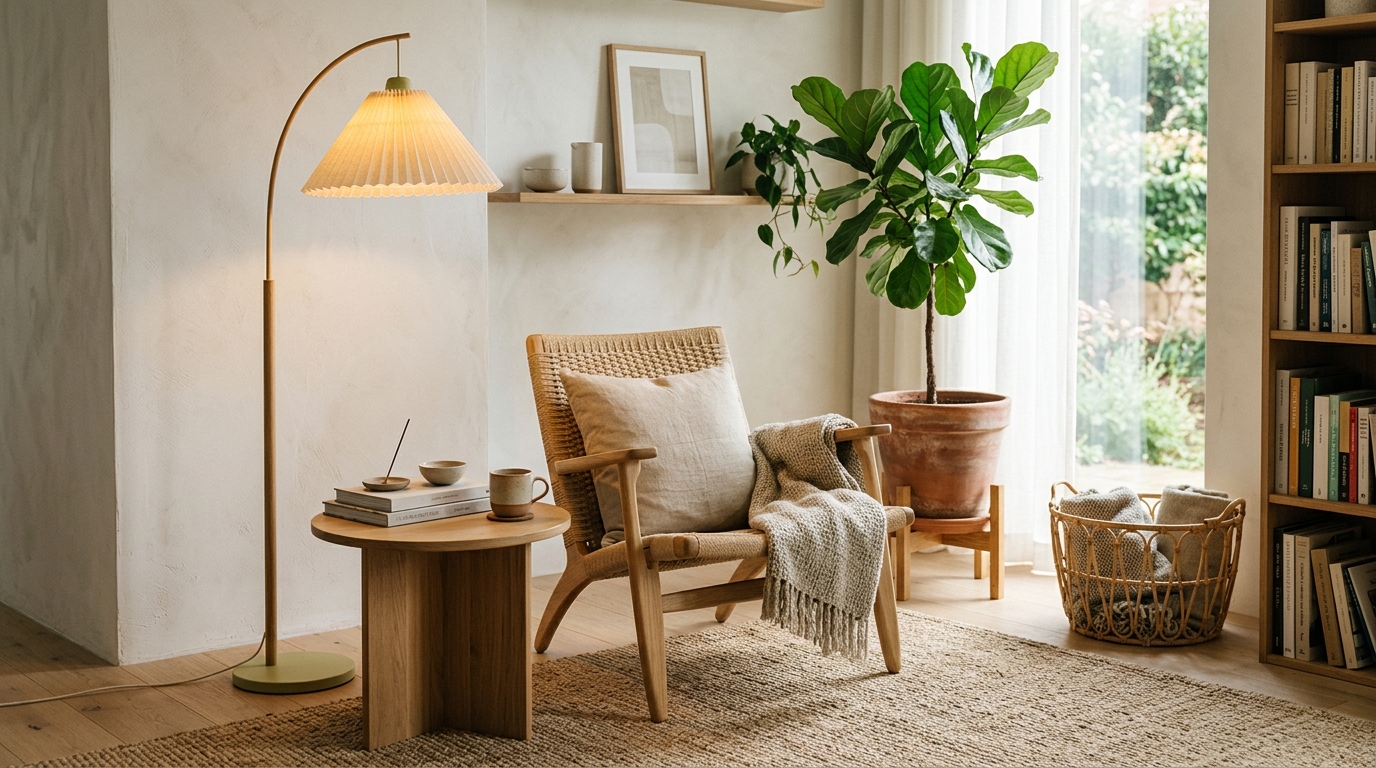
Start by subtracting. Clear the surfaces, edit the palette down to three or four warm neutrals, and only then add back the pieces that bring genuine texture or use. Swap one glossy thing for one matte, natural thing. Trade a harsh ceiling fixture for a warm lamp. Let one wall stay gloriously empty. Do favor low furniture, natural fibers, and a little handmade imperfection; do not chase a sterile, perfectly matched showroom or a palette that never warms up. Japandi is a slow style by design, and it always looks best assembled patiently over months rather than bought in a single frantic afternoon.
If you want to see your own room in this light before you move a single lamp, that is exactly what Framehouse is for. Upload a photo, watch your space reimagined in calm Japandi tones, then get the full design playbook to make it real, free to start.