A small room is not a problem to be solved so much as a puzzle to be charmed. The square footage is fixed, but how a room reads, whether it feels like a cozy nook or a cramped shoebox, is almost entirely a matter of tricks: light, line, scale, and a little sleight of hand. The happy news is that designers have been quietly bending these rules for decades, and not one of them requires knocking down a wall.
Here are nine of the moves the pros reach for first. Each one is low-risk, renter-friendly, and capable of adding visual square footage you did not know you had. Start with one, and watch the walls politely step back.
1. Paint in Pale, Light-Bouncing Tones
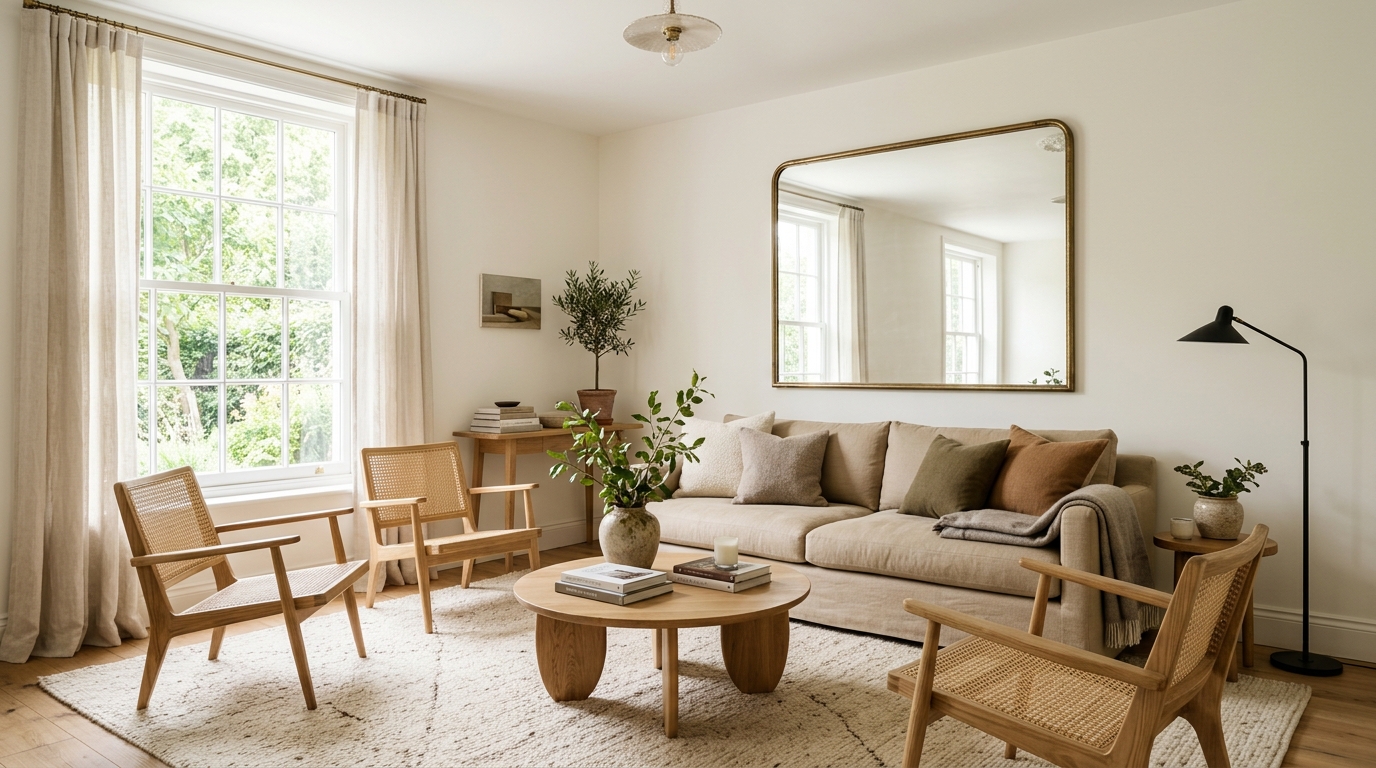
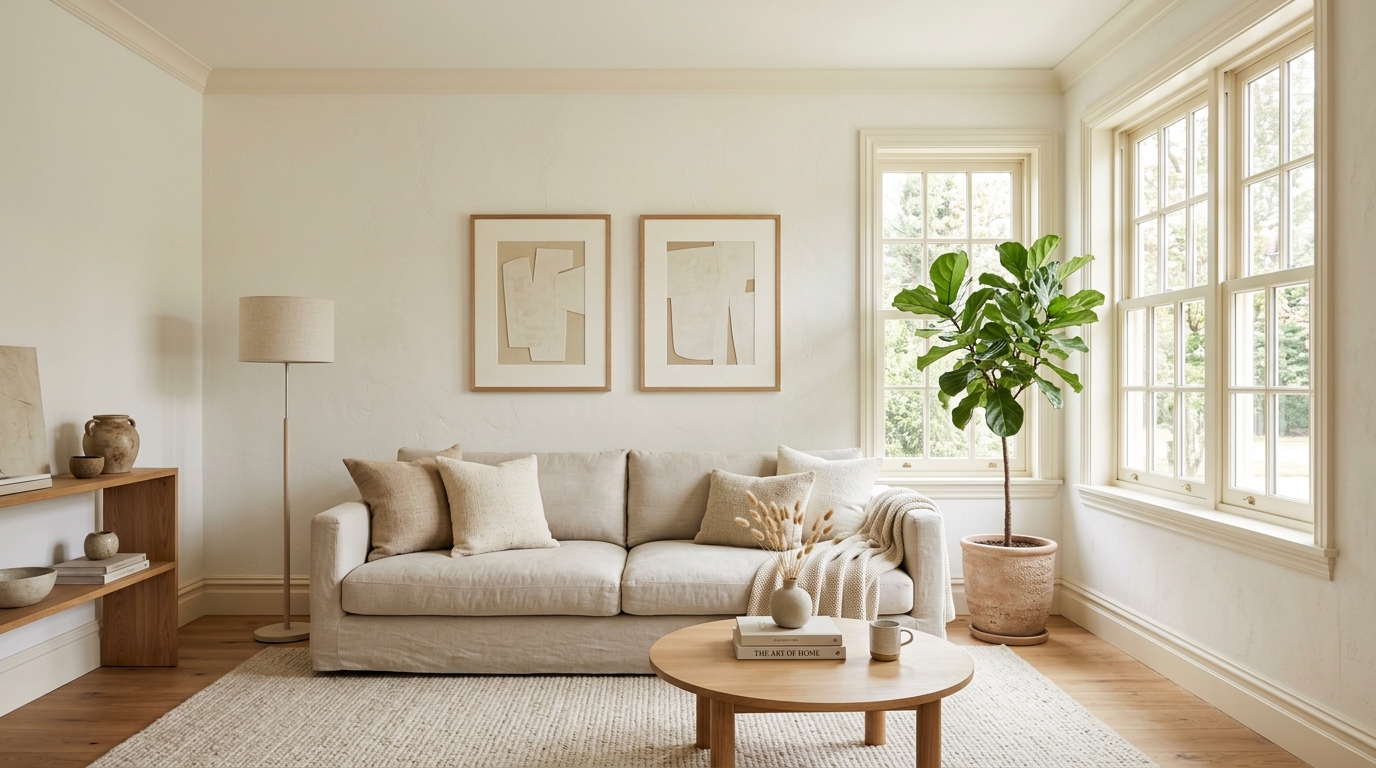
Color is the cheapest square footage you will ever buy. Soft whites, warm creams, greige, and pale putty reflect both daylight and lamplight, so walls appear to recede and corners quietly melt away. Dark, saturated shades do the opposite: they drink the light and pull the boundaries of the room inward.
For the most seamless effect, carry the same light tone onto the trim and even the ceiling. When walls and their edges blur together, the eye stops registering where one plane ends and the next begins, and the whole room reads as bigger and calmer than its footprint has any right to.
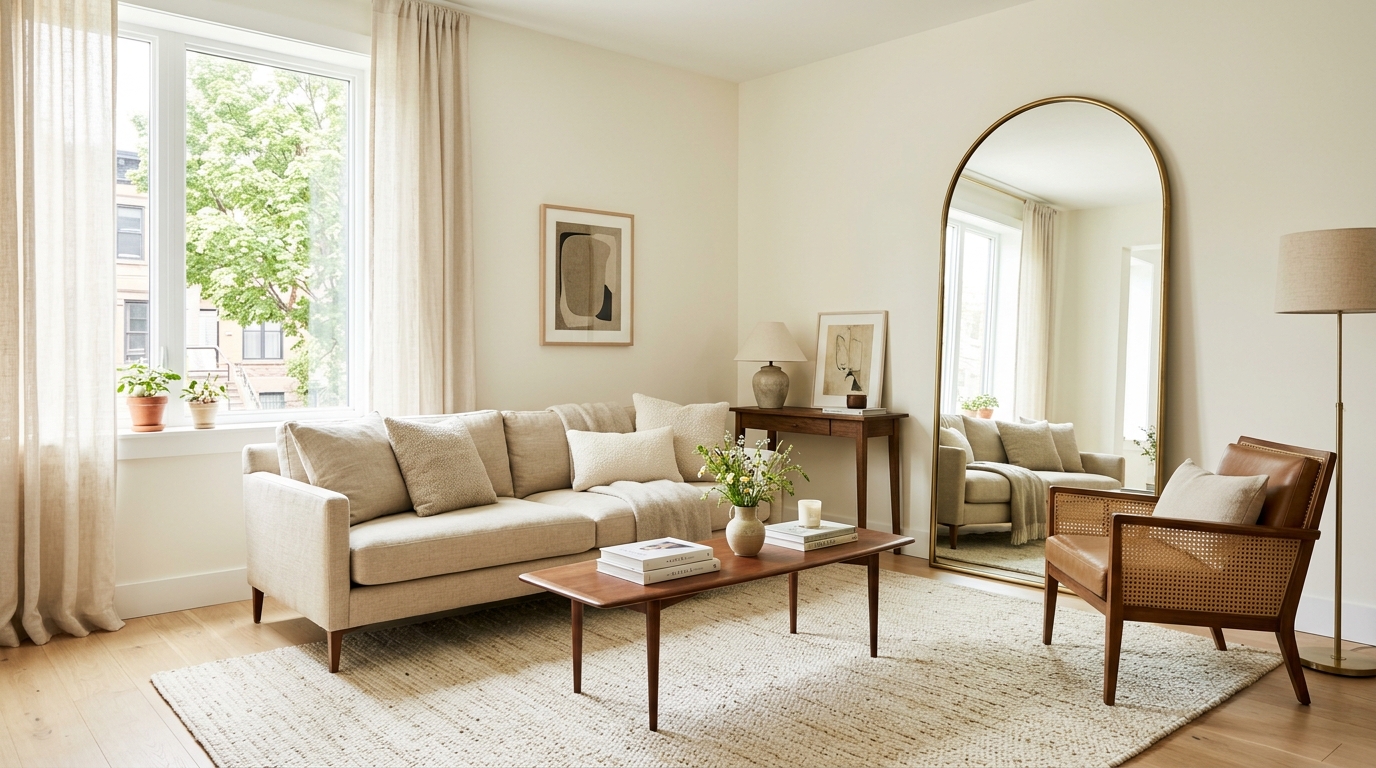
2. Hang One Big Mirror Across From the Light
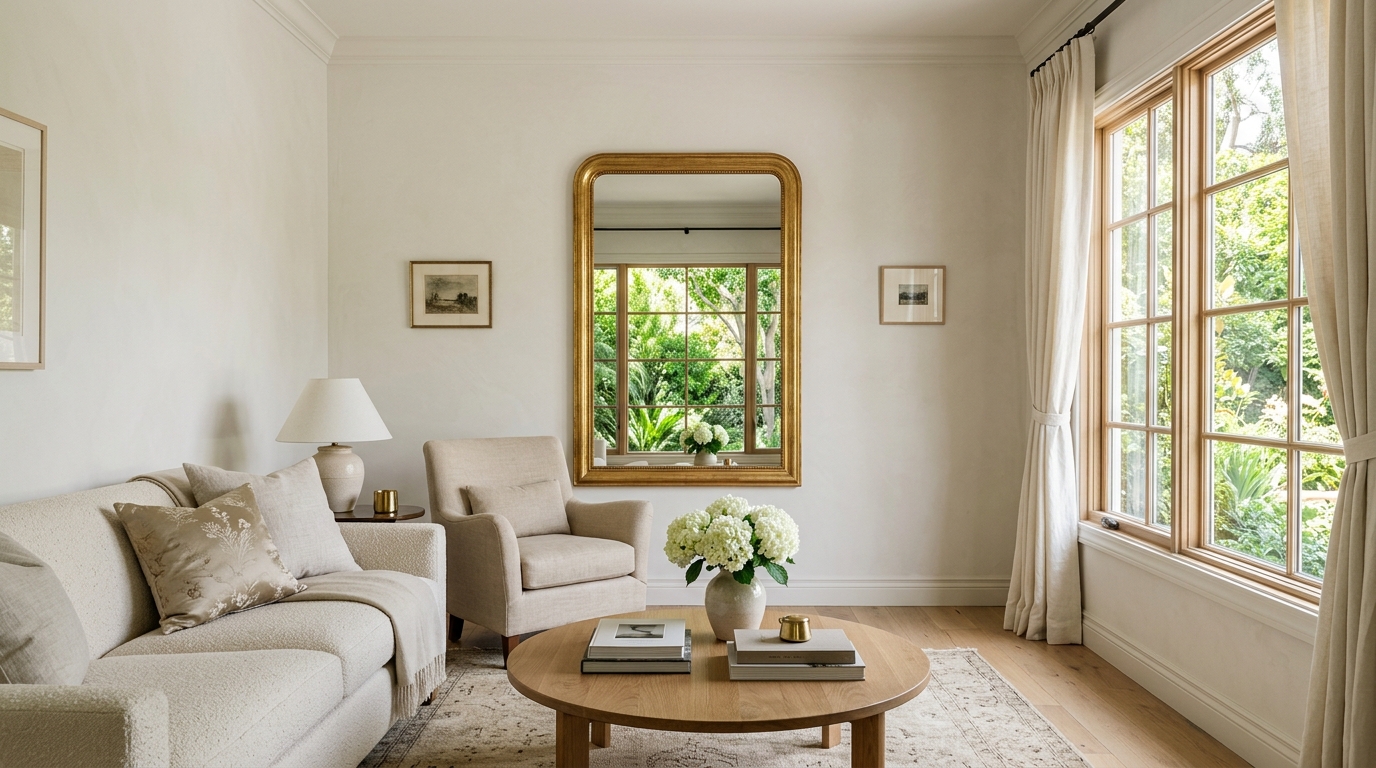
The mirror is the oldest trick in the small-space book, and it endures because it does two jobs at once. It bounces daylight deeper into the room, and it coaxes the eye into reading a reflection as more space to walk into. One generous mirror beats a scattered gallery of little ones every time.
Placement is everything. Position it directly opposite a window and it will double your natural light and hand you a second view for free. Lean an oversized floor mirror against a wall for instant height, or hang one above a console to stretch a narrow entry. Skip the tiny framed pieces; they only add clutter.
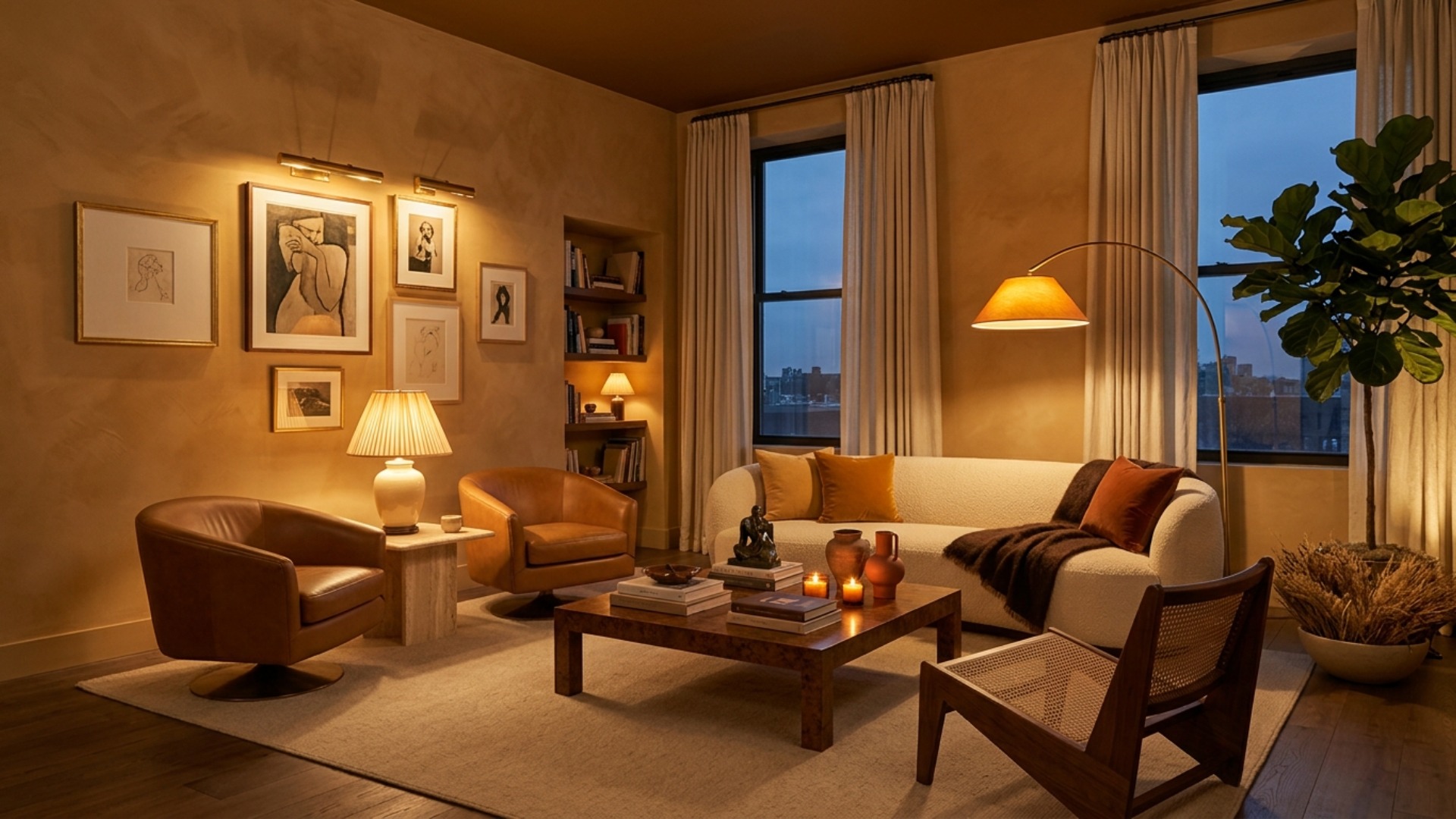
3. Layer Your Lighting Instead of Leaning on One Bulb
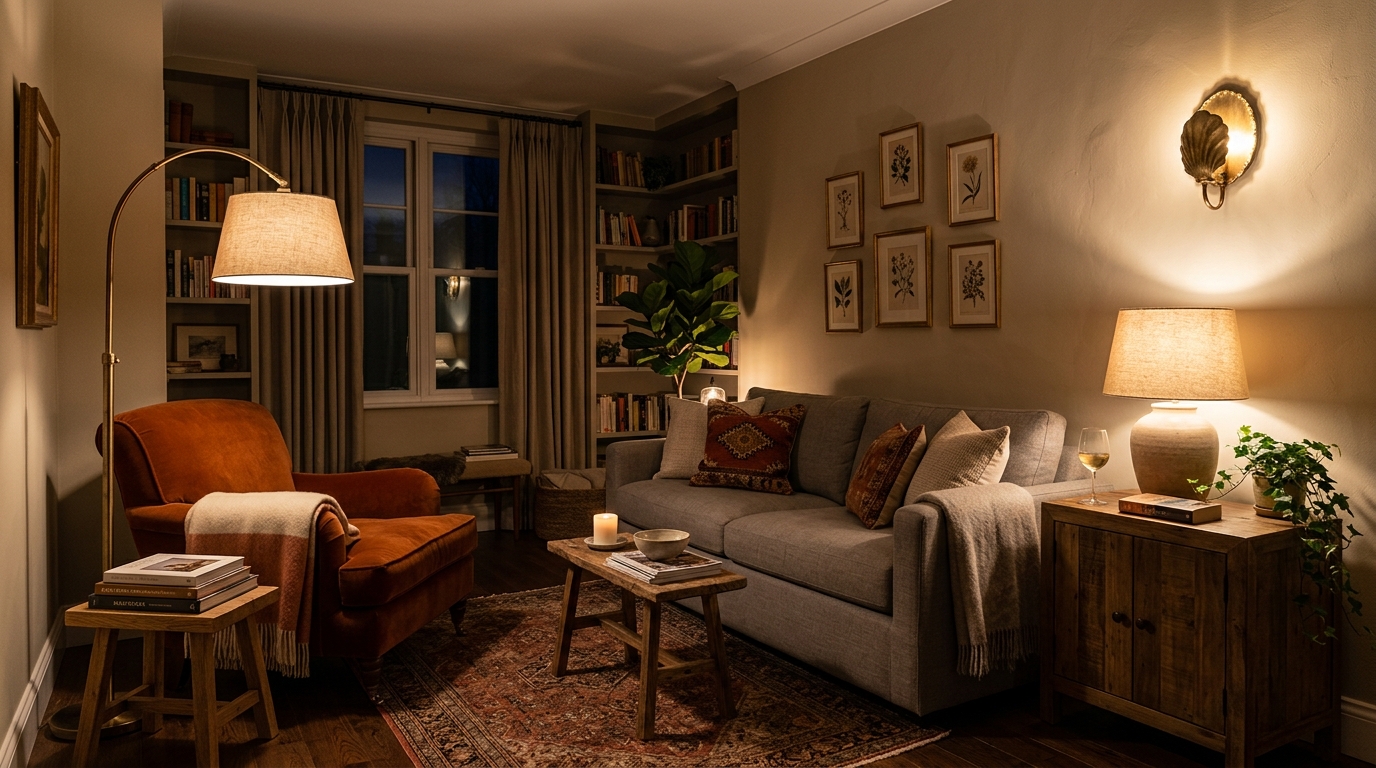
A single overhead fixture flattens a room and drops heavy shadows into the corners, and shadowy corners read to the brain as walls closing in. The remedy is layers: an ambient source up high, a table or floor lamp at eye level, and a little accent light to graze a wall or a shelf.
When light reaches every corner, the room's true edges reveal themselves and the space feels fuller and deeper. Warm bulbs around 2700K keep things inviting rather than clinical. Think of it as painting with light: the more evenly you spread it, the larger the canvas appears.
4. Choose Fewer, Larger Pieces
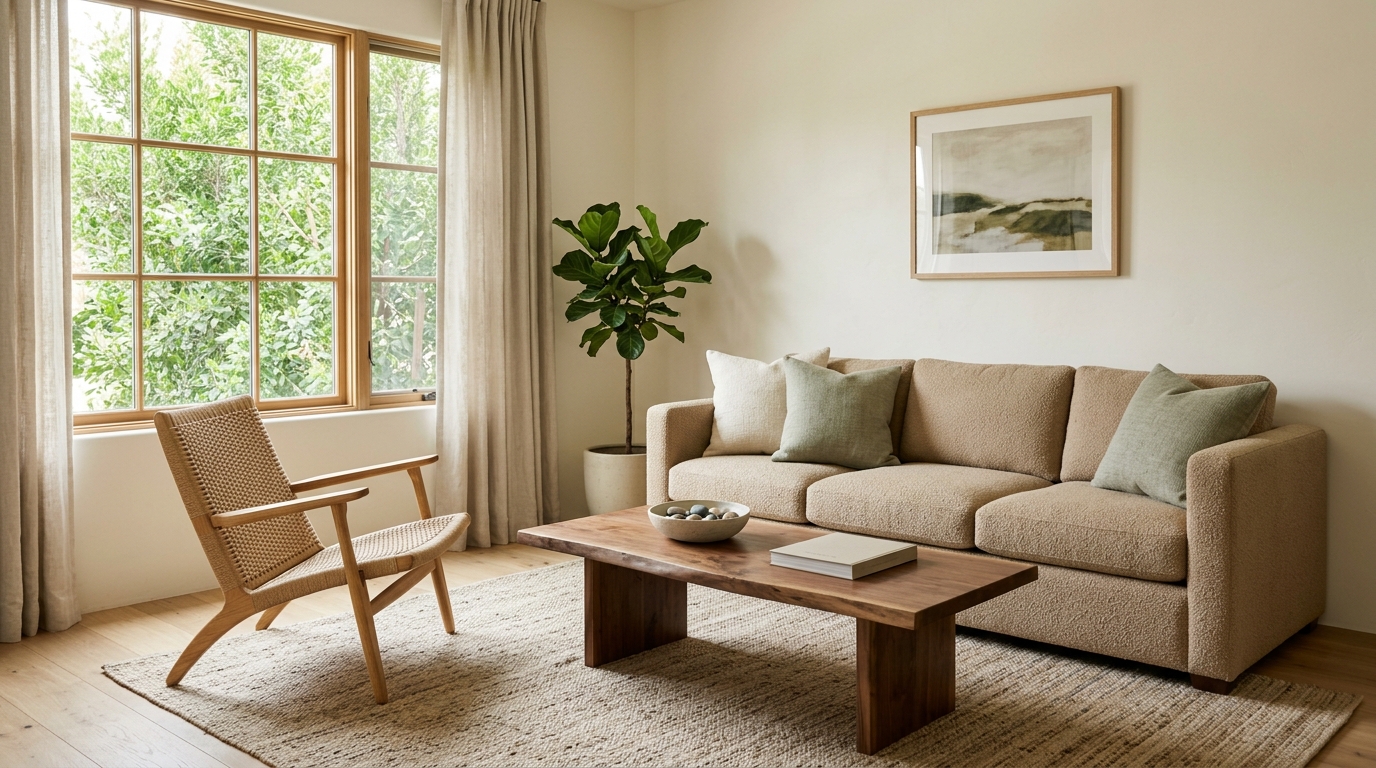
It sounds backwards, but a small room is far happier with a few well-scaled pieces than a scatter of tiny ones. A huddle of dinky chairs and dainty side tables chops the floor into a dozen little zones, and all that visual noise makes a space feel busier, and therefore smaller.
One properly sized sofa, one real coffee table, one considered accent chair: fewer objects mean fewer edges for the eye to trip over, and suddenly the room breathes. Buy for the room you actually have, not the dollhouse version of it. Restraint is the most spacious-looking decision you can make.
5. Let the Furniture Show Some Leg
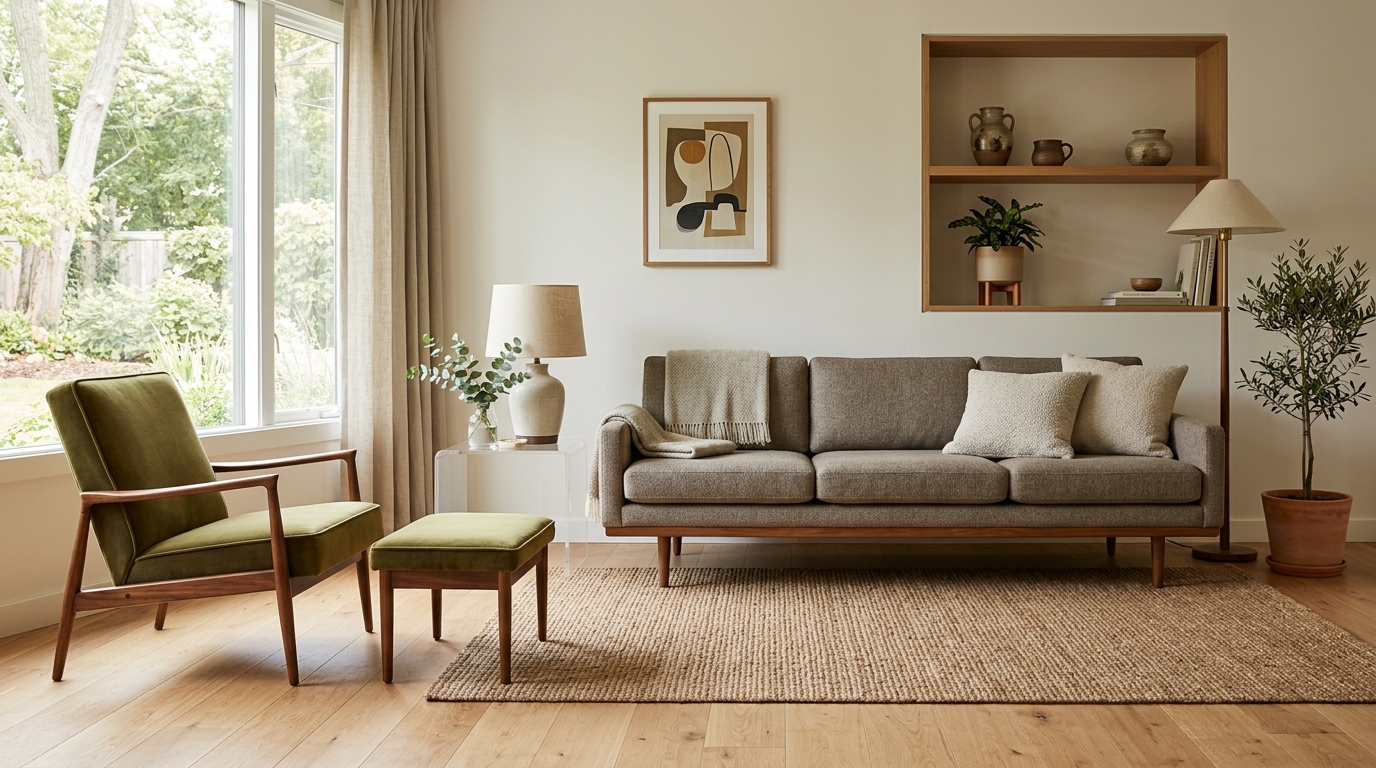
Pieces that sit on slim, exposed legs let the floor run visibly underneath them, and every inch of visible floor whispers to the eye that the room is bigger than it is. A skirted sofa or a boxy storage cube that meets the ground like a brick does the reverse: it plants a solid mass and stops the sightline cold.
Look for sofas, chairs, and consoles raised on tapered wood or fine metal legs, ideally under about 30 inches tall so they never crowd the space overhead. Glass and acrylic tables take the idea further, all but disappearing. The more floor you can see, the more room you appear to have.
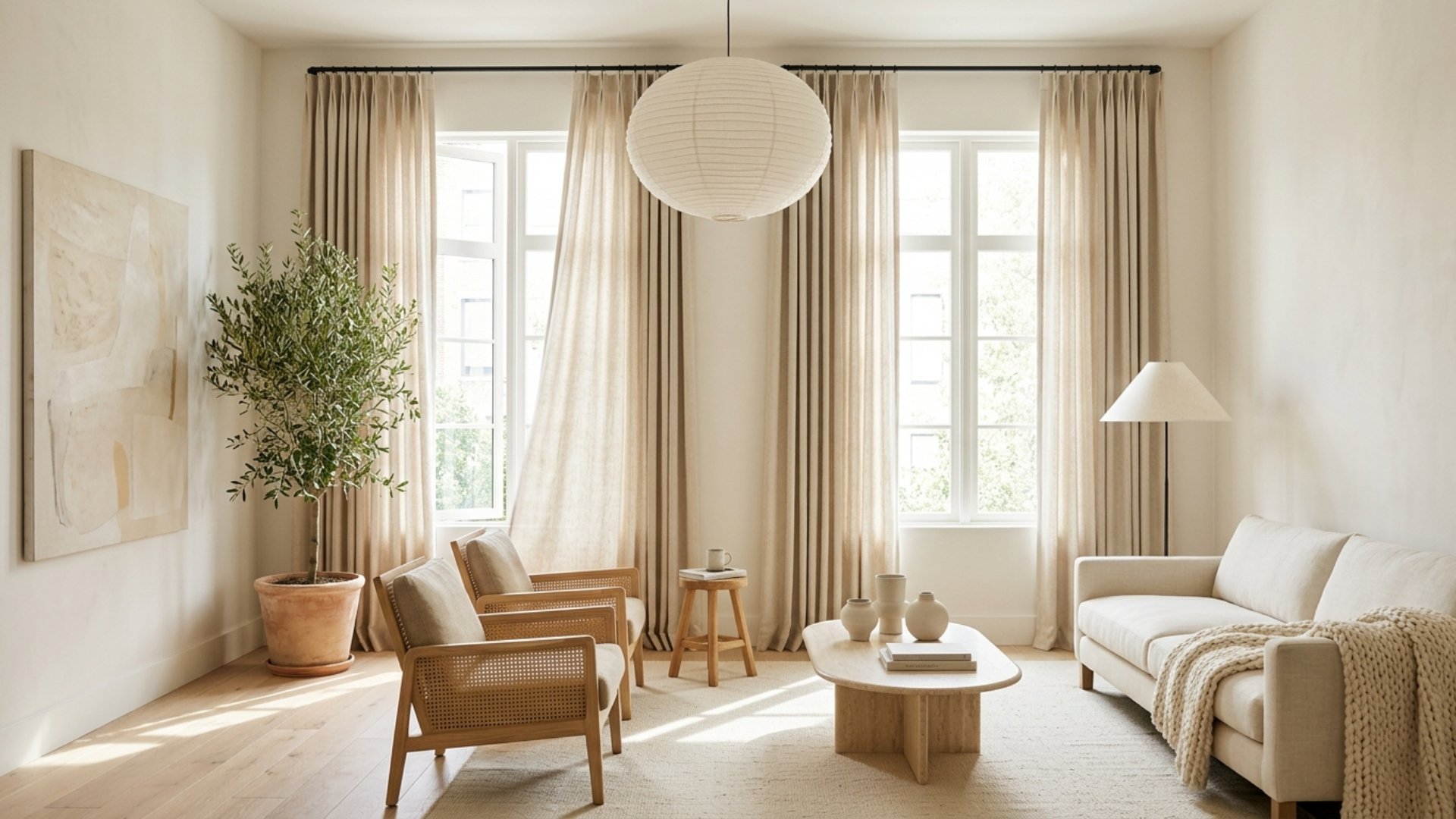
6. Hang Curtains High, Wide, and Airy
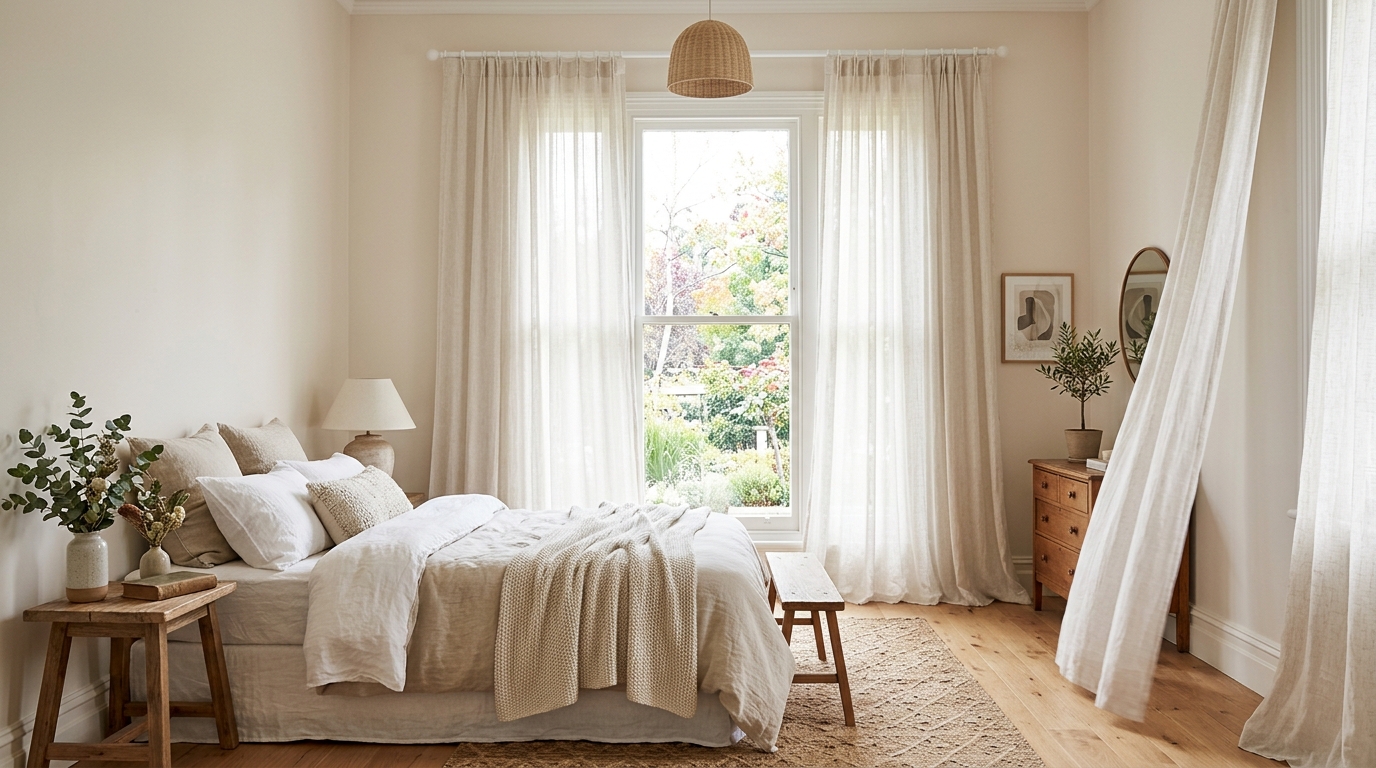
Mount the rod where most people do, an inch above the window, and you announce exactly how short the wall is. Mount it near the ceiling instead, six to twelve inches above the frame, and the eye travels up, ceilings feel taller, and the whole room stretches. Extend the rod a few inches past each side and the window looks wider and welcomes more light too.
Keep the fabric light and let it just kiss the floor. Sheer linens and pale cottons filter daylight without swallowing it, while soft vertical folds, and any subtle vertical stripe, reinforce that reassuring upward line.
7. Commit to a Tonal, Low-Contrast Palette
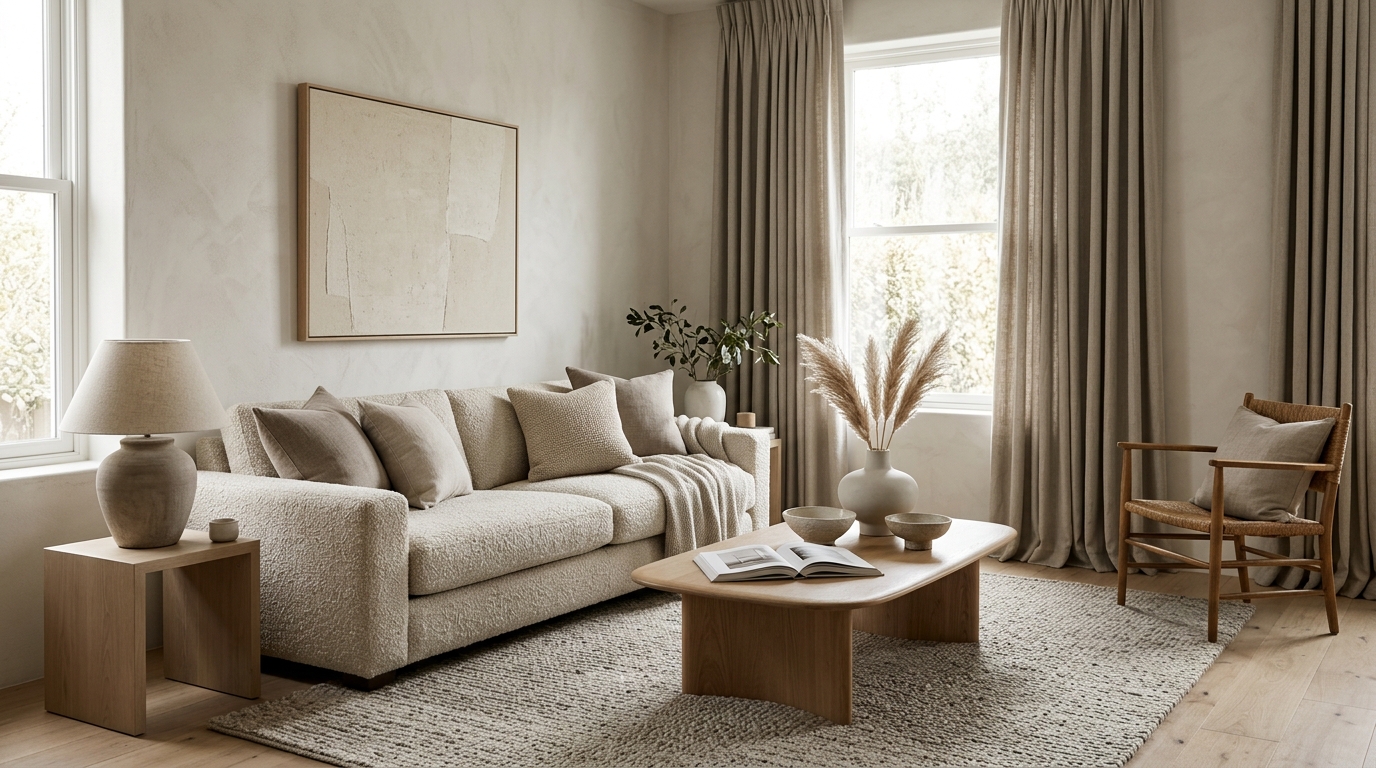
High contrast carves a room into pieces. A charcoal sofa against a bright white wall, a black rug on pale floors, and the eye keeps colliding with hard borders, reading each one as a boundary. A tonal palette, several shades of the same warm neutral or soft hue, lets surfaces flow gently into one another instead.
When your sofa, walls, rug, and drapes live in the same family, there is nothing to abruptly stop the gaze, so it glides across the room and the space feels continuous and calm. Build interest through texture rather than contrast: boucle, linen, oak, and matte ceramic keep a quiet palette from ever reading as flat.
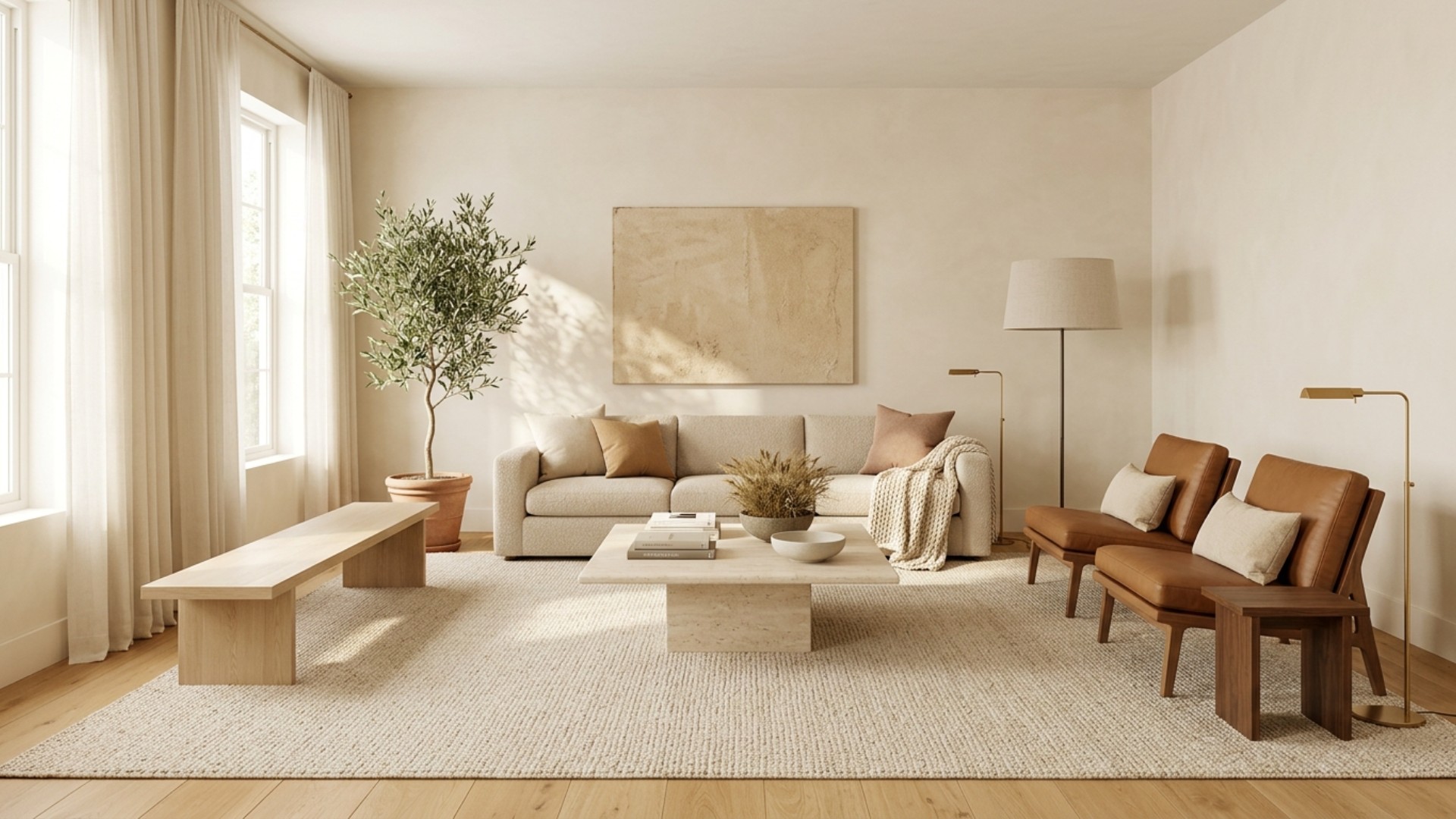
8. Size the Rug Correctly (Bigger Than You Think)
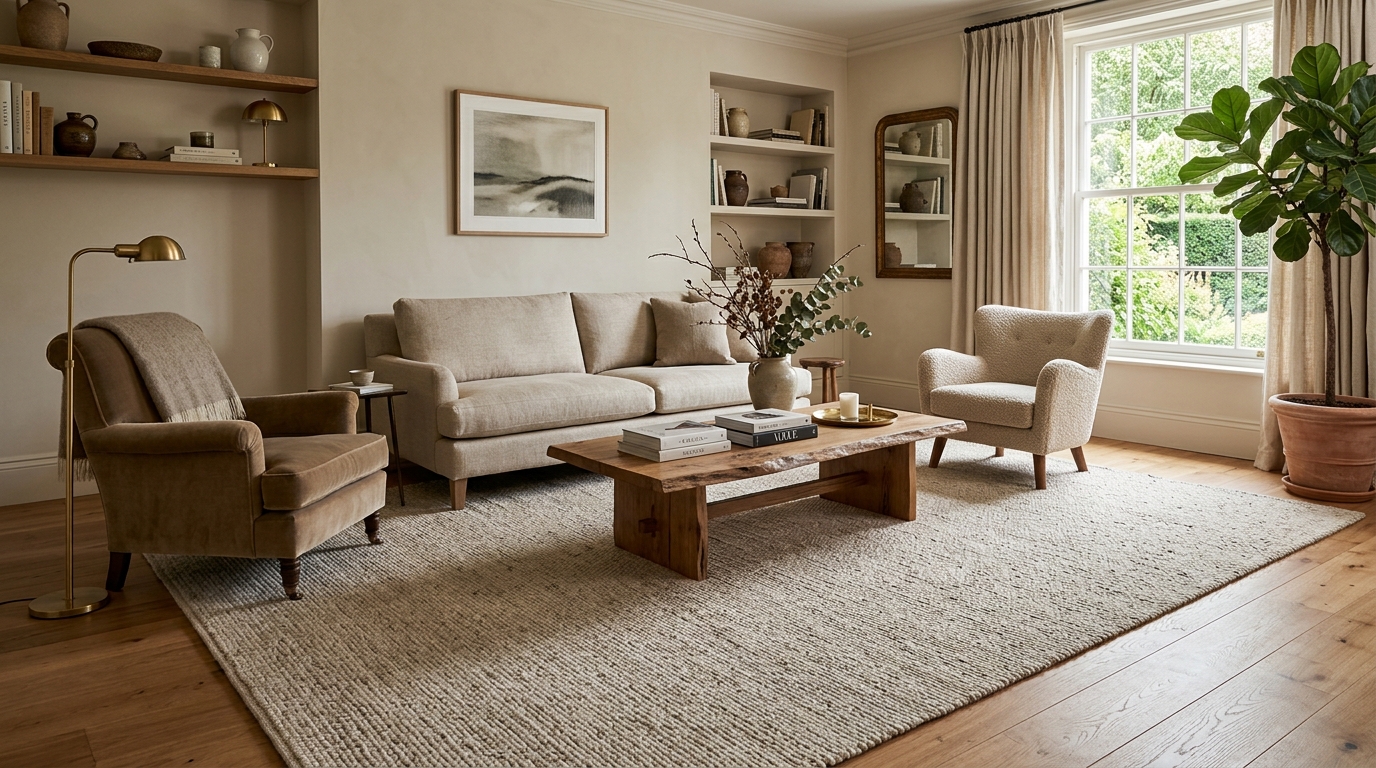
The single most common small-room misstep is a rug that is too small, a lonely little island of wool marooned in the middle of the floor. A postage-stamp rug shrinks the room by drawing a tight box in the center and shoving the furniture into an awkward huddle around it.
Go larger than instinct suggests. Aim for at least the front legs of every seat to rest on the rug, with its edges running close to the walls. A generously sized rug reads as one confident, unbroken plane, and that expanse of continuous floor makes the whole room feel intentional and, crucially, bigger.
9. Clear the Clutter and Free the Floor
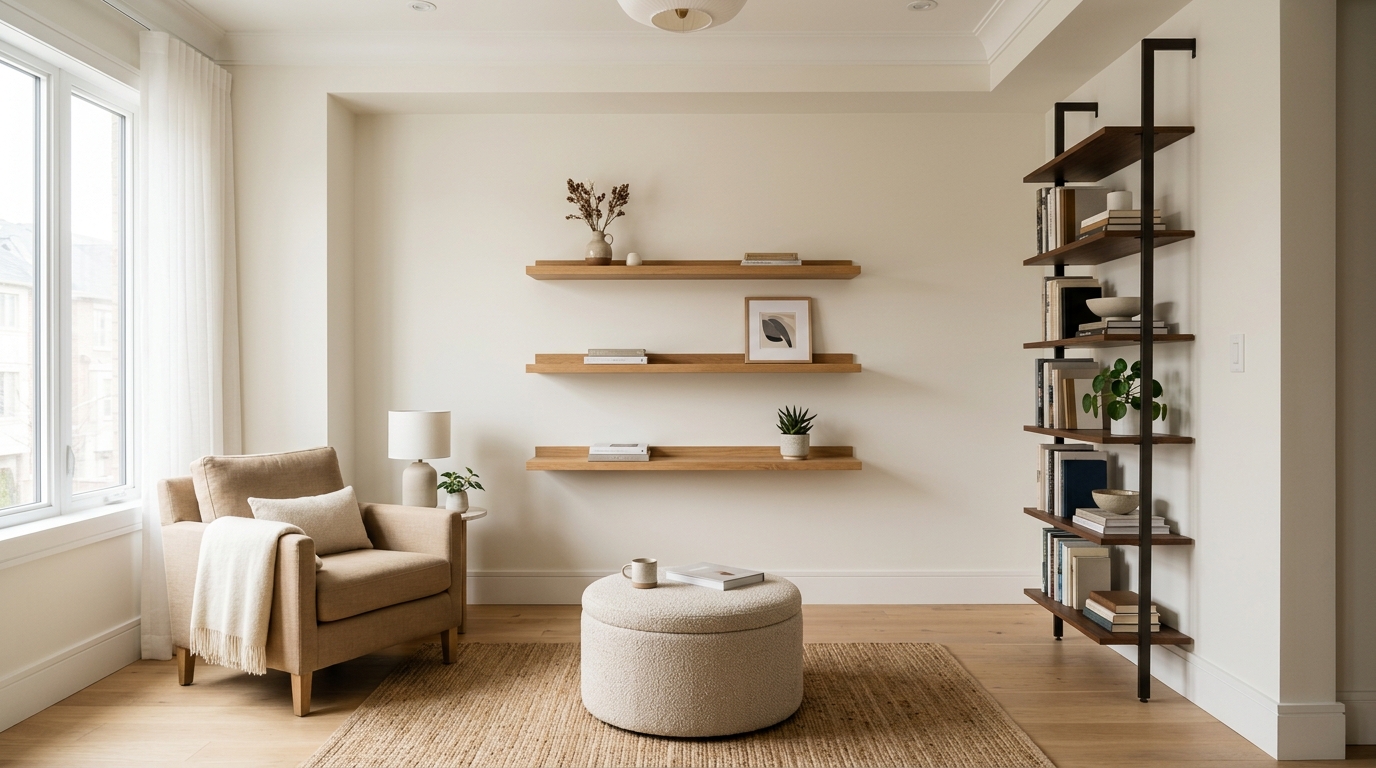
No trick on this list survives a cluttered room. Every object left out on a surface is one more thing for the eye to catalog, and a busy field of stuff reads as chaos, which the brain promptly files under "cramped." Editing is the most powerful spatial tool you own, and it happens to be free.
Get things up off the floor and onto the walls: floating shelves, a row of hooks, a slim vertical bookcase that draws the eye skyward. Choose double-duty pieces like a storage ottoman or a bed with drawers tucked beneath. The more uninterrupted floor and clear surface you leave on show, the more open, airy, and unmistakably larger the room becomes.
See It Bigger Before You Lift a Finger
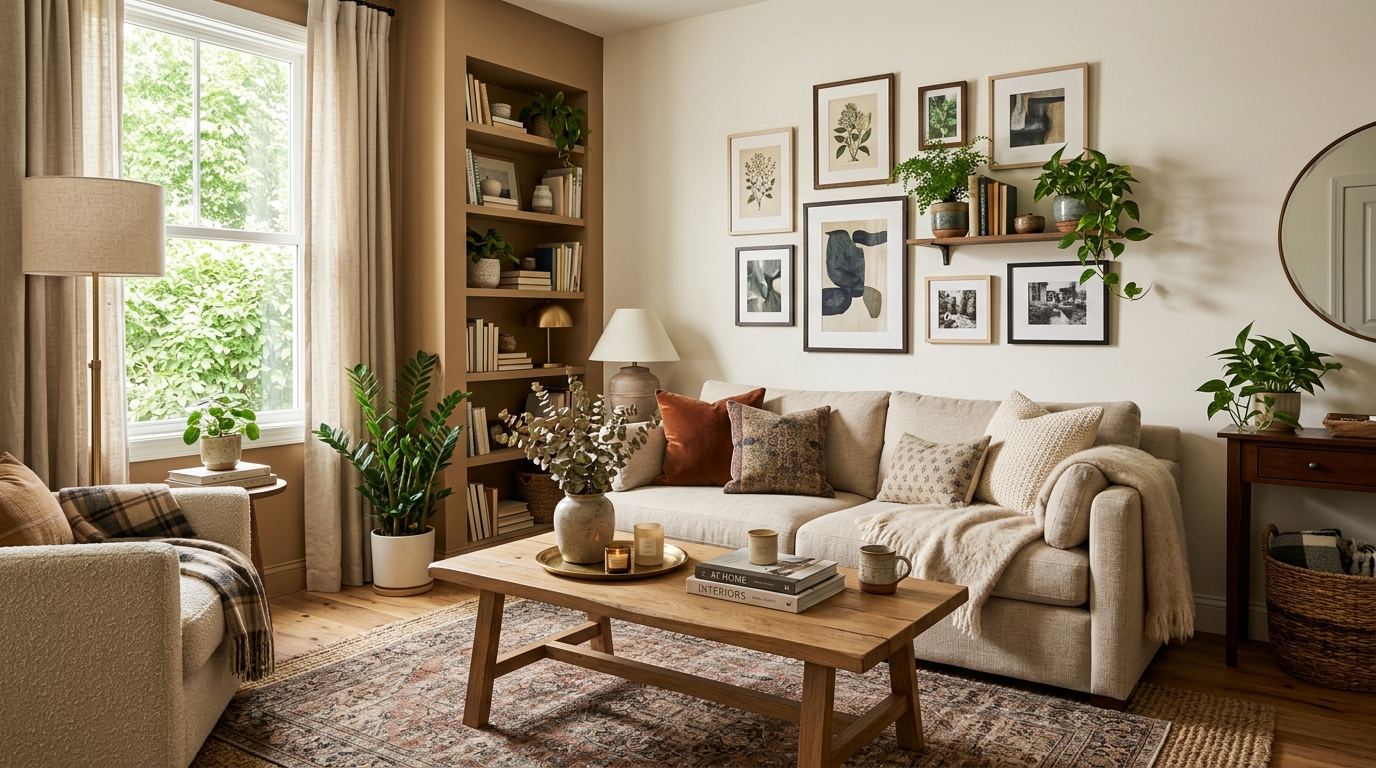
Here is the quietly radical part: you no longer have to guess whether a paler paint, a leggier sofa, or a properly sized rug will actually open up your room. You can see it first. Snap a photo of your space and Framehouse reimagines it in minutes, then hands you the full design playbook, the palette, the pieces, and the plan, so you can make the bigger-looking version real.