Quick answer: The cheapest retaining walls for a sloped yard are pressure-treated timber, interlocking concrete block, gabion baskets filled with local or recycled stone, and dry-stacked stone you already have. For a gentle slope, two or three short terraced walls cost less and look better than one tall wall. Most installed walls run about $15 to $35 per square foot of wall face for budget materials, and DIY can cut that roughly in half. Whatever you build, never skip gravel backfill and drainage, and check local rules for walls over about 3 to 4 feet.
A sloped yard is frustrating: the lawn washes out, mulch slides into the driveway, and half the space is unusable. A retaining wall fixes all three, but quotes can be scary. The national average to install one is around $6,300, according to LawnStarter's 2025 cost data, with most homeowners paying $3,500 to $9,400. The good news is that the right material, a smart layout and a weekend of DIY can bring that way down. Here are 17 cheap retaining wall ideas that actually hold, what each one costs, and how to see your finished slope before you buy a single block.
See the Retaining Wall in Your Own Yard First
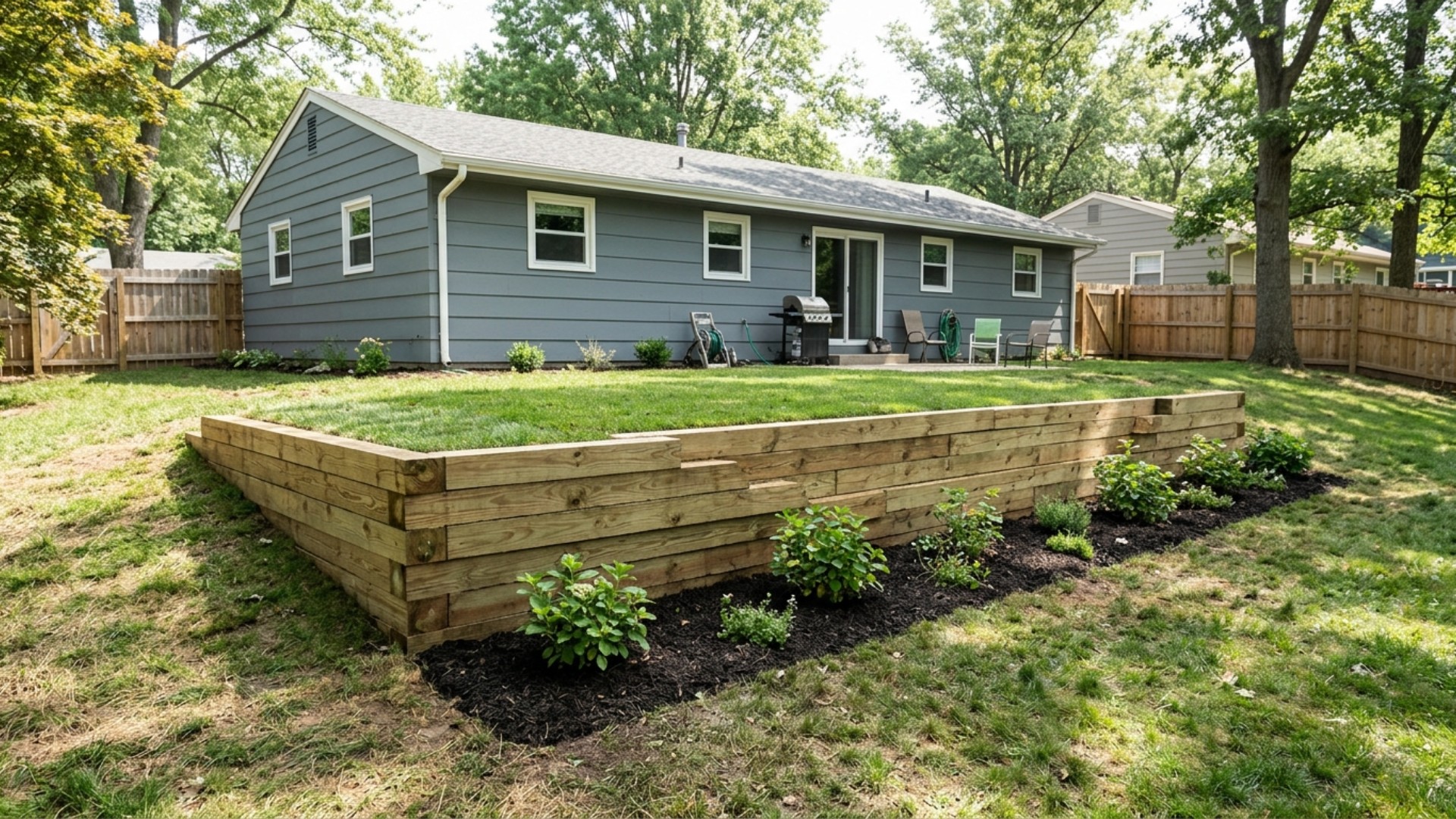
The hardest part of a retaining wall is not the digging. It is deciding where it goes, how tall it is, whether to terrace, and which material looks right next to your house. Framehouse lets you see it before you commit.
Take one photo of your slope and type what to keep and what to change, like "keep the house, driveway and maple tree, add two terraced timber retaining walls with gravel steps and lavender planting." In seconds you see your actual yard with the wall built. Then compare block, stone and gabion versions side by side. Start a 3 day free trial, then $9.99 a week or $59.99 a year, on iPhone, iPad and the web.
Ask Framehouse Chat About Your Slope
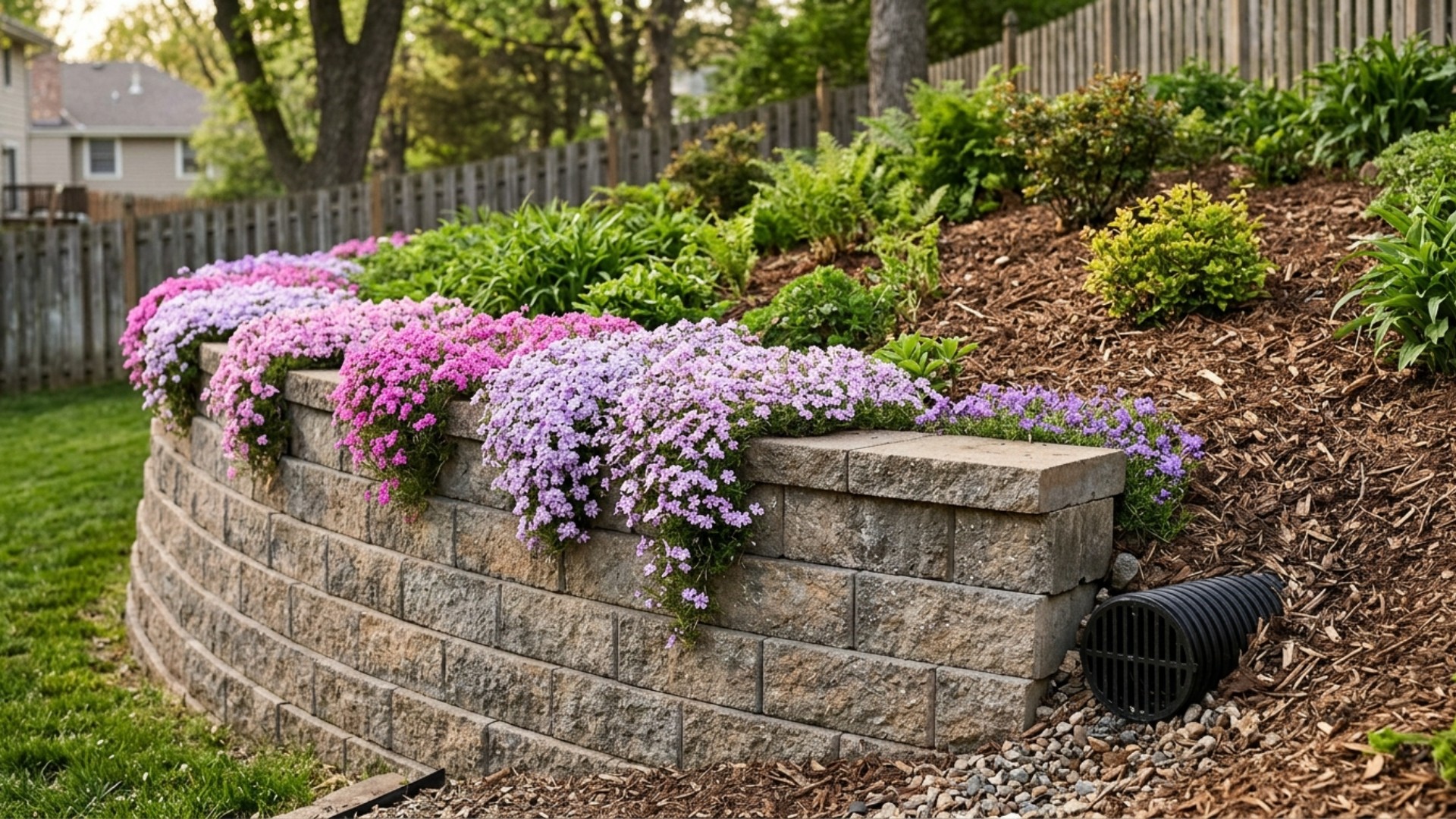
Every slope is different, and the generic advice online rarely fits. Framehouse Chat knows your yard and the design you chose, so you can ask: Should I do one wall or two terraces? How much gravel do I need behind a 30 foot wall? Is timber okay in my wet clay soil? What plants will hold the slope above the wall? Do I need a permit at this height?
It answers for your space, flags when a wall is getting tall enough to need a pro, and suggests cheaper options when they will work just as well.
Get a Wall Plan You Can Hand to a Landscaper
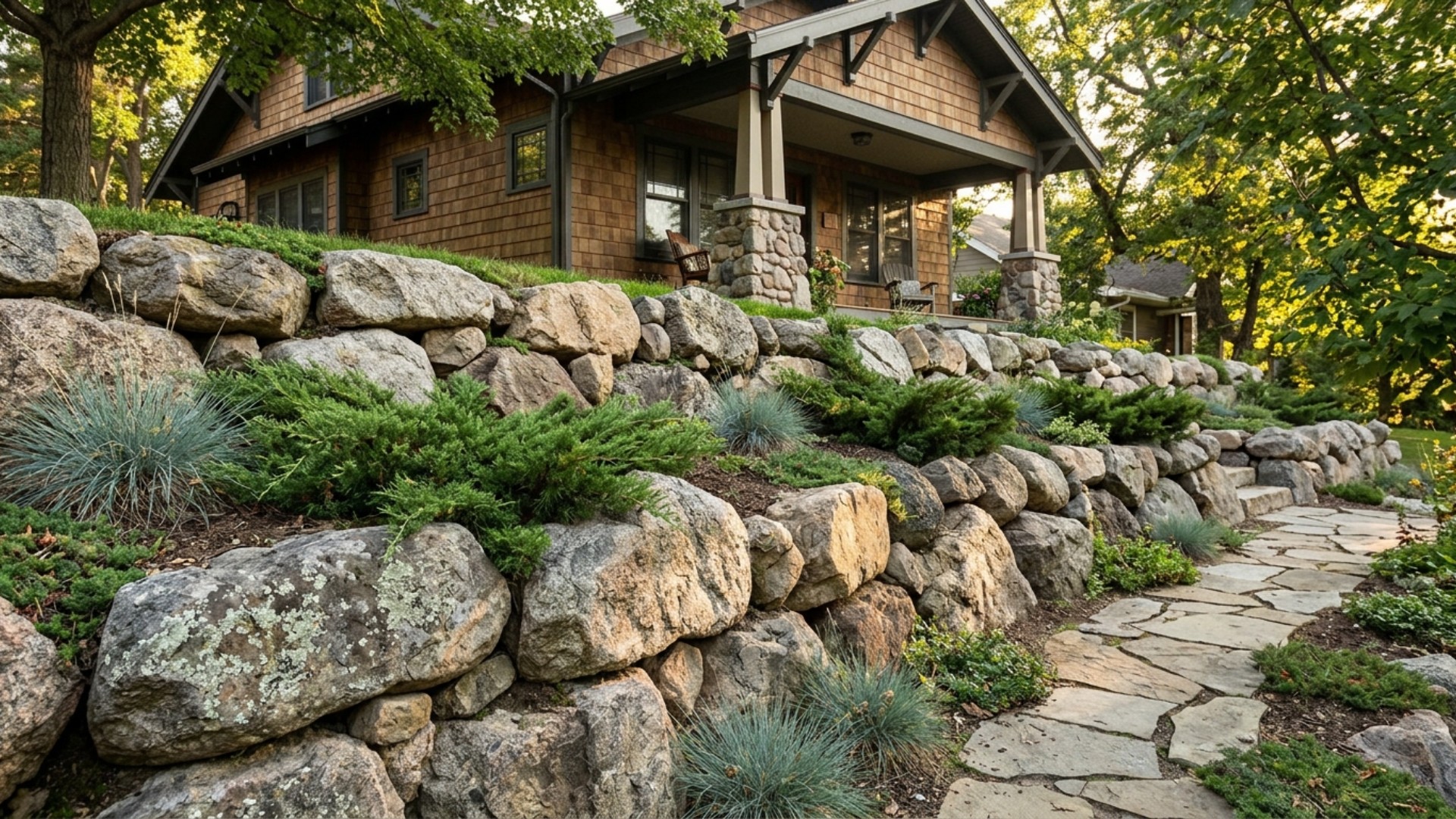
When you love the look, Framehouse turns it into a PDF Playbook: the wall material, approximate length and height, drainage and backfill, plants for the terraces, a starting budget and the steps in order. Use it to DIY, or hand it to a landscaper so every quote is for the same job.
That build-ready plan is why Framehouse is first on our list of the best AI landscape design tools of 2026.
Retaining Wall Cost by Material (Cheapest First)
| Material | Typical installed cost per sq ft of wall face | Best for |
|---|---|---|
| Vinyl or composite panels | About $10 to $15 | Low garden walls and bed edges |
| Gabion baskets | About $10 to $40 | Steep slopes, modern looks, free fill |
| Wood or timber | About $13 to $35 | DIY walls under 3 to 4 feet |
| Interlocking concrete block | About $15 to $35 | Long-lasting DIY walls, curves |
| Cinder block (CMU) | About $20 to $35 | Straight walls you can face or paint |
| Boulders | About $25 to $50 | Natural looks, fast installs |
Ranges are drawn from LawnStarter and HomeGuide cost guides (2025 and 2026). Doing it yourself removes most of the labor, and free materials like fieldstone or broken concrete can take the cost close to zero.
The Cheapest Retaining Wall Ideas (1 to 4)
- Pressure-treated timber sleepers: stack 6x6 ground-contact timbers, pin them with rebar and stagger the joints. Fast, cheap and very DIY friendly.
- Landscape timbers for small beds: for walls a foot or two high, round-edge landscape timbers from the home center are the lowest-cost option there is.
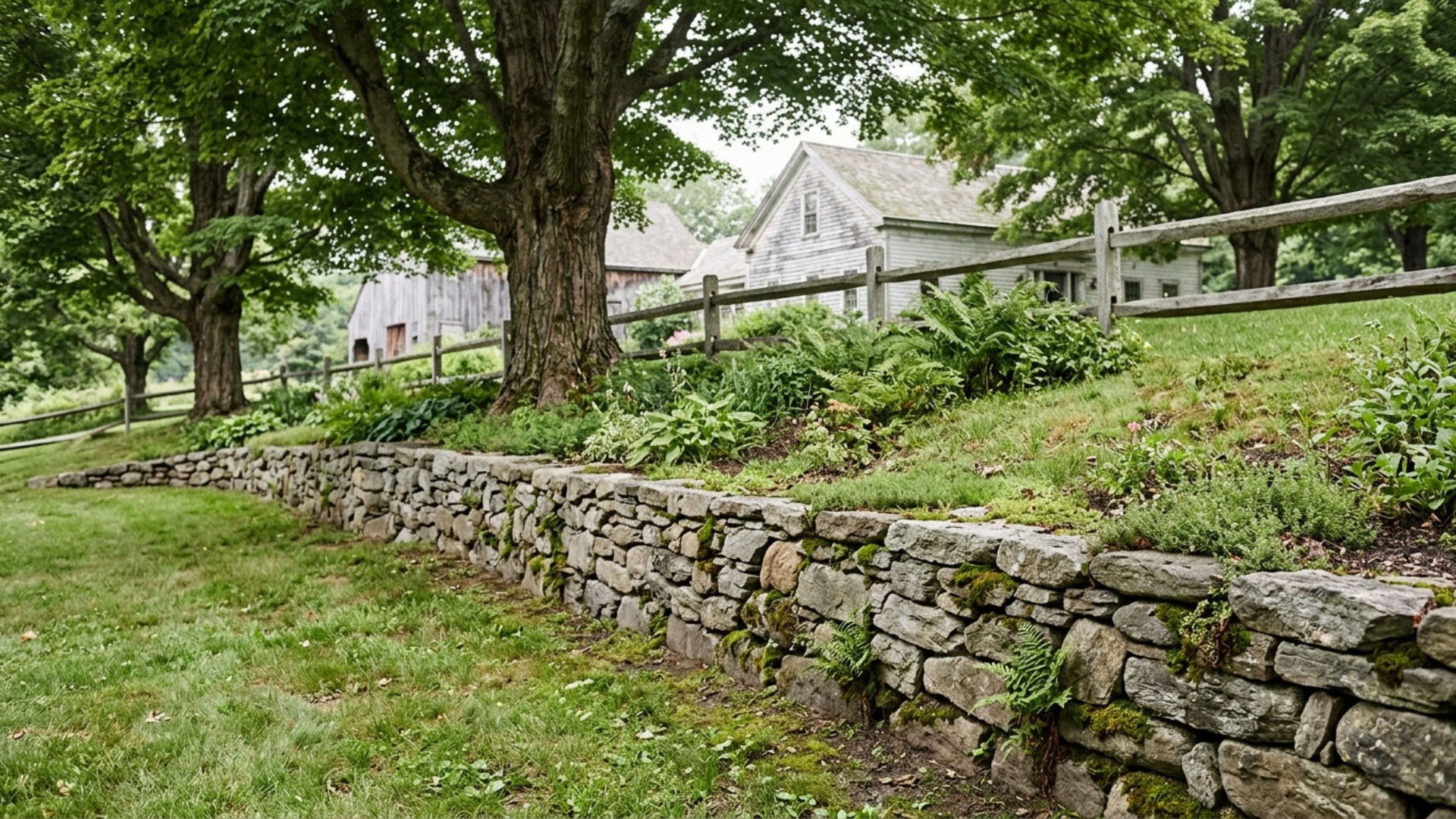
- Dry-stacked fieldstone: if your property, a neighbor or a local farm has loose stone, a dry-stacked wall costs little more than gravel and sweat, and it drains naturally.
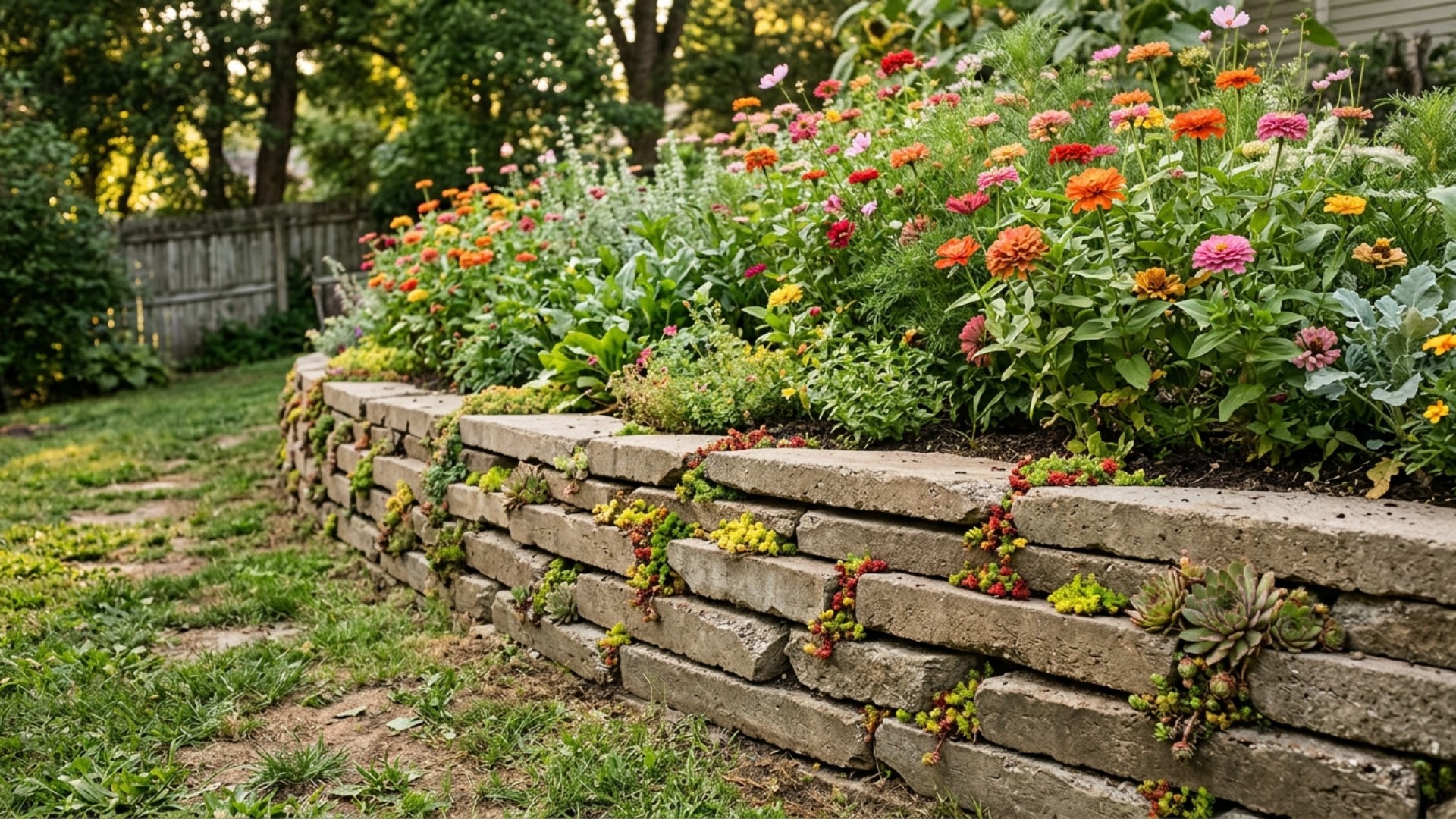
- Urbanite (recycled broken concrete): old patio or sidewalk slabs, broken and stacked like stone, are often free and look surprisingly good once plants soften the joints.
Budget Block, Gabion and Boulder Walls (5 to 8)
- Interlocking concrete block: the best long-term value. Lipped blocks lock together without mortar, curve easily and come in stone-look faces.
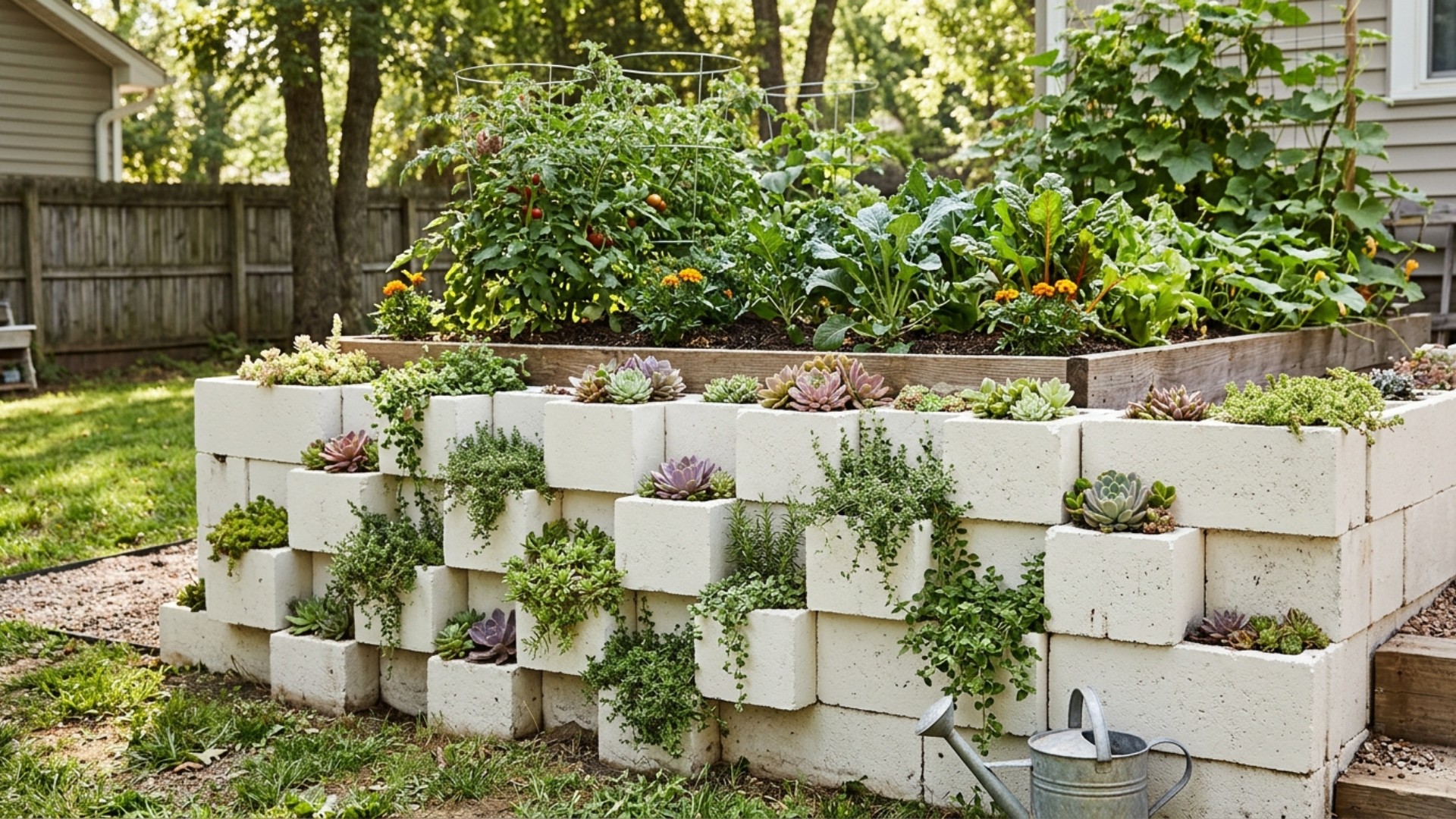
- Cinder block with planting pockets: lay standard blocks with the holes facing up and fill them with soil and succulents for a living, budget wall.
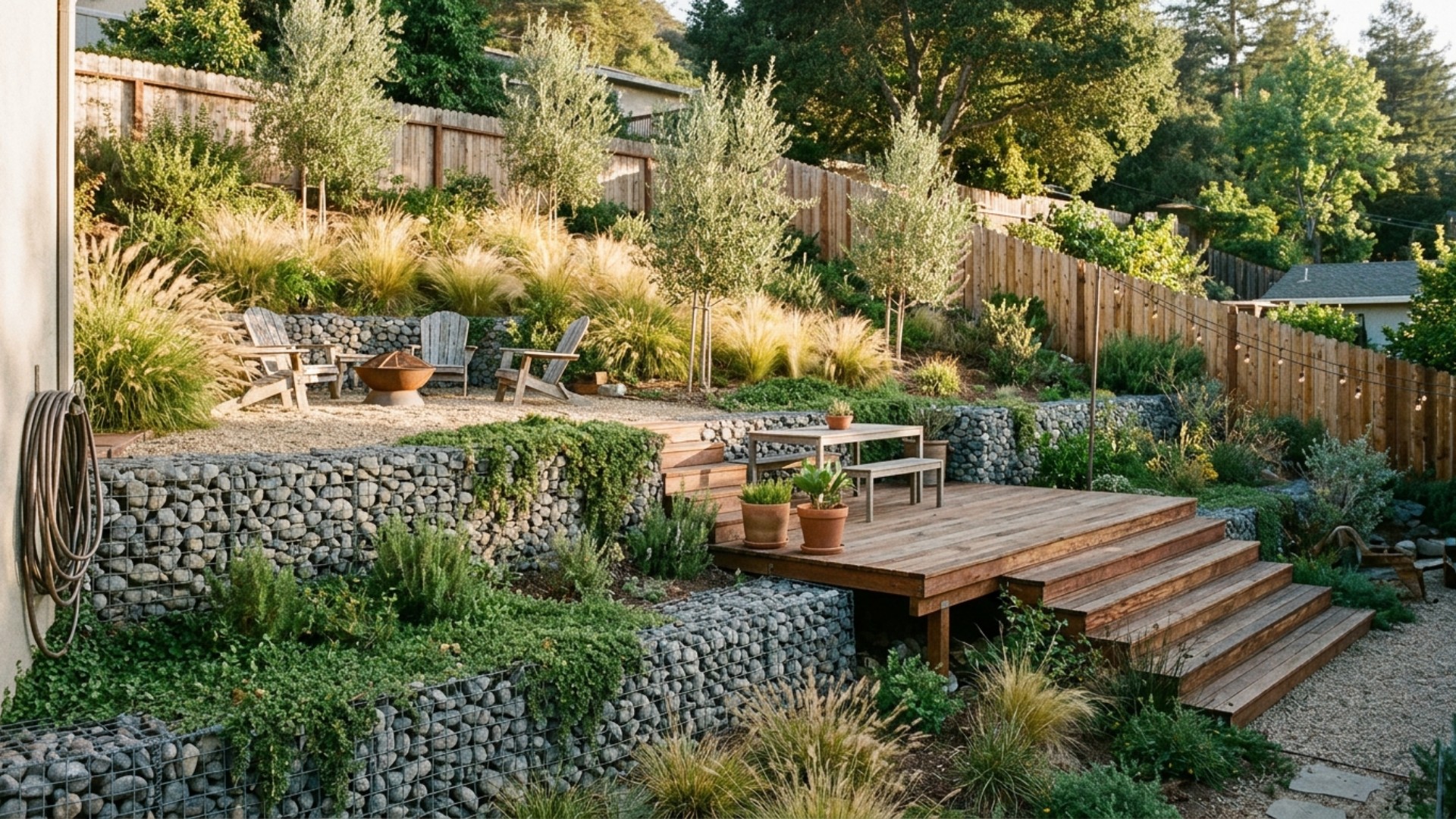
- Gabion baskets: wire cages filled with rock. Gabion walls can be remarkably cheap when you have free fill, and they drain perfectly, which makes them great on steep slopes.
- Boulder wall: a single course of large boulders set into the slope gives a natural, high-end look with very few pieces to place.
Clever Layouts That Cost Less (9 to 12)
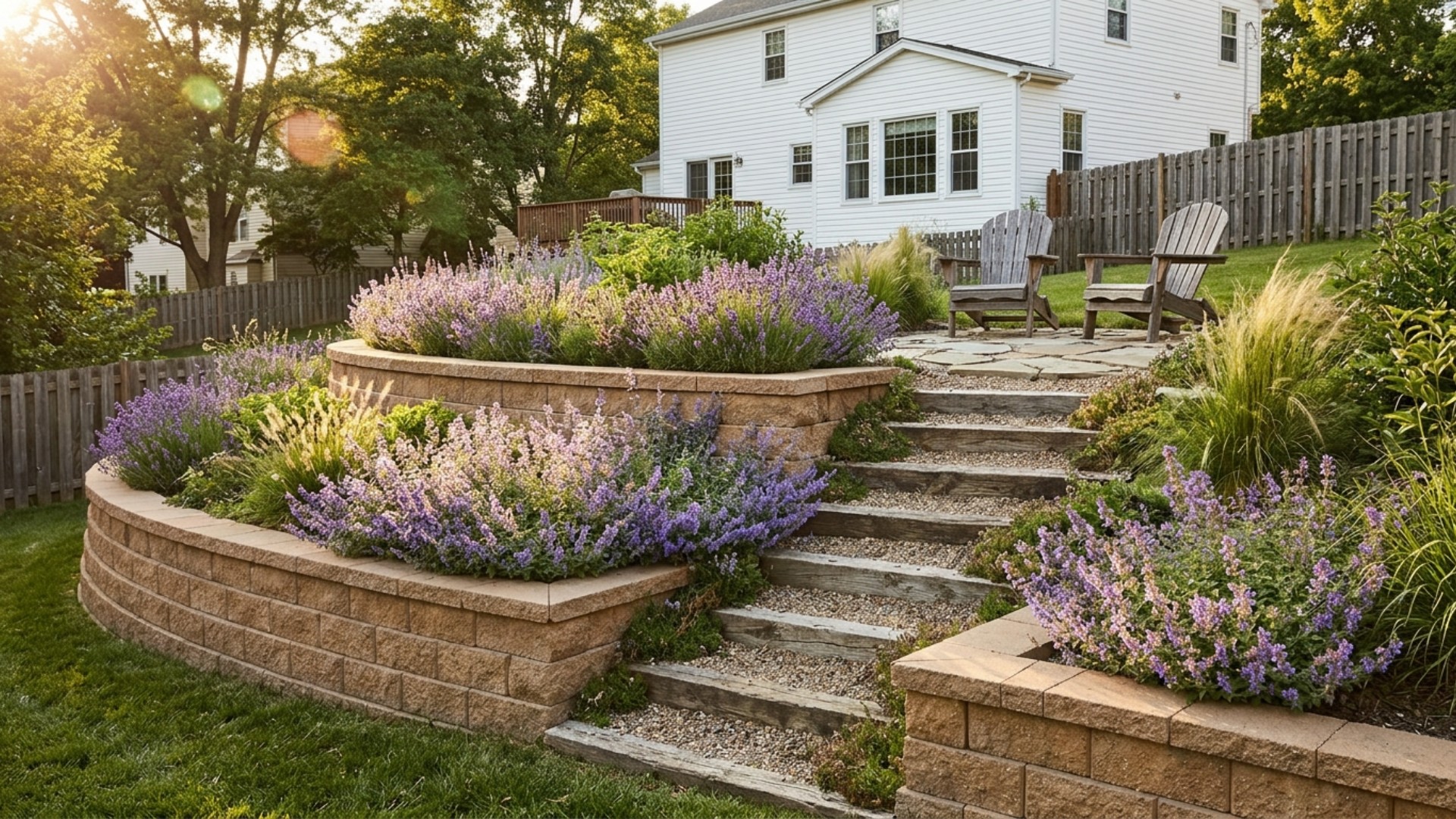
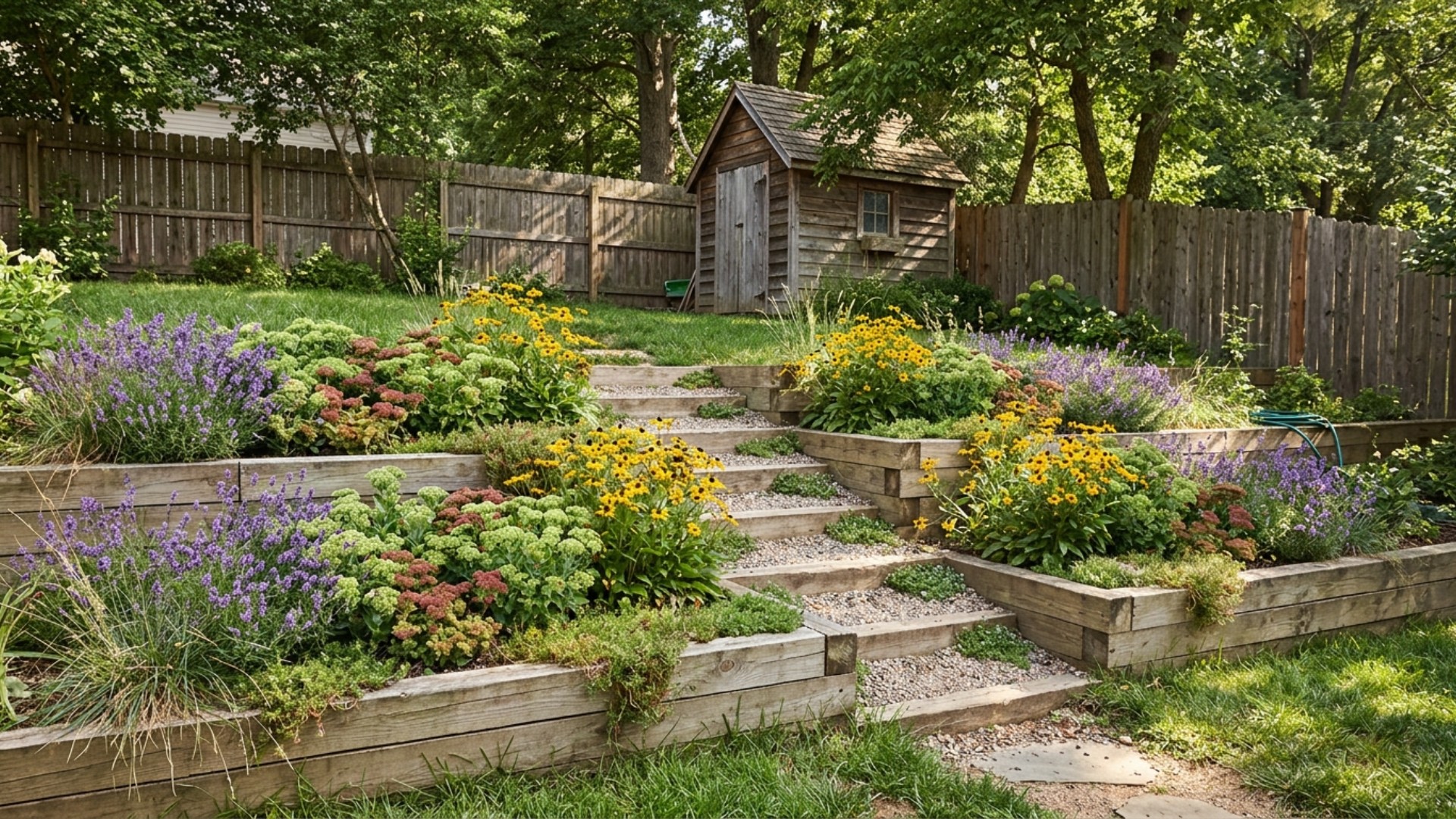
- Two-tier terraced walls: two 2 foot walls instead of one 4 foot wall usually means lighter materials, easier DIY and fewer permit questions. The step between them becomes a planting bed.
- Short walls plus gravel steps: break the slope with a few low walls and timber-edged gravel steps for a path and a wall in one project.
- Planted slope instead of a wall: on a gentle grade, deep-rooted groundcovers and erosion mats may hold the soil with no wall at all.
- Corrugated metal and timber posts: galvanized panels between wood posts give a modern farmhouse look for low raised beds and small walls.
Cheap Upgrades That Look Expensive (13 to 17)
- Curved block wall: a gentle curve looks custom and costs the same as a straight run with interlocking block.
- Front yard retaining wall flower bed: a low wall along a sloped front yard turns a mowing headache into a raised bed and instant curb appeal.
- Built-in seat wall: cap a wall at about 18 inches high with wide cap stones and it doubles as outdoor seating.
- Fence or railing on top: on taller walls, set the fence just behind the wall for safety and privacy without separate footings in the wall itself.
- Solar cap lights: low-voltage or solar lights tucked under the caps make even a timber wall look finished at night.
The Drainage Step You Cannot Skip
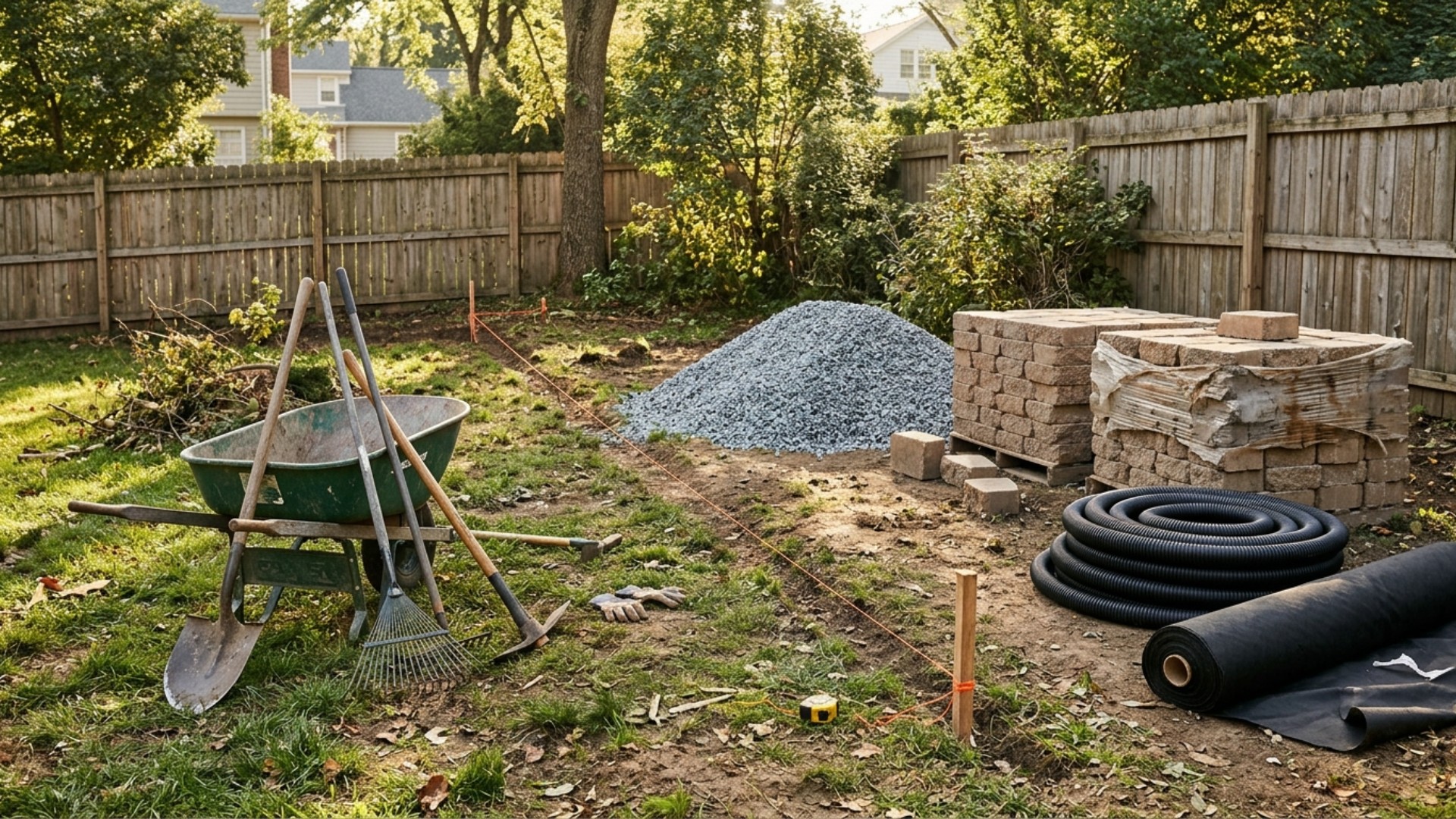
Water, not soil, is what pushes cheap walls over. A wall that holds back wet soil carries far more weight than a dry one. Every retaining wall, however cheap, needs these:
- A compacted gravel base under the first course, partly buried for stability.
- Clean gravel backfill at least 12 inches behind the wall, not the clay you dug out.
- A perforated drain pipe at the base, sloped to daylight.
- Landscape fabric between the gravel and the soil to keep it from clogging.
- A slight backward lean into the slope, built into most interlocking blocks.
Height, Permits and When to Call a Pro
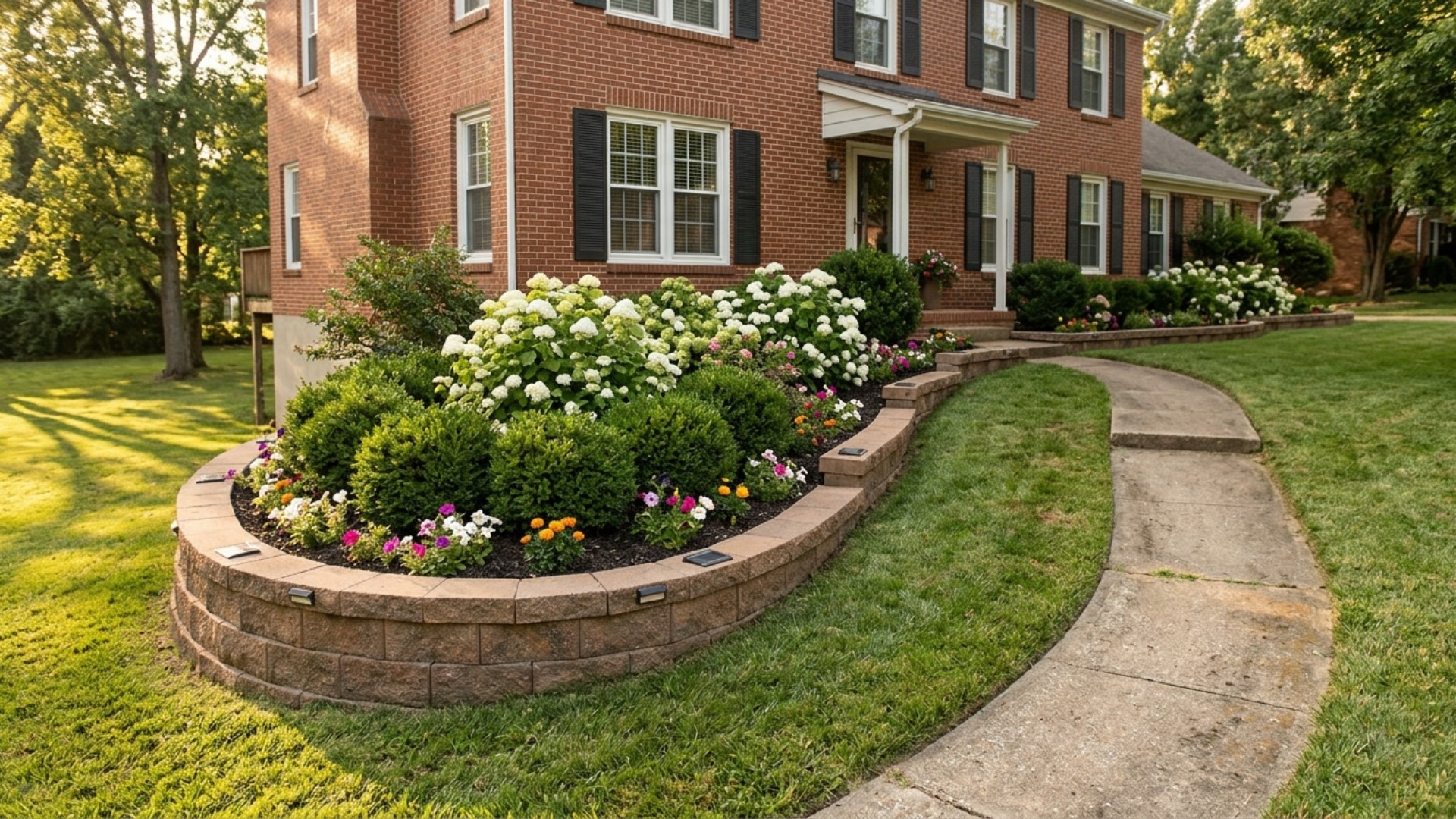
- Under about 3 feet: usually a reasonable DIY project with timber or interlocking block.
- Around 3 to 4 feet and up: many towns require a permit and sometimes an engineer's design. Check with your local building department before you dig.
- Holding back a driveway, building or steep hill: hire a pro. The load is much higher than it looks.
- Call 811 before digging: it is free and marks buried utility lines.
Plants That Help Hold a Sloped Yard
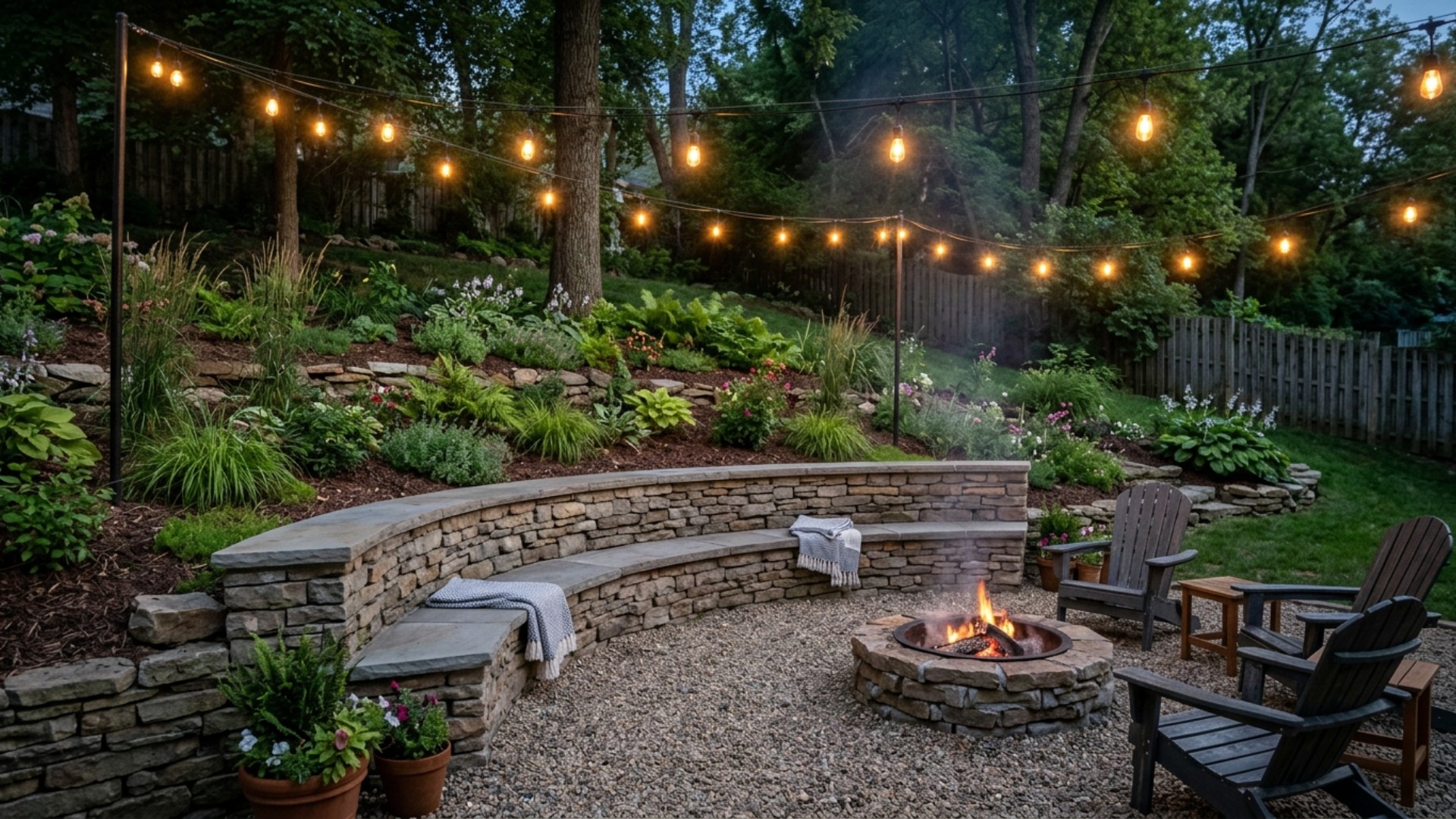
- Cascading over the wall: creeping phlox, creeping thyme and trailing sedum.
- Tough, deep roots on the slope: creeping juniper, ornamental grasses and catmint.
- Color for terraces: lavender, coneflower, black-eyed Susan and daylilies.
- Shade slopes: hostas, ferns and pachysandra.
Choose plants suited to your hardiness zone and sun, and mulch the terraces to stop the soil from washing while roots establish.
Mistakes That Make Cheap Walls Fail
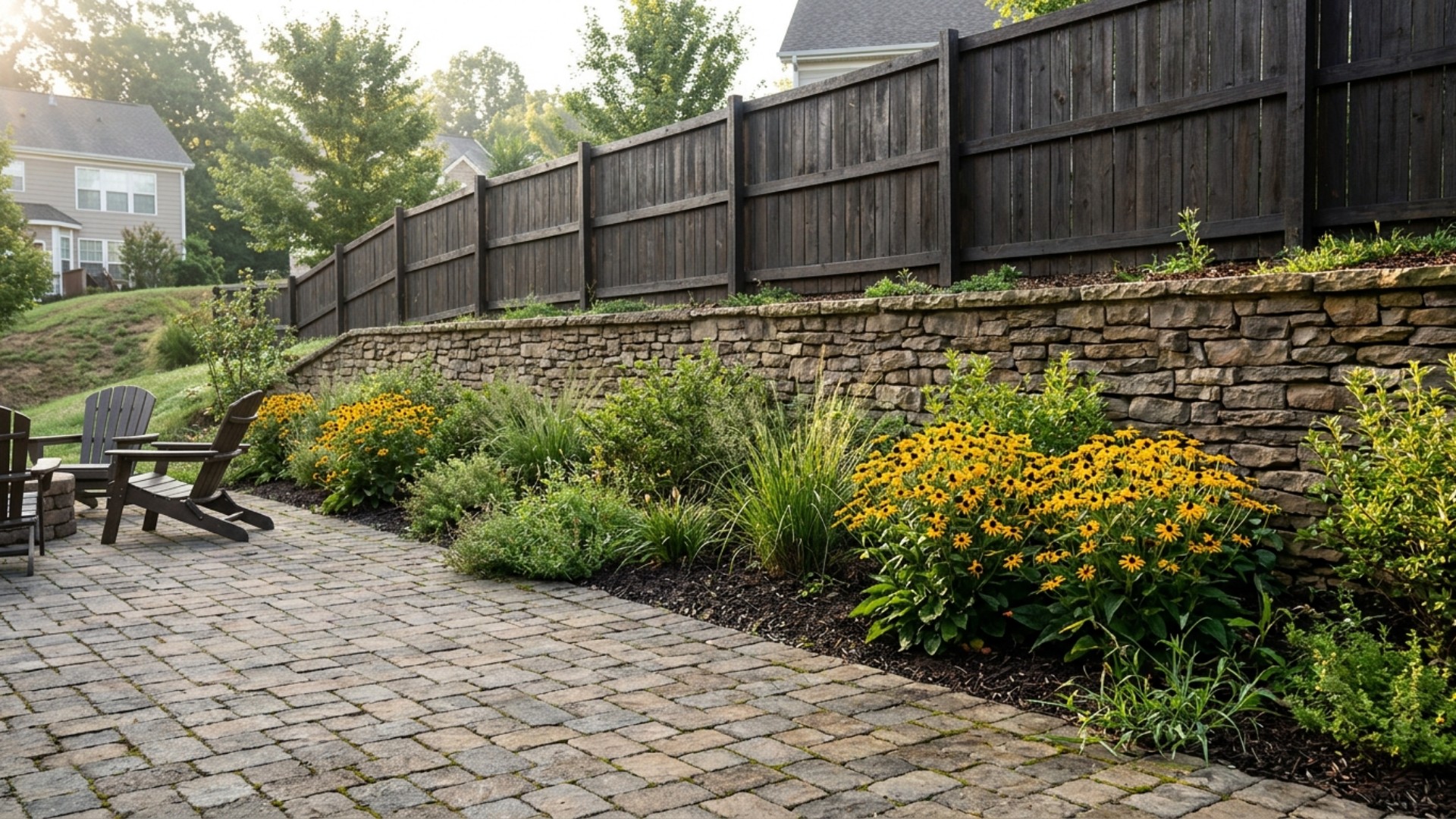
- No gravel or drain pipe: the number one cause of bulging and leaning walls.
- Skipping the buried first course: the base row should sit partly below grade on compacted gravel.
- Untreated wood: only use ground-contact rated lumber, or it can rot within a few seasons.
- One tall wall where terraces would do: taller walls cost more per foot and often need permits.
- Old railroad ties: they are often coated in creosote. Skip them near vegetable beds and play areas.
Putting a pool on your newly leveled ground? See our cheap above ground pool landscaping ideas.
See Your Sloped Yard Finished With Framehouse
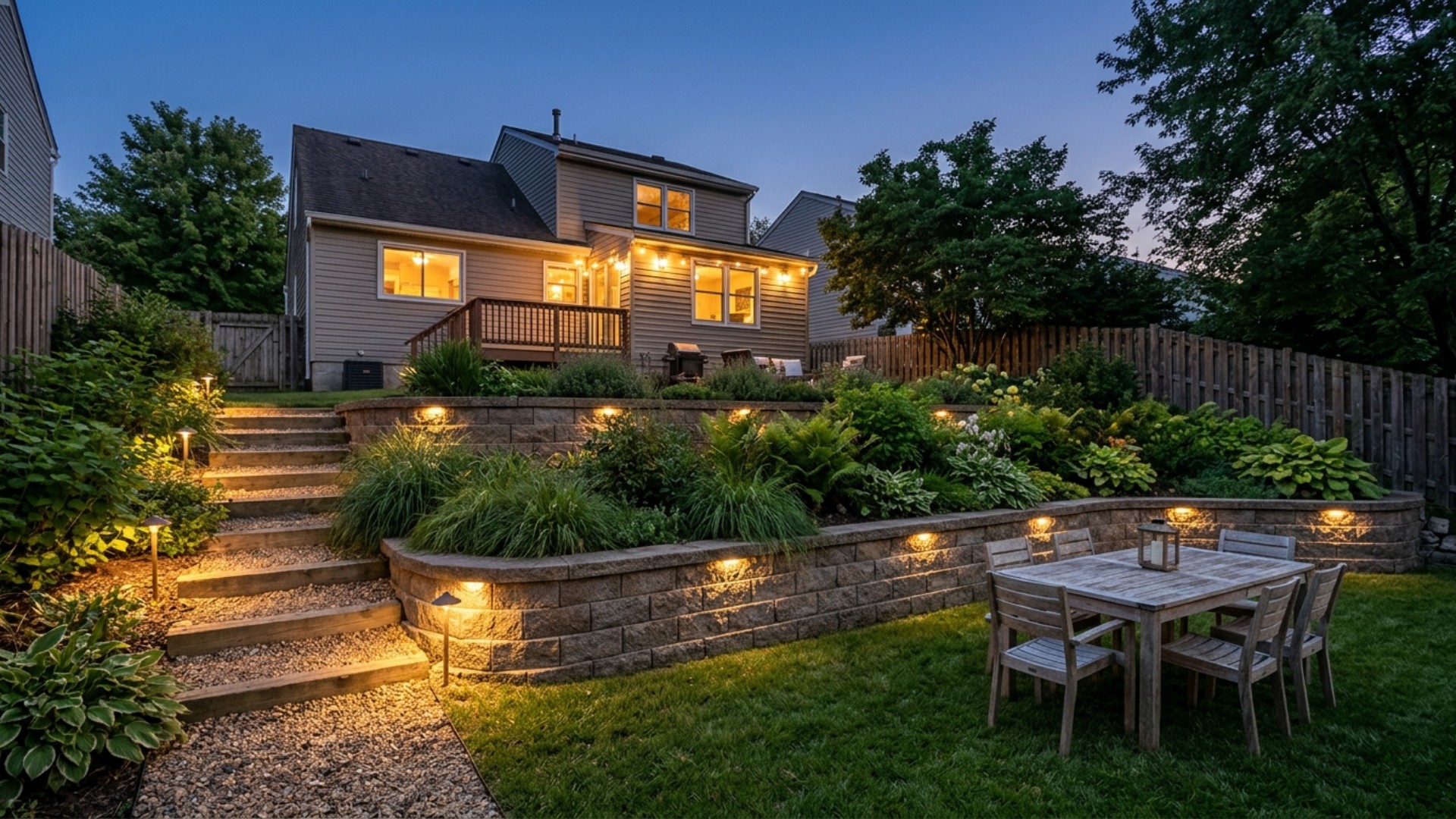
You do not have to guess where the wall goes or what it will look like. With Framehouse you type what to keep and change, see your real yard with timber, block, gabion or stone walls in seconds, ask Framehouse Chat about drainage, height and plants, and get a PDF Playbook with materials, budget and steps for you or your landscaper.
See a retaining wall on your yard free for 3 days. Then $9.99 a week or $59.99 a year. Explore more ideas on our landscape design page.