Somewhere between the neighbor's flawless lawn and your own patchy grass, dandelions, and that one sprinkler head nobody has fixed, most of us start dreaming about a yard that just works. Not a golf course lawn. A yard that looks good, costs less to keep alive, and does not demand a fight with the mower every single week.
Quick introduction before we dig in: this guide is built with Framehouse, an AI-powered design app that turns one photo of your own yard into a realistic preview of a new look, then hands you a full design playbook (plant lists, materials, a step-by-step plan) so you know exactly what to buy and where it goes. Every idea below links to a real, ready-to-try look already built in the app. Tap through, upload a photo of your own front yard, backyard, or side strip, and see that exact style rendered in your own space in seconds, free to start.
With that out of the way: this year's biggest landscaping ideas are all about yards that work harder for less effort. Homeowners are trading thirsty turf for pea gravel and pollinator-friendly clover, turning the awkward strip beside the garage into an actual destination, and borrowing design cues from Mediterranean courtyards and Japanese gardens that were built for low-water, low-fuss living in the first place. Below, 25-plus ideas for gravel gardens, Mediterranean-style yards, narrow side lots, Japanese maples, zen corners, cottage garden layouts, xeriscaping, and clover lawns, plus an FAQ answering the questions we hear most. Grab a mug of something warm. Your yard has some catching up to do.
Gravel Gardens 101: The Low-Maintenance Trend Taking Over Yards
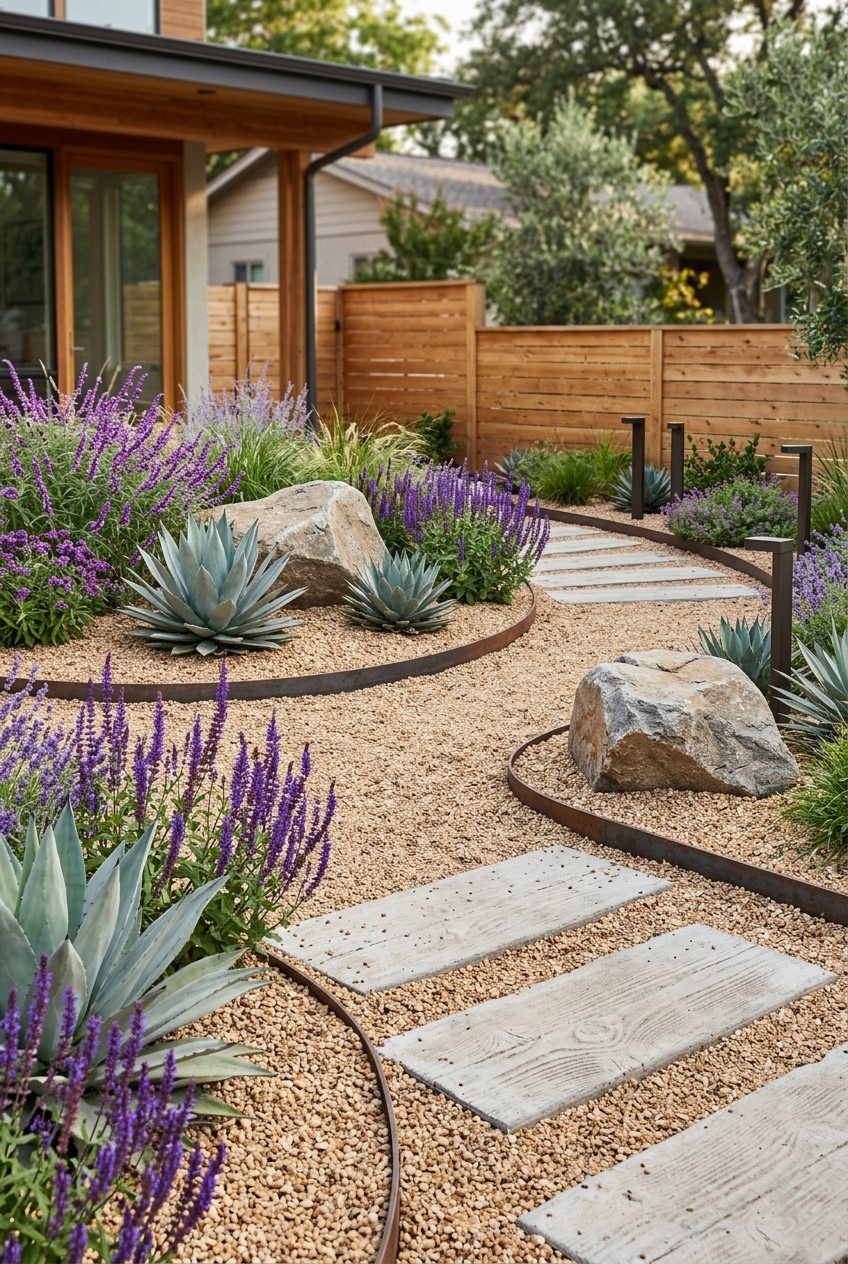
Gravel has quietly become the darling of low-maintenance landscaping, and the math explains why. Installing landscape gravel runs about $0.86 to $1.83 per square foot on average, which is a fraction of what sod, pavers, or a full irrigation system will cost. Once it is down, there is no mowing, no fertilizing, and barely any watering.
The trick to a gravel garden that looks intentional rather than like a construction site is variety. Mix a coarse decorative gravel as your base with a few boulders, drought-tolerant grasses, and a sculptural plant or two, like agave or yucca, for height. Lay landscape fabric underneath before you spread any stone. Skipping it is the single most common mistake, since bare gravel sinks into the soil within a season or two and lets weeds punch right through.
For a backyard on a real budget, gravel is also the fastest way to turn a patchy, high-maintenance lawn into something photo-ready without a full renovation. Even a modest 200-square-foot path or seating area typically needs about two to three cubic yards of material, which lands most homeowners in the $60 to $300 range for materials alone.
See it in your yard: visualize this buff gravel front garden idea in your own space.
Pea Gravel Ideas for Patios, Paths, and Flower Beds
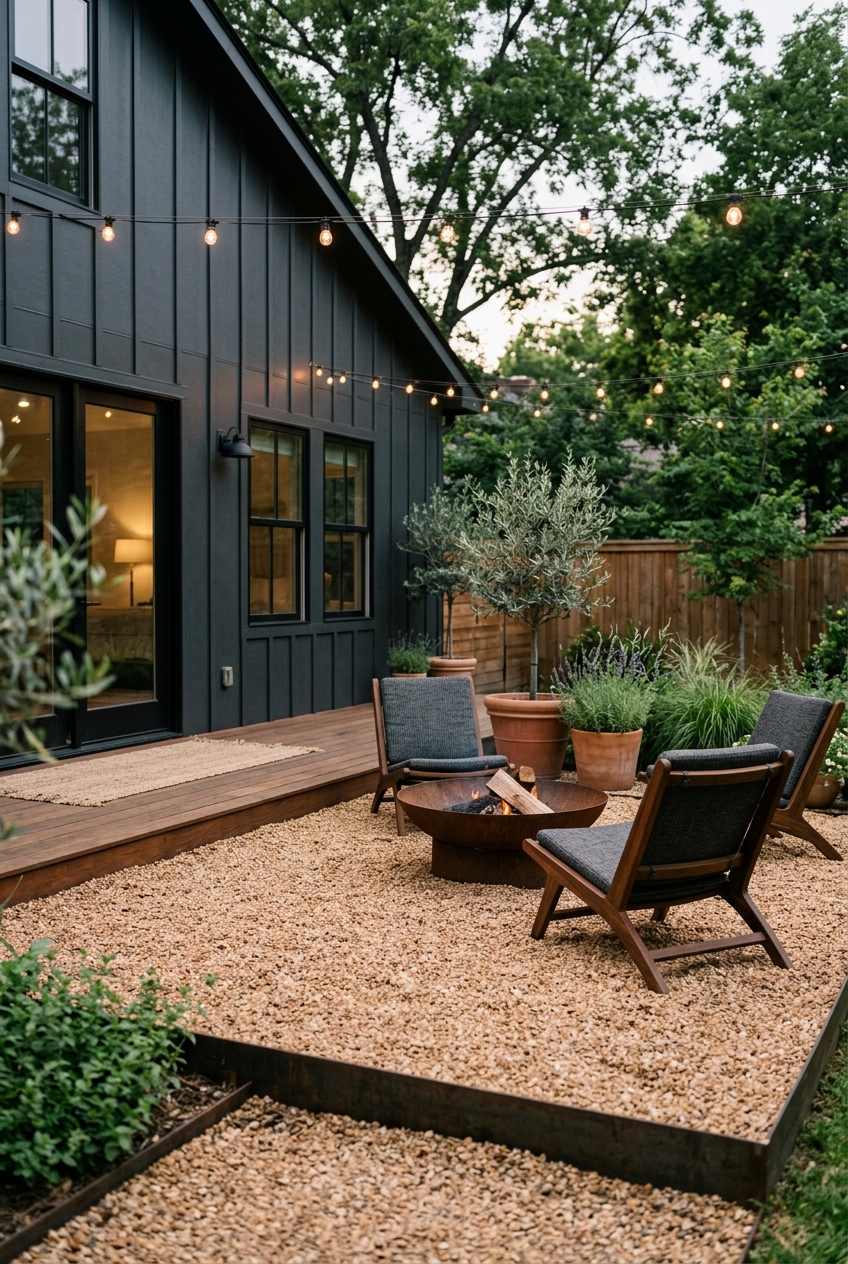
Pea gravel is the smallest, roundest, and most forgiving member of the gravel family, which is why it shows up everywhere from cottage flower beds to full patios. A typical 200-square-foot pea gravel project runs somewhere between $240 and $380 installed, and DIYers can bring that down further by skipping the labor.
A few ways to use it well:
Flower beds: Spread two to three inches of pea gravel around perennials as a mulch alternative. It suppresses weeds, holds moisture in the soil below, and never breaks down the way bark mulch does.
Patios: Pea gravel patios feel more relaxed than pavers and pair beautifully with a fire pit or a bistro table. Add a steel or paver edge, since loose stone without a border has a way of migrating straight into the lawn.
Paths: A curving pea gravel path edged in brick or dark steel reads as intentional rather than accidental. Keep it at least 24 to 30 inches wide so it stays comfortable to walk.
On the topic of edging: steel, aluminum, or timber borders typically add $2 to $8 per linear foot to a project, and that detail is what separates a crisp gravel bed from one that looks like it is slowly dissolving into the yard.
See it in your yard: visualize this pea gravel fire pit terrace idea in your own space.
Gravel Front Yards That Actually Boost Curb Appeal
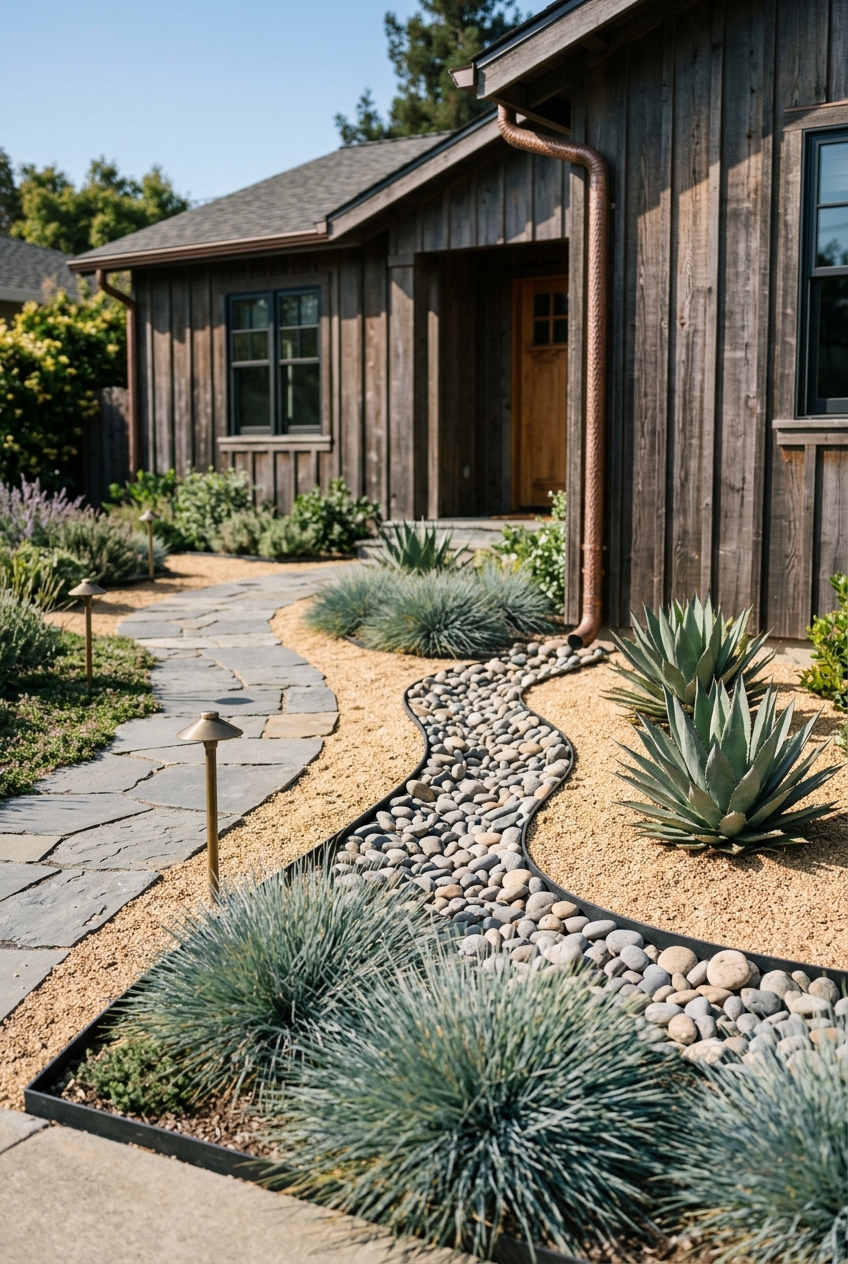
A full gravel front yard sounds like a big swing, but it is one of the more forgiving landscaping updates you can make, and it photographs beautifully with a little planning. Start with a defined shape: a gravel yard with soft, curved planting beds reads as designed, while a flat rectangle of stone reads as a parking lot.
Layer in large terracotta or concrete pots along the front walk or porch for instant height and seasonal color you can swap without redoing the whole bed. A dry creek bed, essentially a wide, winding channel of larger river rock, doubles as drainage for runoff and as a design feature in its own right. Finish with drought-tolerant grasses like blue fescue and a few larger shrubs so the whole thing does not read as flat gray stone.
This is also one of the rare yard upgrades where less lawn genuinely means less work: no mowing, no weekly watering, and a surface that holds up in the drought years when a green lawn quietly becomes a very expensive habit.
See it in your yard: visualize this lawn-free dry creek idea in your own space.
Mediterranean Landscaping for a Front Yard That Feels Like a Vacation
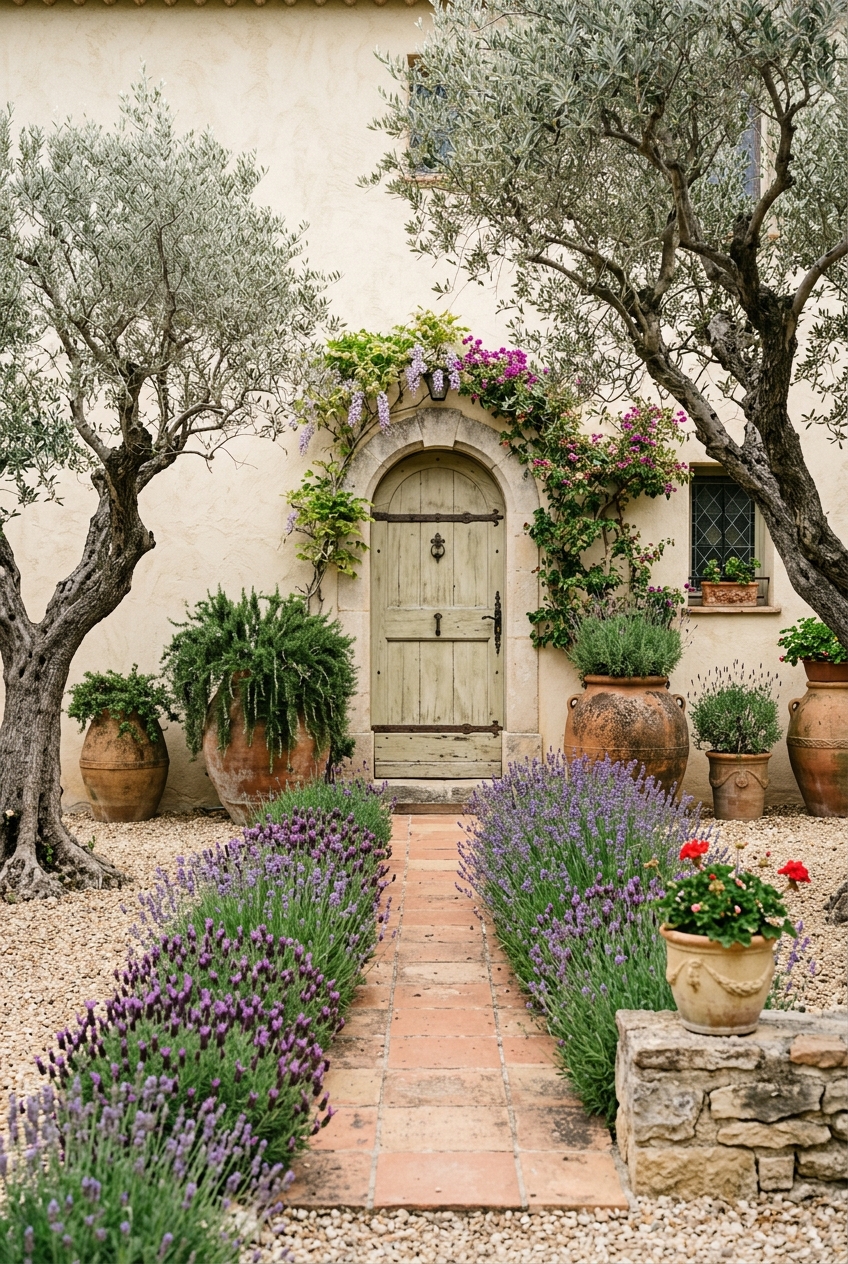
If your Pinterest board is full of Santorini and Provence, you are craving Mediterranean-style landscaping, and it happens to be one of the lowest-maintenance looks you can plant. The style leans on silvery, drought-tolerant plants such as olive trees, lavender, rosemary, and cistus, paired with gravel paths, terracotta pots, and warm stone.
The plant palette does double duty here. Lavender and rosemary are both heat and drought tolerant once established, and most classic Mediterranean plants only need deep, infrequent watering after that first season, sometimes as little as once a month in summer and not at all in winter. A dwarf olive underplanted with trailing rosemary and a lavender border is a classic, low-fuss combination that works from a sunny Los Angeles front yard to a protected patio corner further north (swap true olive for a hardy substitute, or grow it in a pot you bring in for winter).
Skip the lawn entirely if you are chasing this look. A manicured green lawn is about the least Mediterranean thing you can plant. Gravel, stone, and structured hedges do the work instead.
See it in your yard: visualize this Mediterranean front courtyard idea in your own space.
Finally, Ideas for the Narrow Side Yard You've Been Ignoring
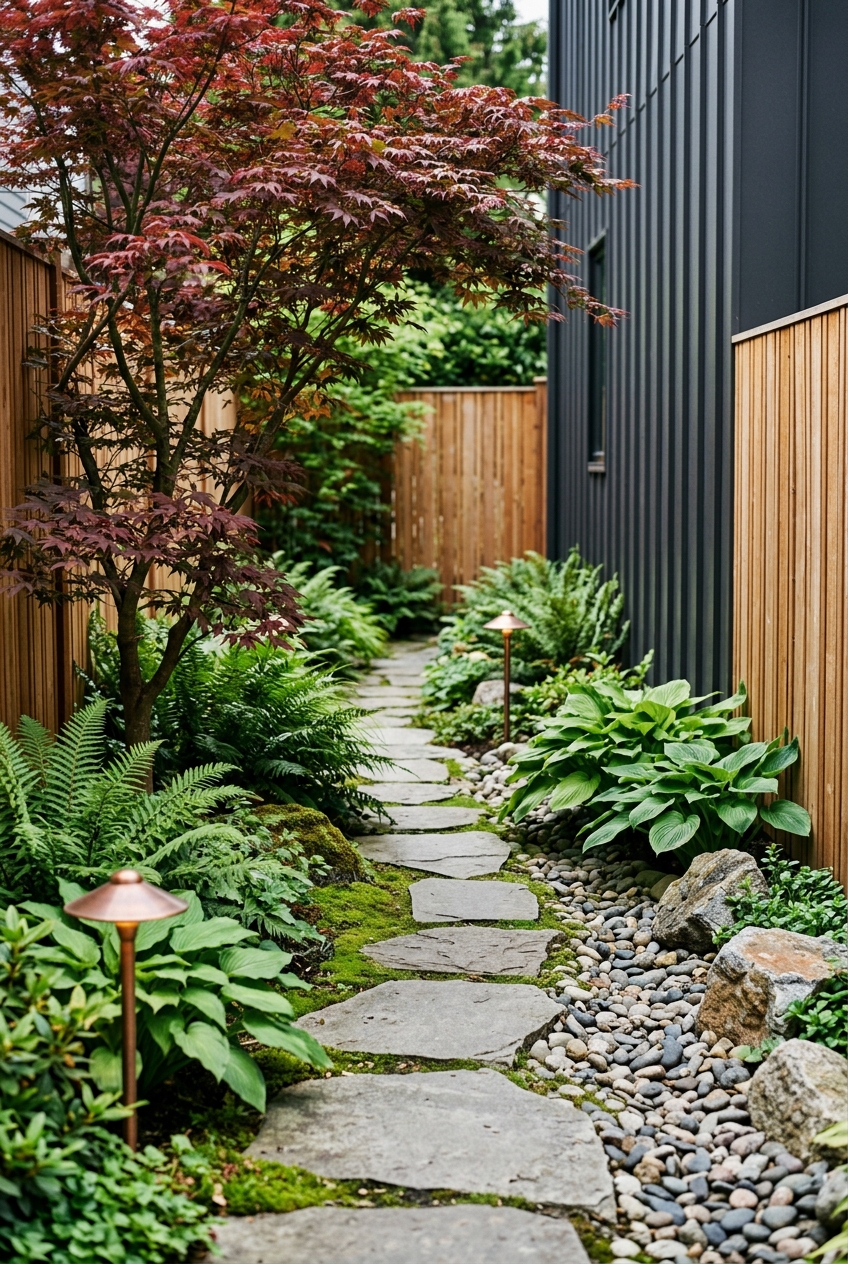
The side yard, that leftover strip between your house and the fence, is the most underrated square footage on most properties. It is also the hardest to plan for, since it is usually narrow, often shady, and interrupted by an HVAC unit or a row of trash cans.
A few fixes that consistently work in a tight side yard:
Go vertical. A simple trellis or a wall-mounted planting system turns a two-foot-wide strip into real garden space without eating into the walkway.
Choose narrow-growing plants. Upright, columnar shrubs and trees give privacy and greenery without spreading into the path the way a rounded shrub would.
Define the walkway. A flagstone or decomposed granite path with plantings on either side, a Japanese maple, ferns, and hydrangeas is a classic combination, turns a pass-through into a moment instead of a chore.
Hide the ugly stuff. Lattice panels or a simple screen can tuck away utility boxes, HVAC units, and trash cans without blocking access for maintenance.
Even a side yard as narrow as three or four feet can handle a gravel or stepping-stone path with low plantings on either side. The goal is not to fight the narrowness, it is to make it feel deliberate.
See it in your yard: visualize this shaded side yard garden idea in your own space.
Japanese Maples and Zen Gardens for Small Backyards
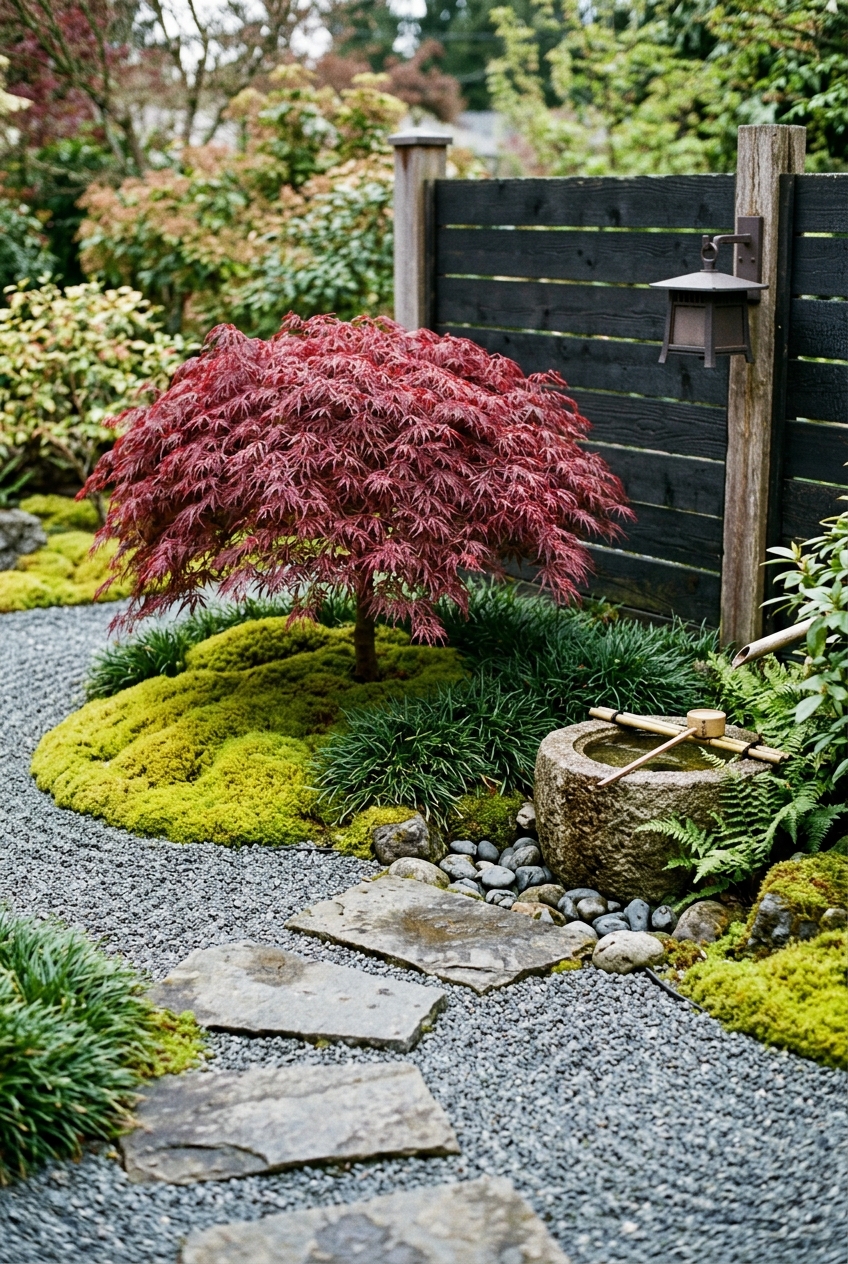
Few trees do more visual work in less square footage than a Japanese maple. Dwarf and compact varieties, such as Acer palmatum 'Shaina,' 'Shishio hime,' or 'Mikawa yatsubusa,' typically mature between three and eight feet tall, which makes them an easy fit for a small backyard, a side yard corner, or even a large container on a patio.
Pair a single specimen maple with the bones of a zen garden and you get one of the most calming small-space looks in landscaping: raked gravel or fine decorative stone standing in for water, a few carefully placed boulders, moss or low groundcover instead of lawn, and one tree as the visual anchor. Restraint is the whole point of a zen garden. A very small Japanese garden with one maple, one stone lantern, and a patch of raked gravel reads as far more intentional than a yard crowded with a dozen plants competing for attention.
This is also one of the more budget-friendly small-garden styles, since it trades the biggest expenses in landscaping, namely lawn, irrigation, and dense planting, for gravel, a handful of specimen plants, and a couple of well-chosen stones.
See it in your yard: visualize this crimson Japanese maple courtyard idea, or visualize this small urban zen garden idea, in your own space.
Cottage Garden Layouts That Look Effortlessly Full
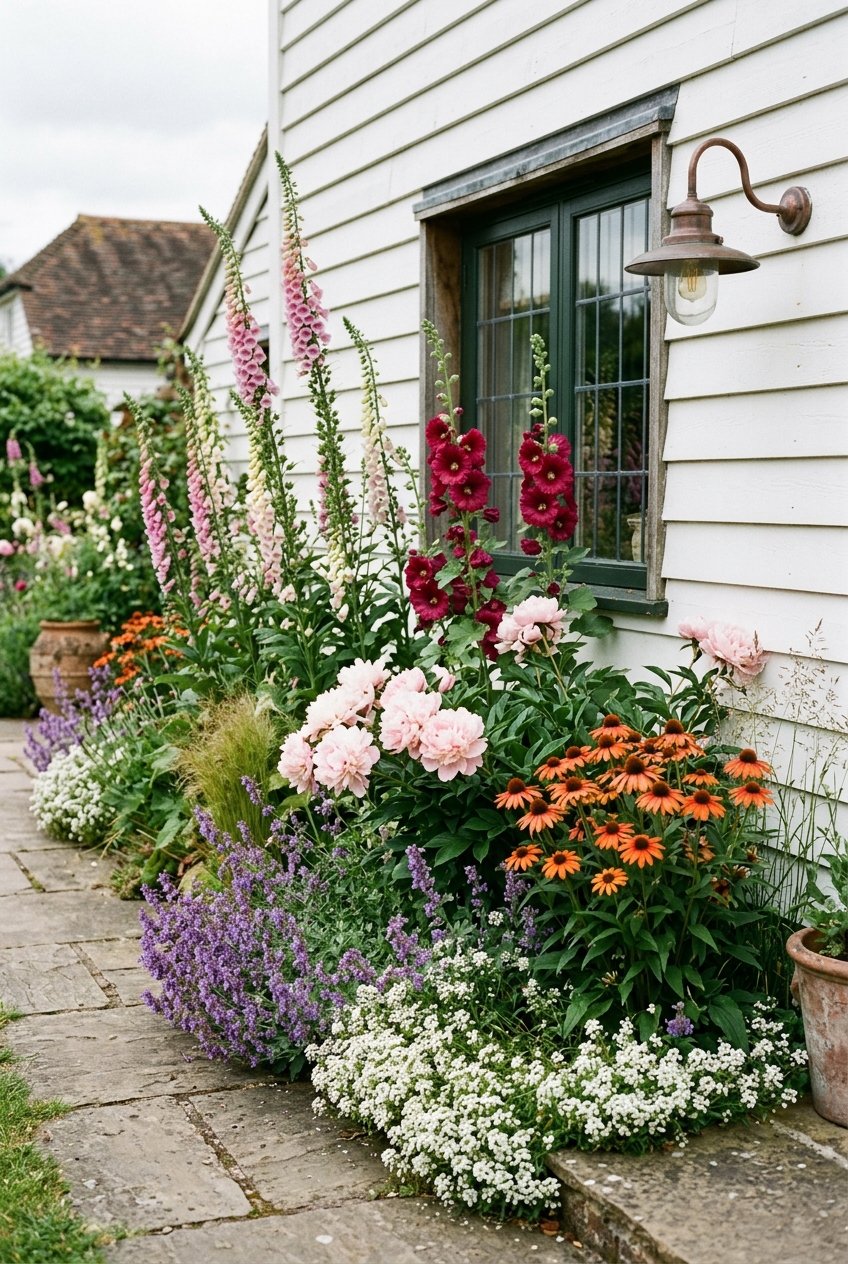
A cottage garden is proof that a slightly chaotic-looking yard can still be a planned one. The style began in England as working-class flower and vegetable beds pressed right up against the house, and the modern version keeps that dense, layered, slightly wild feel.
The actual layout is simpler than the finished look suggests. Plant tall flowers like foxglove and hollyhock toward the back or center of a bed, mid-height perennials such as peonies and coneflowers as the anchor layer, and low, spilling plants like alyssum or creeping thyme along the front edge and path. Keep the paths themselves soft and winding, in gravel, brick, or reclaimed stone, so they almost disappear under the planting by midsummer.
The trick experienced cottage gardeners lean on is repetition. Repeating the same three or four plants throughout the bed, rather than using one of everything, is what keeps a densely planted cottage garden feeling cohesive instead of chaotic.
See it in your yard: visualize this English cottage garden idea in your own space.
Xeriscaping and Native Plants for Serious Curb Appeal
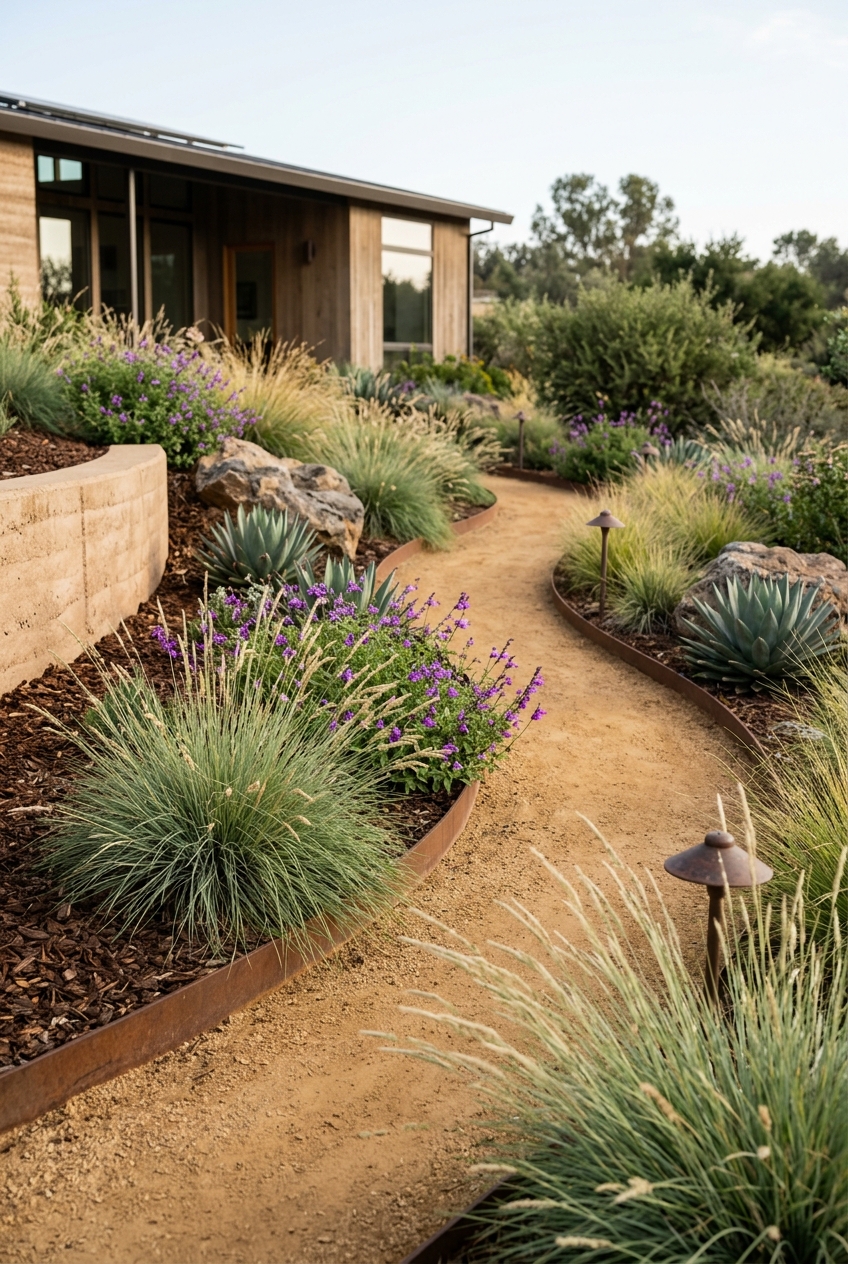
Xeriscaping gets an unfair reputation as a euphemism for gravel and cactus, but a well-planned xeriscape looks closer to a native wildflower meadow than a moonscape. The actual definition is simpler: landscaping designed around plants that need minimal irrigation once established, typically native or regionally adapted species grouped by water needs.
The water savings are the real headline. Outdoor irrigation accounts for roughly 30 to 60 percent of the average household's total water use, and switching to xeriscaping typically cuts outdoor water use by 50 to 75 percent, according to multiple utility and conservation studies. Some California homeowners who converted have reported saving more than 100 gallons of water a day. Xeriscaping has also been shown to lift home value by as much as 15 percent, since buyers increasingly see a low-water yard as a feature rather than a compromise.
For front yard curb appeal, lean on native grasses, low mounding shrubs, and a few flowering perennials suited to your specific region rather than a generic desert plant list. A xeriscape planted with species native to your climate will need far less coddling than one built around plants that merely tolerate drought.
See it in your yard: visualize this native front yard idea in your own space.
Clover Lawns, the Low-Mow Grass Alternative We're Rooting For
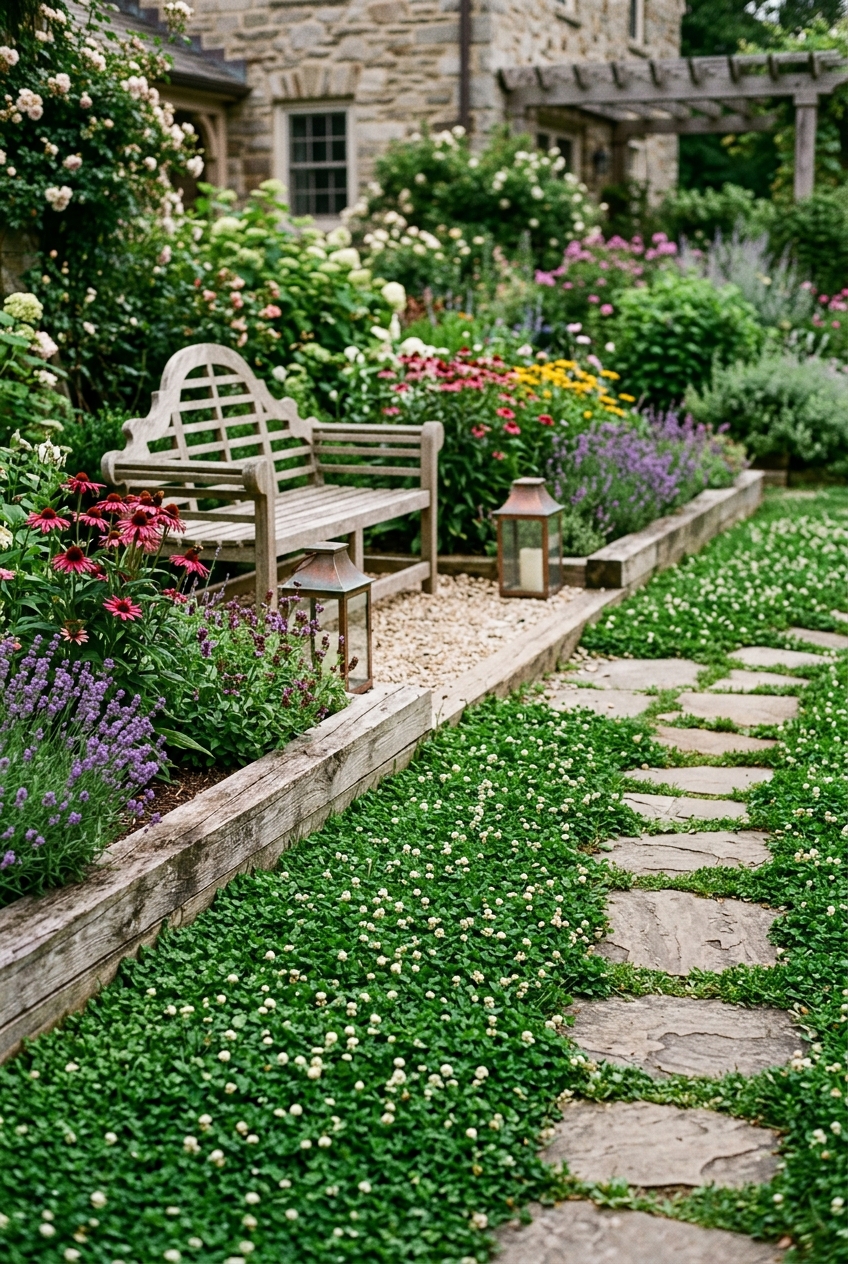
If mowing is the part of yard work you resent most, a clover lawn is worth a serious look. Microclover naturally tops out around three to four inches, so most homeowners mow it once every three to four weeks during the growing season, compared with a weekly cut for traditional turf. It also fixes its own nitrogen from the air, which means little to no fertilizer, and it tends to stay green through the kind of summer heat that sends grass into dormancy.
The easiest entry point is not ripping out your whole lawn. Overseeding an existing grass lawn with microclover at a light rate blends the two, giving you most of clover's low-maintenance benefits, drought tolerance, natural fertilizing, fewer mowing sessions, while keeping the uniform look and foot-traffic tolerance of grass. Full clover lawns look a little softer and less manicured than a striped lawn, so if you want that classic look with less upkeep, the grass-clover blend is the compromise most homeowners land on.
Between fewer mowing sessions, less water, and no synthetic fertilizer, a well-established clover lawn can meaningfully cut what you spend on lawn care over a few seasons, all while feeding the bees your garden needs anyway.
See it in your yard: visualize this microclover lawn idea in your own space.
Whatever direction you take your yard, from a full gravel overhaul to a single dwarf Japanese maple in a side yard corner, the hardest part is usually picturing it before you commit a weekend and a truckload of stone to it. That is exactly the gap Framehouse is built to close: pick any idea above, upload one photo of your actual yard, and see it reimagined in seconds, then get a full design playbook so you know exactly what to buy and where it goes. Start free at Framehouse and dig in with confidence instead of guessing.