Scandinavian Living Room Ideas That Maximize a Small Studio
Scandinavian design was built for long dark winters in small northern flats, which makes it almost purpose-made for a studio. This page shows how its light palette and low, practical furniture turn a cramped living area into one that feels open and calm.
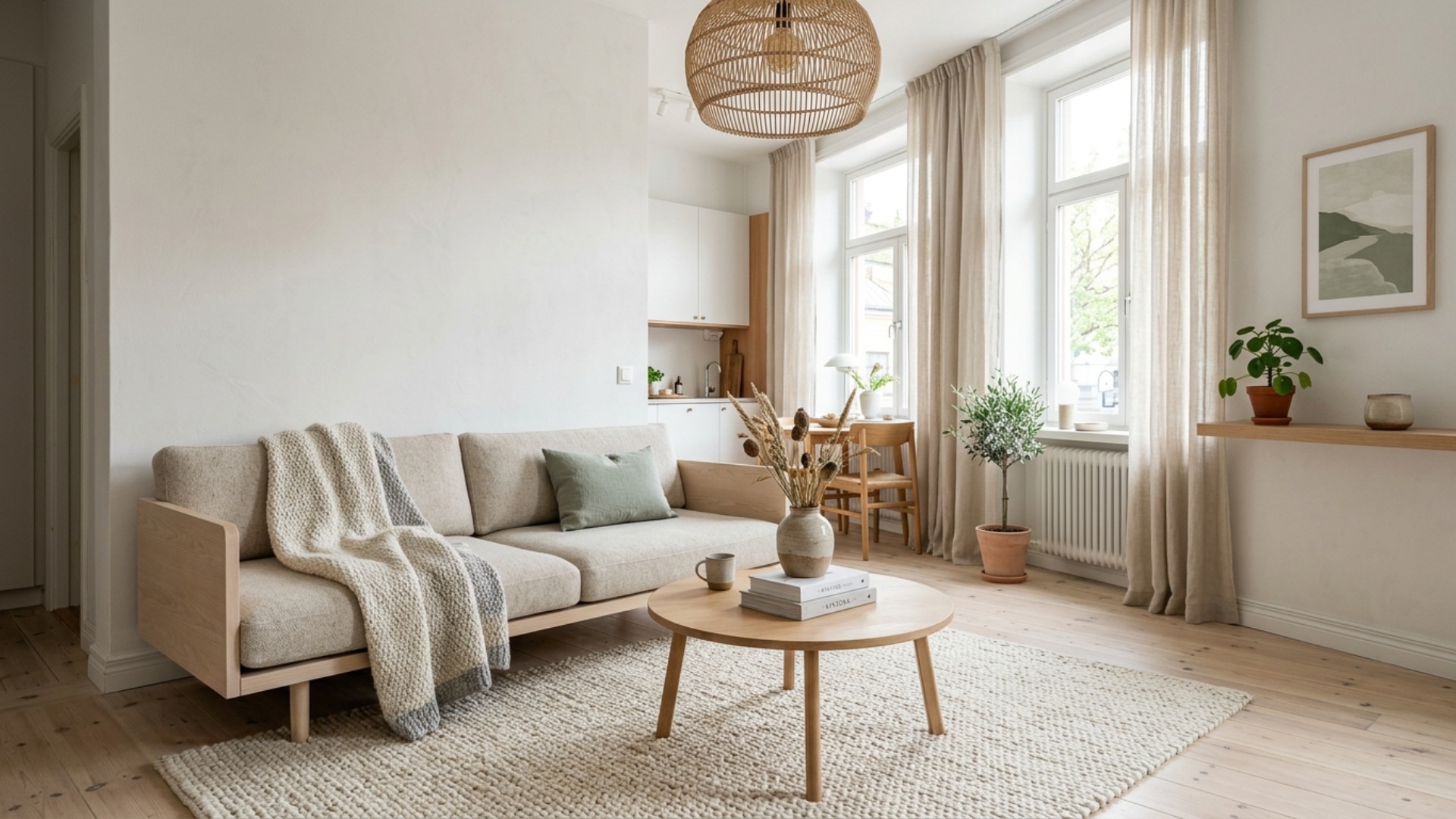
The real problem
Why this is harder than it looks
Scandinavian style gets flattened into a formula: paint it white, buy blond wood, add a sheepskin, done. Followed literally in a studio it produces a room that is bright but blank, a furniture-showroom version of cozy that never quite feels like home. The white is right, but the reason it works gets lost in the copying.
Scandinavian design was shaped by small apartments and short winter daylight, so it is fundamentally about making a little light and a little space go far. That is exactly a studio's problem. The light palette bounces what daylight you have, the low furniture keeps sight lines open, and the built-in practicality means every piece does a job. It is less a look to copy than a set of solutions to the constraints you already have.
In a studio the living area is rarely its own room. It shares the floor with the bed and often the kitchen, and it has to work as a lounge, a workspace, and sometimes a dining spot. Your starting point is usually one sofa's worth of space, a wall or two, and whatever light comes through a single window you cannot afford to block.
The common misstep is going all-white and all-hard, which reads cold and echoey, then adding small decorative objects to warm it up, which just adds clutter. Scandinavian warmth comes from texture and wood, not trinkets: a chunky wool throw, a jute rug, a birch table. Add softness through materials and keep the surfaces clear, and the room feels warm without feeling full.
A clear path
How to plan it
-
01
Lighten the whole envelope first
Paint the walls a warm white like Farrow and Ball Wimborne White, keep the floor pale, and hang sheer linen instead of heavy drapes. Light surfaces bounce what little daylight a studio gets deeper into the room, which is the cheapest way to make a small space feel larger. This is the single highest-impact Scandinavian move, and it costs a can of paint.
-
02
Choose low, leggy, multi-use furniture
Pick a low-back sofa on slim legs, a nesting coffee table, and a slim console that can double as a desk or a dining surface. Furniture you can see under and around keeps a studio feeling open, and pieces that do two jobs earn their footprint. A sofa bed or a storage ottoman quietly solves the studio's other problems at the same time.
-
03
Add warmth through texture, not clutter
Layer a jute or wool rug, a chunky knit throw, and a couple of linen cushions to bring the softness that keeps white from reading cold. Scandinavian warmth is tactile, so a few generous textures do more than a shelf of small objects. Keep the surfaces mostly clear and let the materials carry the coziness.
-
04
Build in one wall of light storage
A studio living area needs storage that does not darken it, so use a low or pale wood unit, an IKEA Besta run in white or oak, or floating shelves that keep the floor open. Closed storage hides the clutter a one-room life generates, and keeping it low and light means it holds your things without shrinking the room.
-
05
Visualize it in Framehouse before you commit
White is deceptively hard: the wrong undertone reads gray or clinical against your particular light, and repainting a studio is a whole-weekend job. Drop your actual living area into Framehouse, test the warm white and the wood tone against your real window and floor, and confirm the room reads bright and warm rather than cold before you buy a can or a sofa.
Built for studio maximization
Moves that pay off
Maximizing a studio means the living area has to share the room and still feel like a place to relax. Every piece should open the space up or do more than one job.
- Keep furniture low and legged so you can see the floor beneath it. Visible floor is the trick that makes a studio living area read larger.
- Buy double-duty pieces: a sofa bed for guests, a storage ottoman for clutter, a nesting table that expands for dinner. Each one saves a footprint.
- Protect the window. Never block the studio's main light source with tall furniture, and use sheer shades so daylight reaches the whole room.
- Zone the living area with a rug so it reads as a distinct space from the bed, without adding a wall that would darken the room.
- Go vertical for storage but keep it light: pale floating shelves and a low unit hold your things without the bulk of a tall dark wardrobe.
- Defer the big statement sofa. A modular or slim two-seater flexes with a studio better than a deep sectional that eats the floor.
scandinavian cues
What to keep, what to skip
Scandinavian is light, warm, and practical. These cues keep a studio living area bright without tipping into cold or sparse.
- Palette: warm white and soft greige, pale wood, and gentle muted accents like sage or dusty blue. Avoid stark bright white, which reads clinical in low winter light.
- Wood: pale birch, ash, or light oak, used generously. The wood is what keeps a white Scandinavian room warm rather than sterile.
- Texture: wool, sheepskin, jute, and linen layered freely. Softness through material is the whole source of Scandinavian coziness, or hygge.
- Light: maximize it and keep it warm. Sheer window treatments, pale surfaces, and 2700K bulbs, never a single harsh overhead.
- Furniture: low, simple, and functional, with tapered legs and clean lines. Beautiful and useful in equal measure is the Scandinavian test.
- What to skip: heavy dark wood, ornate detail, glossy finishes, and clutter. The style is airy and restrained, so anything heavy or fussy breaks it.
Use it for
What people plan with Framehouse
- Test a warm white against your floor and your winter light before painting.
- See whether a low-back sofa opens the room more than your current one.
- Compare a jute rug against a wool one for zoning the living area.
- Show a partner how the space feels with the window kept clear.
- Decide whether a sofa bed or a storage ottoman solves more of your studio's problems.
Quick answers
Common questions
Make a plan you can act on
Skip the spiral of mood boards. Three minutes in the Aura Quiz turns your taste into a direction.
Take the Aura Quiz