Japandi Studio Apartment Ideas for a Rental Makeover
Japandi is the rare style that improves a rental rather than fighting it, because most of what it asks for is restraint and the rest sits on the floor. This page covers what to change, what to leave, and where a renter should actually spend.
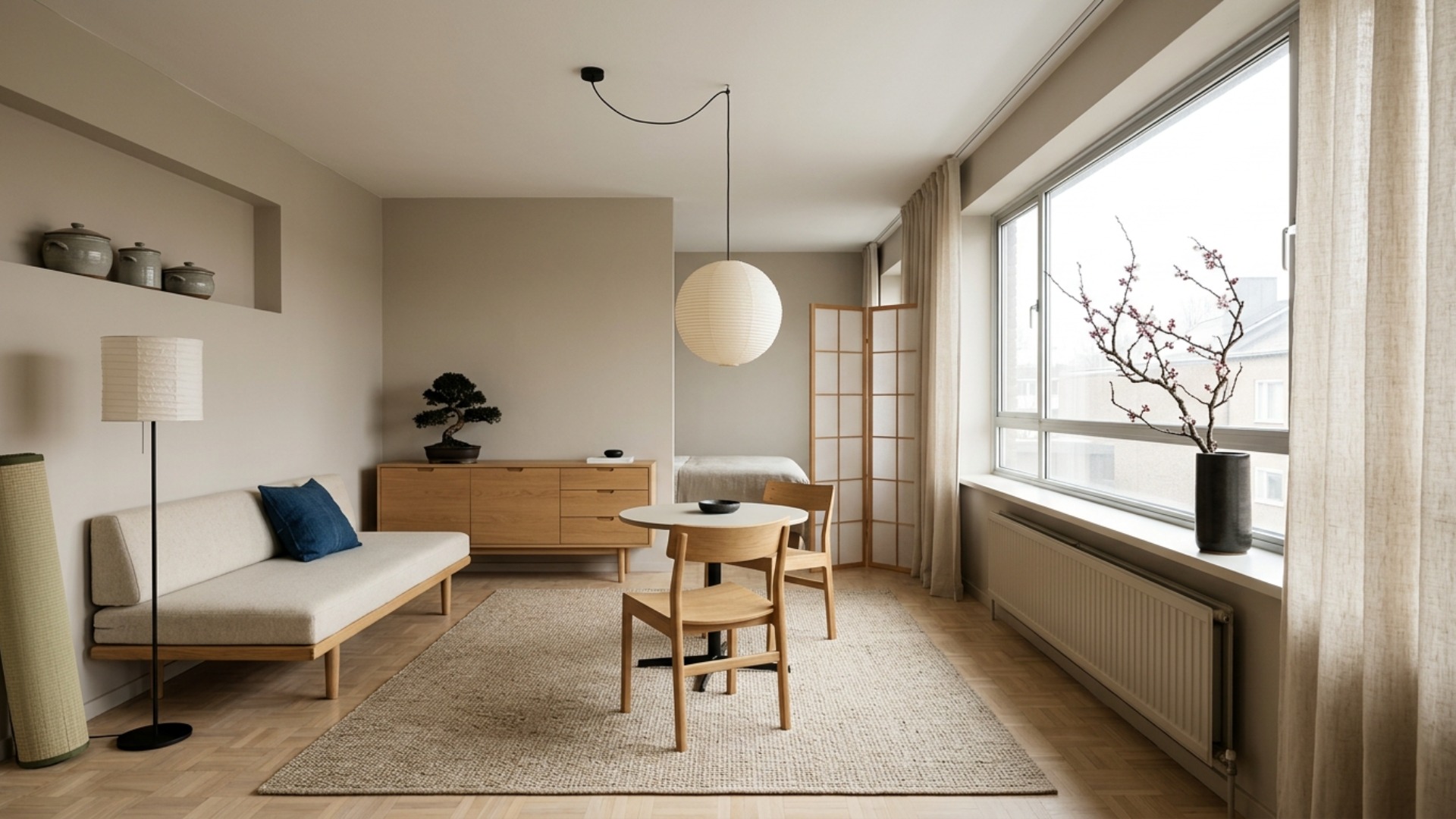
The real problem
Why this is harder than it looks
Japandi has been reduced to a shopping list: pale oak, matte black, a paper lantern, a gnarled branch in a tall vase. Buy all four and you have a beige room with things in it, which is not the same as a Japandi room. The style is not a set of objects. It is a rule about how much of the room stays empty.
What sits underneath is the overlap of two traditions that both treat negative space as a material rather than as leftover. The Japanese idea of ma is that the interval between things carries as much meaning as the things themselves, and Scandinavian functionalism arrives at something similar from the other direction, by refusing to keep anything that has no job. Where they meet is a room where the empty stretches of wall and floor are load-bearing. Remove them and the style collapses into generic warm minimalism.
A rental studio makes that easier in one way and harder in another. Easier because you already own less and cannot build in anything. Harder because the room comes with decisions already made: a floor you did not choose, walls in a colour you would not have picked, a vertical blind, three identical builder light fittings, and a rule that everything must come off in eighteen months without leaving a mark.
The failure pattern specific to renters is treating reversibility as permission to buy disposable. Peel-and-stick everything, a flat-pack shelf that will not survive the move, a sofa chosen because it was cheap. It is backwards. In a rental the furniture is the only permanent part of your design, because it is the part that leaves with you. Spend properly on four or five pieces that will work in the next place, and treat the walls, the floor, and the lighting as things you are borrowing.
A clear path
How to plan it
-
01
Deal with the floor with a rug rather than a fight
Whatever the floor is, you are not changing it, and covering most of it is faster and cheaper than resenting it. Buy one large flatweave in undyed wool or paper yarn, at least 200 by 300cm in a studio, sized so the front legs of every seating piece sit on it. One large rug reads as intentional flooring. Two small ones read as an attempt to hide something, which draws attention to the thing you were hiding.
-
02
Cover the window properly without drilling anything
A vertical blind will undo everything else you do, and it can go in a cupboard for eighteen months. Use a tension rod inside the reveal or an adhesive ceiling track rated well above the weight you need, and hang unbleached linen or a plain cotton panel that reaches the floor. Keep the fabric plain and slightly translucent: Japandi wants light filtered rather than blocked, and pattern here is the fastest way to lose the calm.
-
03
Swap the light fittings and keep the originals in a labelled box
Builder fittings and cool white bulbs are what make a rental read as a rental. Change the shades where you can, add two plug-in wall sconces with cord covers run down the corner, and put a paper lantern on a plain black cord over the table. Use 2700K bulbs everywhere and put them on dimmers or smart bulbs. Label the box with the original fittings and you get the deposit back without a conversation.
-
04
Take about a third of the objects out and leave the walls mostly bare
This is the step people skip, and it is the one that actually produces the style. Aim for one object per horizontal surface and no more than two things on any wall, then live with it for a week before adding anything back. A single ceramic vessel on an empty sideboard is the look. The same vessel next to a tray, a candle, a small plant, and a stack of books is not, no matter how good each item is on its own.
-
05
Visualize it in Framehouse before you buy the pieces that move with you
The furniture is the part of a rental design you are actually investing in, so it is worth being sure. Upload a photo of the studio as it is and generate the Japandi version before you commit to the daybed, the table, or the screen. It also settles the question renters ask most, which is whether the existing floor and wall colour can live with pale oak, and that is far easier to answer from an image than from a swatch.
Built for rental makeover
Moves that pay off
A rental rewards a particular kind of spending: heavy on the things that leave with you, light on the things that stay behind.
- Put the budget into four or five pieces of furniture you would take to the next place, and almost nothing into surfaces.
- Photograph every wall and fitting on day one. It settles deposit questions later and takes ten minutes.
- Use freestanding room dividers rather than anything fixed. A shoji-style screen or an open shelf unit does the job and comes with you.
- Choose adhesive picture hanging strips rated for double the weight you need, and skip anything heavier than a small frame on plasterboard.
- If you may repaint, one warm greige on every wall including the hallway is worth the weekend. If you may not, lean into the rug and the textiles instead.
- Do not buy peel-and-stick flooring or tile. It is the one reversible fix that routinely fails to come up cleanly and costs more than it saves.
japandi cues
What to keep, what to skip
Japandi is quieter than either of its parents, and it is defined more by what is absent than by what is present.
- Palette: warm greige or soft off-white, pale honey oak, unbleached linen, and matte black used sparingly. One muted accent at most. Deep olive and indigo both sit well.
- Wood: pale and matte with visible grain, oak or ash, oiled rather than lacquered. Avoid red-toned woods and anything glossy.
- Materials: paper, raw linen, ash-glaze and unglazed ceramic, rush and tatami. Texture carries the room, because the colour range is deliberately narrow.
- Structural signature: low horizontal lines and a floor that stays visible. Low furniture and a clear floor plane are more essential here than any single object.
- Negative space is a material. Leave one wall entirely empty and resist filling it. This is the rule that separates Japandi from warm minimalism.
- Skip: too much brass, glossy black lacquer, faux bonsai, wall decals of branches, and buying more than one paper lantern.
Use it for
What people plan with Framehouse
- Check whether pale oak works with your rental flooring
- Try a room layout before buying a sofa you will move twice
- See how the studio looks without the vertical blind
- Show a partner what a bare wall will actually feel like
- Decide whether the room needs a screen or just a rug
Quick answers
Common questions
Make a plan you can act on
Skip the spiral of mood boards. Three minutes in the Aura Quiz turns your taste into a direction.
Take the Aura Quiz