Scandinavian Living Room Ideas for a Rental Makeover
Scandinavian is the ideal rental style: it leans on light, texture, and a few good pieces rather than anything you have to drill, paint, or leave behind. This page shows how to make a rented living room feel calm and finished while keeping every change reversible.
The real problem
Why this is harder than it looks
The rental version of Scandinavian style usually fails for the opposite reason the homeowner version does. A renter assumes the look is out of reach because they cannot paint the walls or change the floor, so they stop at a throw and a candle and the room stays generic. The style gets read as something that needs permission, when almost none of it does.
What actually makes a Scandinavian room work is light, negative space, and a short list of warm natural materials, and every one of those is available to a renter. White rental walls are already the right base. The parts that read as expensive, the pale wood, the wool, the restraint, are things you bring in and take with you. The permanent surfaces matter far less than renters think.
The constraint you are working with is that nothing can leave a mark and everything has to come with you to the next place. That sounds limiting, but it maps neatly onto Scandinavian discipline: you were going to keep the material list short anyway. The real risk is not the landlord, it is buying rental-grade filler that looks temporary and that you will not want in the next apartment.
The failure pattern is spending on disposable pieces chosen because they are cheap rather than because they are right, then hanging things in ways that cost you the deposit. Buy fewer, better, portable pieces and use damage-free methods, and a rented living room can look every bit as considered as an owned one.
A clear path
How to plan it
-
01
Start with the light, since it is already yours
Take down heavy landlord blinds or dated curtains, box them for move-out, and hang simple linen panels on a tension rod that needs no drilling. Maximize the daylight that is the foundation of the style, and swap the cool rental bulbs for warm 2700K ones. Better light is the single biggest change you can make without touching a wall.
-
02
Anchor the room with a large rug you will take with you
A big flat-weave wool rug in oatmeal or soft grey covers a tired rental floor, defines the seating, and moves to the next apartment. Buy it larger than feels necessary, so the front legs of the seating rest on it. This one portable purchase does more than any semi-permanent flooring change, and it protects your deposit rather than risking it.
-
03
Bring warmth in pale wood and wool, not paint
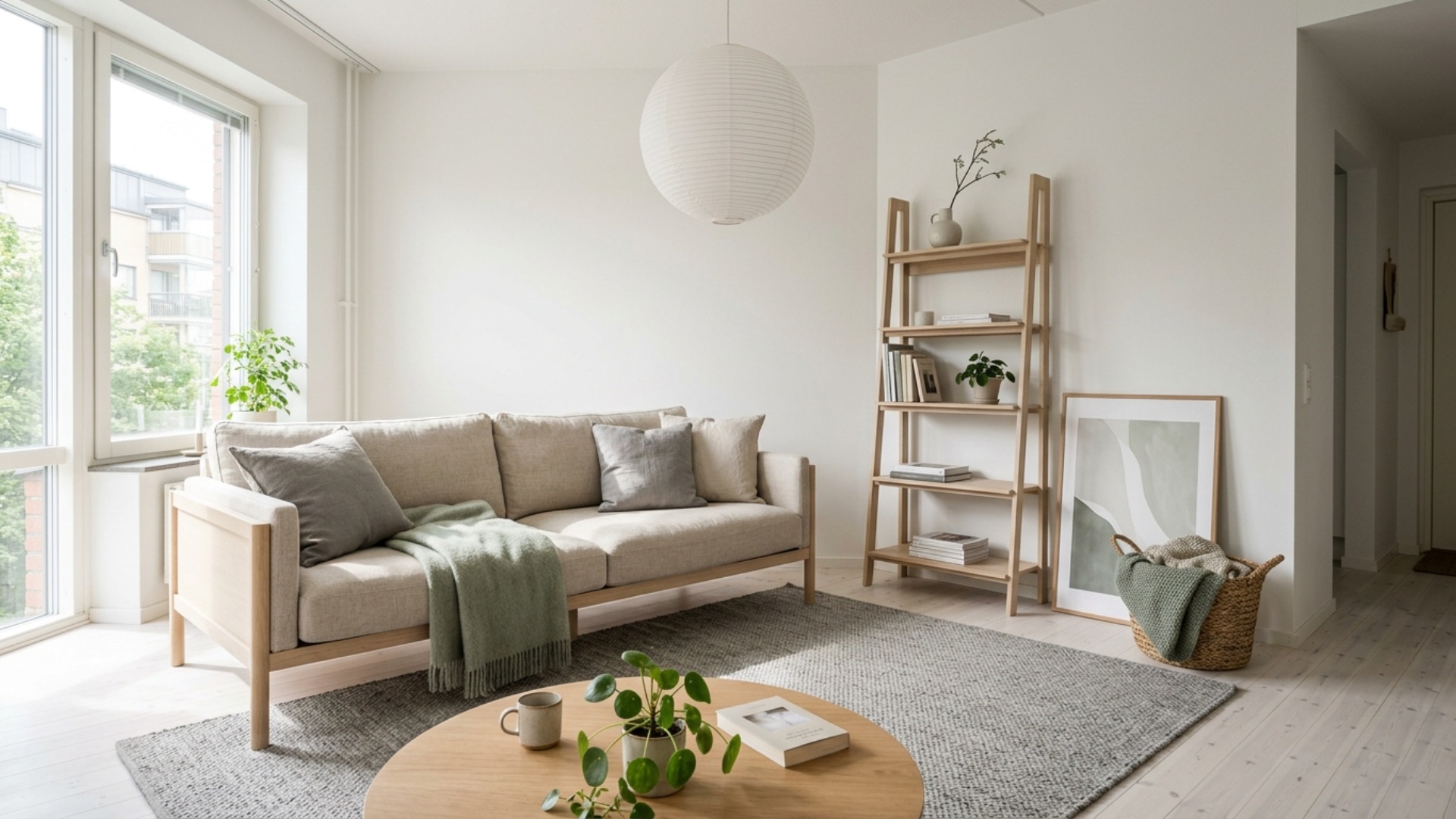
Since you cannot change the walls, let freestanding pieces carry the palette: a birch or ash shelf, an oak-toned coffee table, a boucle chair. Layer wool, linen, and a woven basket for texture. These are the parts of Scandinavian style that read as warm and finished, and they all pack up and leave with you.
-
04
Decorate the walls without damage
Lean a large framed print against the wall on the floor or a shelf instead of hanging it, and use removable adhesive strips rated for the weight for anything you do put up. A single leaning piece looks intentional and costs you nothing at move-out. Avoid nails and heavy anchors, which are the fastest way to lose a deposit.
-
05
Visualize it before you buy portable pieces
Renters cannot absorb wrong purchases either, and a pale oak or a soft grey reads differently against your specific rental floor and light. Photograph the room and test the rug tone, the wood, and the layout in Framehouse first. Since every piece has to be worth carrying to the next place, seeing it finished before you buy is worth even more to a renter.
Built for rental makeover
Moves that pay off
A rental makeover is about reversible, portable, deposit-safe choices. Favor freestanding over fixed, and buy pieces good enough to want in the next apartment.
- Use tension rods, removable adhesive strips, and freestanding furniture so nothing needs a drill or leaves a hole.
- Photograph the apartment on move-in day, including any existing damage, so a landlord cannot later blame you for it.
- Cover, do not replace. A large rug, a slipcover, and linen panels hide dated finishes without altering them.
- Buy pieces you will keep. Portable, well-made furniture beats cheap filler that looks temporary and gets left behind.
- Be cautious with peel-and-stick on surfaces you are unsure about, since some removable products still pull paint or finish.
- Keep the original blinds and fixtures boxed, so you can reinstall them and reclaim your deposit at move-out.
scandinavian cues
What to keep, what to skip
Scandinavian runs on a short, warm palette and a lot of daylight. For a rental, lean on the movable parts of the style and let the white walls you already have do their job.
- Palette: the white rental wall as your base, plus pale birch and ash, soft grey wool, and one muted accent like sage.
- Woods: light, matte, and freestanding. A birch shelf or oak coffee table brings the tone in without touching the floor.
- Textiles: wool, linen, and boucle in soft undyed tones, layered for warmth and easy to pack.
- Structural signature: low furniture on slim legs, which keeps a small rental feeling open and travels well.
- Light: undressed or linen-panel windows, warm bulbs, and a mirror leaned to bounce daylight deeper into the room.
- What to skip: dark temporary decor, heavy patterns, and anything that needs a nail to look finished.
Use it for
What people plan with Framehouse
- Test a soft grey against an oatmeal rug over your actual rental floor before buying the larger, pricier one.
- Try a leaning framed print versus a wall-hung arrangement to see which reads more finished without damage.
- Show a partner how linen panels on a tension rod transform the windows without a single drill hole.
- Check that a freestanding shelf clears the radiator and fits the wall before you carry it home.
- Preview whether a birch or an oak-toned coffee table warms the room more against your existing sofa.
Quick answers
Common questions
Make a plan you can act on
Skip the spiral of mood boards. Three minutes in the Aura Quiz turns your taste into a direction.
Take the Aura Quiz