Minimalist Studio Apartment Ideas for a Move-In Redesign
The week you move into a studio is the only time you will ever see it empty, and that empty room is information worth more than any mood board. Here is how to design a minimalist studio around what the space told you before the boxes swallowed it.
The real problem
Why this is harder than it looks
Moving into a studio comes with a deadline nobody states out loud: whatever arrangement exists by the second weekend tends to survive the whole lease. Unpacking has its own momentum, every emptied box becomes furniture placed somewhere, and somewhere hardens into permanent within days. Most studios are not designed at all. They are simply the fossil record of one exhausting weekend.
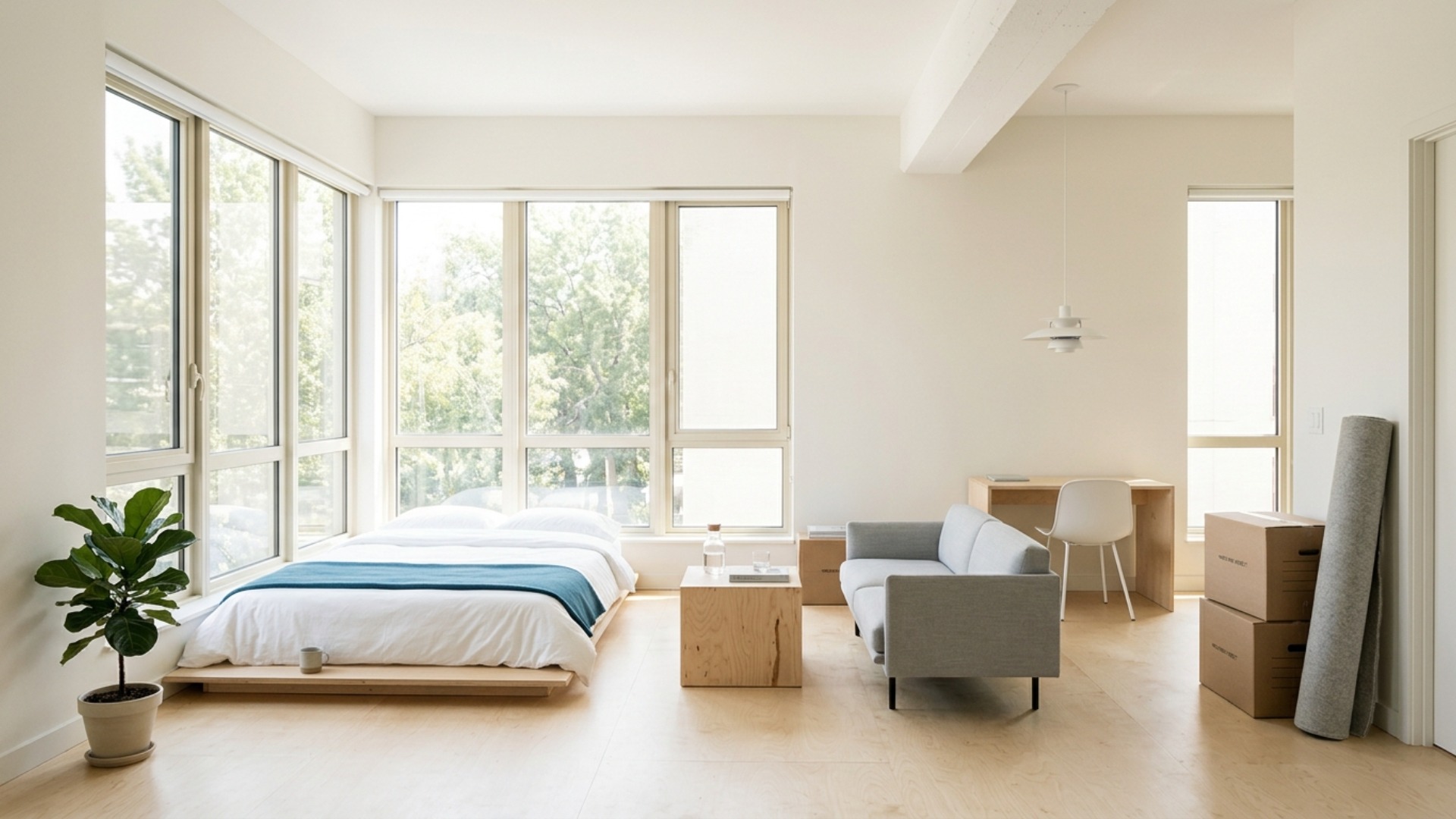
A minimalist move-in flips that script by treating the boxes as a feature. Everything you own is already packed, sorted, and out of sight, which is precisely the state minimalists spend years trying to get back to. The move is to unpack deliberately: bed, table, seat, lamp, and then stop. Live in that version for a week. The apartment will tell you where the light pools, which wall the room wants the bed on, and which boxes you never felt the need to open.
The failure pattern is furnishing for the apartment you left. The sofa that fit the old one-bedroom, the second bookcase, the armchair nobody sat in: they arrive, they claim floor, and the studio is full before it was ever designed. In 350 square feet, every piece you carry in without questioning costs you the room's one real luxury, which is emptiness.
Design decisions made in an empty room are the cheapest you will ever make. The goal of the first two weeks is to make as many of them as possible while the floor is still visible.
A clear path
How to plan it
-
01
Unpack only the first four: bed, table, seat, light
Set up the bed properly on day one, add one table, one chair, and one warm lamp, and declare the apartment functional. This forced minimum is the whole strategy: it keeps the floor clear while you learn the room, and it makes every further unpacking a decision instead of a default.
-
02
Let the room pick the layout, not the floor plan
Spend the first week watching where light lands morning and evening before committing the bed and desk. In most studios the bed belongs in the darkest corner and the desk near the window, but the only way to know is to live a few days in the empty version. Lock the layout before the rug and shelving arrive.
-
03
Apply the one-month box rule ruthlessly
Any box still sealed after a month holds things the apartment does not need. Sell or donate it unopened if you can bear to, or store it at a parent's place if you cannot. A studio has no spare closet for a maybe pile, and the stuff you shed now is storage furniture you never have to buy.
-
04
Buy storage only after the purge, and buy it closed
Once the boxes are gone you will know exactly how much storage the life you actually live requires, and it is always less than moving day suggested. Choose closed pieces, a lidded bench at the bed's foot, one wardrobe, drawers under the platform, since in one room every open shelf is part of the decor whether it deserves to be or not.
-
05
Test the full arrangement in Framehouse before buying anything large
Photograph the studio while it is still nearly empty and try layouts, storage walls, and a palette in Framehouse before the big purchases. An empty room is the best possible canvas for a redesign preview, and it is far easier to move a sofa in software than through a stairwell.
Built for moving in redesign
Moves that pay off
A move-in is a one-time window where sequencing matters more than taste.
- Book nothing for delivery in week one except the mattress. Every early delivery makes a layout decision for you.
- Photograph the empty apartment from each corner before the truck arrives; you will design from these photos for months.
- Put $100 into lighting before $1,000 into furniture: one warm floor lamp and warm bulbs change how livable the minimum feels.
- Measure the stairwell and door before any large purchase. Studio buildings are where sofas go to be returned.
- Keep the kitchen and bathroom fully boxed until their cabinets are wiped and lined; they are the only rooms with fixed storage.
- Resist duplicate furniture. One table serves desk, dining, and entry duty in a studio that is honest with itself.
modern minimalist cues
What to keep, what to skip
Minimalism in a studio is less about owning little and more about the room reading as one calm gesture.
- Palette: one bright warm white for every wall, pale wood, and a single cool accent such as petrol blue or fog grey, repeated twice at most.
- Materials: birch or ash, cotton, wool, matte steel, clear glass. Nothing that shines, nothing faux.
- Furniture: low, leggy, and few. The bed platform is the largest object; nothing else competes.
- Zones by rug and light, not dividers: a screen in 350 square feet is a wall you bought voluntarily.
- One surface stays permanently empty, the table or a counter. It is the room's visual exhale.
- Skip: bulk-buy organizers, over-door racks, second bookcases, and any furniture described as multi-functional that does neither function well.
Use it for
What people plan with Framehouse
- Try three bed positions in your actual studio photo before the frame ships
- See the room with a petrol blue accent against birch before buying textiles
- Check whether a wardrobe or under-bed drawers handle your closet overflow better
- Compare one warm lamp against two cool ones in your real evening light
- Show a partner the ten-item version of the room before the storage run
Quick answers
Common questions
Make a plan you can act on
Skip the spiral of mood boards. Three minutes in the Aura Quiz turns your taste into a direction.
Take the Aura Quiz