Japandi Bedroom Ideas for a Move-In Redesign
The week you move in is the one time a bedroom has no habits to undo, which makes it the best moment japandi will ever get. This page shows how to set the room up right before the clutter claims its territory.
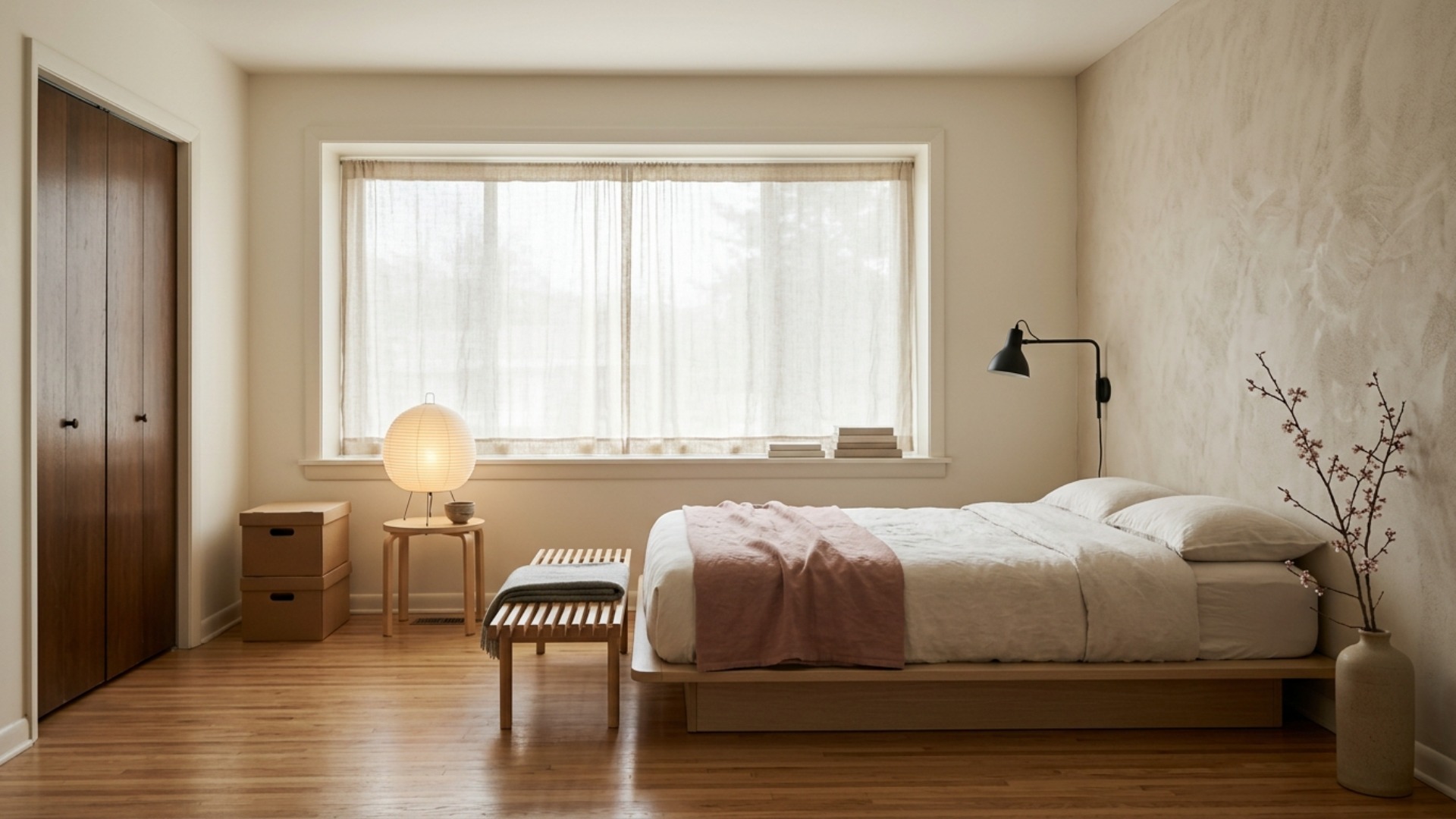
The real problem
Why this is harder than it looks
Move-in advice usually says to live in a space for a few months before deciding anything. For most styles that is sensible. For japandi it wastes the one advantage a move gives you: a room with nothing in it and no habits attached. The style is defined by what is absent, and absence is exactly what you are standing in on day one.
What japandi asks for is a small number of low, warm, honest pieces and a lot of disciplined emptiness. That is brutally hard to retrofit into a furnished room, because it means removing things you already own and rationalizing the survivors. On move-in day it is the path of least resistance: you simply unpack less, and place what you unpack deliberately.
Your starting point is boxes, a bed that may or may not survive the transition, and a deadline feeling that the room should be done by Sunday. That deadline is the enemy. A japandi bedroom comes together in two passes, the essentials in week one and the layers a month later, and rushing the second pass is how the style collapses into generic beige.
The failure pattern is unpacking everything you brought and then trying to subtract your way back to calm. It never happens; objects that make it to a surface stay there. The fix is a one-way rule: nothing gets placed in the bedroom unless it has a job or the room visibly needs it. Boxes that stay sealed after a month go to storage or out the door.
A clear path
How to plan it
-
01
Place the bed first and place it low
Put the bed on the longest wall without a door or radiator, facing the window if the room allows. If you are replacing the frame, go low: a platform in oak or walnut-toned wood, 8 to 12 inches off the floor with no tall headboard. In a japandi room every other decision hangs off the bed's height and position, so this choice comes before any unpacking.
-
02
Unpack in one palette and quarantine the rest
Before the boxes open, commit to warm white, oatmeal, oak, and one black accent. Bedding, curtains, and the first textiles out of the boxes follow the palette; everything that clashes stays boxed in the closet for a month. Most of it will never argue its way back into the room.
-
03
Solve storage before the floor disappears
One wardrobe or dresser in wood, under-bed drawers if the frame has them, and a wall hook rail in oak or black. The Japandi surfaces-stay-empty rule only works when closed storage exists, so buy or assemble it in week one, before the pile system takes root on the chair.
-
04
Add the two lights that make the style read
Replace the ceiling fixture with a paper lantern like a Noguchi-style Akari, and put one warm lamp at the bedside, ceramic or black metal, bulbs at 2700K. Harsh overhead light is what makes an empty room feel unfinished instead of calm, and fixing it costs less than $150.
-
05
Preview the layers before the second-pass purchases
After a month, the room will tell you what it actually needs: usually a rug a shade darker than the floor, one bench or stool, and a single large plant or branch. Photograph the room and test those candidates in Framehouse before buying, since the second pass is where japandi rooms either finish or drift into clutter.
Built for moving in redesign
Moves that pay off
A move-in is a sequencing gift: the room is empty, so the order of operations is fully yours. Spend it deliberately.
- Do the bed, the palette commitment, and the storage in week one; wait a full month on art, rugs, and accessories.
- Budget in two passes: roughly two thirds on the bed, bedding, and storage now, one third held back for what the room reveals later.
- Keep the floor visible: in a japandi bedroom bare oak around a low bed does more for calm than any object you could add.
- If the moving budget is tight, paint and a paper lantern move the room further than replacing any single furniture piece.
- Renters: a freestanding wardrobe, a hook rail, and a plug-in pendant deliver the whole system without one hole beyond a picture nail.
- Label one closet shelf 'undecided' and let doubtful objects live there, not on the dresser, while they wait for a verdict.
japandi cues
What to keep, what to skip
Japandi in a bedroom is a low horizon, a warm narrow palette, and surfaces kept honest. Set these rules on day one and the room holds them.
- Palette: warm white, oatmeal, honey oak, one matte black note, and at most one muted accent like dusty rose or sage.
- Materials: solid or veneered light wood, washed linen, wool, paper, unglazed ceramic. No chrome, no gloss, no acrylic.
- One structural signature: the low bed line, echoed by a bench or a long low dresser, nothing tall except one plant or branch.
- Light warm and paper-filtered: an Akari-style pendant plus one bedside lamp beats any number of spots.
- Three objects per surface, maximum, and one of them should be alive or handmade.
- What to skip: tall headboards, matching furniture sets, gallery walls, and buying decor in the first month.
Use it for
What people plan with Framehouse
- Test a low platform bed against your actual wall before the freight order
- See whether warm white or a clay plaster tone suits the room's real light
- Compare oak against walnut furniture in the room before committing the budget
- Check rug sizes against your floor plan before the second-pass purchase
- Show a partner the finished room before the boxes are even open
Quick answers
Common questions
Make a plan you can act on
Skip the spiral of mood boards. Three minutes in the Aura Quiz turns your taste into a direction.
Take the Aura Quiz