Coastal Studio Apartment Ideas for a First Apartment
Coastal is the rare style that suits a first studio perfectly, because its whole language is light, air, and a few natural textures rather than expensive furniture. This page shows how to get the breezy look in one rented room without the nautical cliches or a security-deposit fight.
The real problem
Why this is harder than it looks
The instinct with coastal is to reach for the theme: the anchor print, the rope, the navy and white stripes, a starfish or two. In a small first studio that theme turns a room that should feel like a breezy beach house into a gift-shop version of one, and it does it fast because there is nowhere for the eye to rest. The look people actually want is quieter than the one the decor aisle sells.
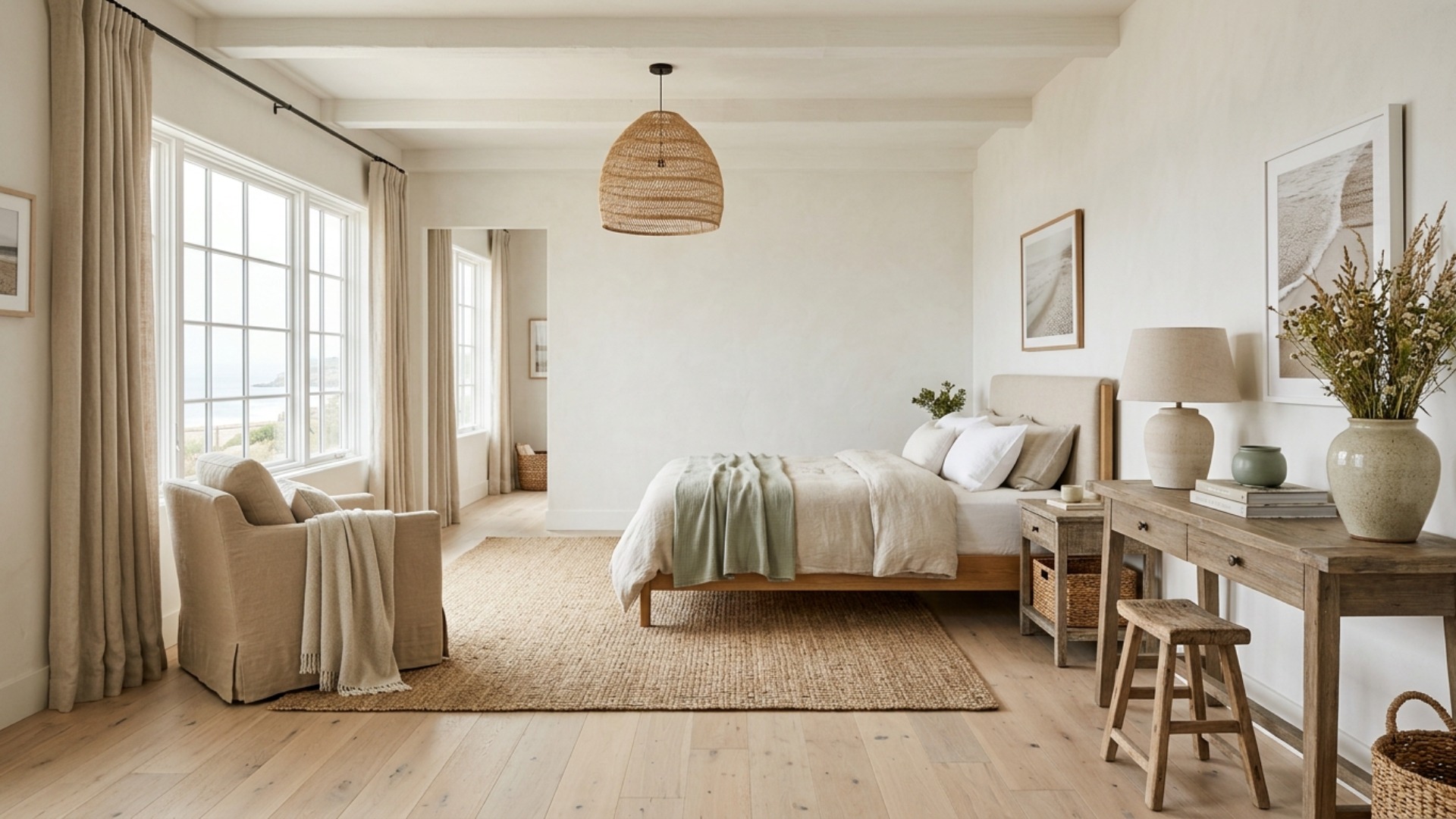
Real coastal is about light and restraint. It is off-white and sand, weathered wood, linen and jute, and as much natural light as the window will give, with the ocean implied rather than illustrated. That is good news for a first apartment, because none of it is expensive and none of it requires owning the place. The materials do the work, so the budget goes to a few honest textures instead of furniture.
Your real starting point is one room doing every job at once, probably rented, probably with white or beige walls you cannot change and a lease you do not want to fight. Coastal is unusually forgiving here. Its palette loves the landlord white you are stuck with, and its whole mood is casual, so nothing has to be perfect or built in.
The failure pattern is decorating the theme instead of building the feeling, and forgetting that a studio needs zones before it needs style. Solve the one-room problem first, define where the bed ends and the living starts, then let a light, natural, restrained palette carry the coastal part almost on its own.
A clear path
How to plan it
-
01
Zone the one room before you decorate it
A studio reads as calm only when it has clear areas, so define them before adding any style. A jute rug under the living area, the bed set apart with a low bookshelf or an airy linen curtain on a tension rod, and a small console marking the entry all give the eye borders. This costs little and matters more than any coastal accessory, because an undivided studio always feels cluttered no matter how nice the pieces are.
-
02
Lean into the light you have
Coastal lives on natural light, so treat the window as the main feature. Hang sheer or unlined linen curtains high and wide so the glass reads larger and the light spreads, and skip heavy drapes. Add a large mirror opposite or beside the window to bounce daylight deeper into the room. In a small studio this single move does more for the breezy feeling than any amount of decor.
-
03
Build the palette from sand, off-white, and weathered wood
Keep the base pale and warm: off-white and sandy neutrals on the big soft things, weathered or light oak on the furniture, and one muted accent like sage or a soft washed blue rather than a bright nautical navy. Layer natural textures, linen bedding, a jute or seagrass rug, a rattan light or basket, to add the coastal feeling without a single literal beach motif.
-
04
Choose double-duty, renter-friendly furniture
In a studio every piece should earn its footprint, and in a rental nothing should require a drill if you can help it. A storage ottoman as coffee table and seating, a weathered console that works as a desk and an entry table, and a bed with drawers underneath all pull double duty. Favor light, low, leggy pieces in pale wood, which keep sight lines open and make a small coastal room feel airier.
-
05
See the coastal studio in your real room before you buy
A studio punishes a wrong-sized or wrong-toned purchase because there is nowhere to hide it, and coastal neutrals shift a lot depending on your light and your landlord white. Before you buy the rug, the curtains, or a piece of furniture, visualize the finished coastal studio in Framehouse using a photo of your actual room, so you can test the zoning and the sand-and-oak palette against your real walls and windows before any money leaves your account.
Built for first apartment
Moves that pay off
A first apartment usually means a rental, a tight budget, and one room that has to do everything. Sequence the spending so it survives the move to your next place too.
- Solve zoning before style, since a studio that reads as one cluttered box will not look coastal no matter what you buy.
- Buy freestanding, renter safe pieces that need no drilling, and use tension rods and leaning mirrors instead of wall anchors.
- Put money into a few good textiles, linen bedding and a jute rug, rather than furniture, because textures carry coastal and move with you.
- Choose light, low, leggy furniture that keeps sight lines open and makes the small room feel larger.
- Skip the theme decor. One woven basket or a piece of driftwood beats a wall of anchors and rope.
- Keep pieces neutral and versatile so they work in your next apartment, since a first place is rarely the last.
coastal cues
What to keep, what to skip
Coastal is about light and natural texture, not literal beach objects. Hit these and a rented studio reads breezy and calm.
- Palette: off-white and warm sand, weathered or pale oak, and one muted accent such as sage or a soft washed blue, never bright nautical navy.
- Materials: linen, cotton, jute, seagrass, rattan, and light wood, layered for texture rather than color.
- Light: maximize it. Sheer linen curtains hung high and wide, a large mirror to bounce daylight, and warm bulbs after dark.
- Openness: low, leggy furniture and clear sight lines, so the small room feels airy and the eye can travel.
- One natural signature: a woven pendant, a large basket, or a simple piece of driftwood carries the theme without clutter.
- What to skip: nautical cliches, rope and anchor motifs, navy and white stripes everywhere, and any heavy dark furniture that closes the room in.
Use it for
What people plan with Framehouse
- Test a jute rug and zoning layout against your actual floor plan first.
- See how sheer linen curtains change the light before buying window treatments.
- Compare a sage accent against a soft washed blue in your own light.
- Check that a double-duty console fits as both desk and entry table.
- Preview the whole room without theme decor so you trust the restrained look.
Quick answers
Common questions
Make a plan you can act on
Skip the spiral of mood boards. Three minutes in the Aura Quiz turns your taste into a direction.
Take the Aura Quiz