Coastal Living Room Ideas for a Family Home Refresh
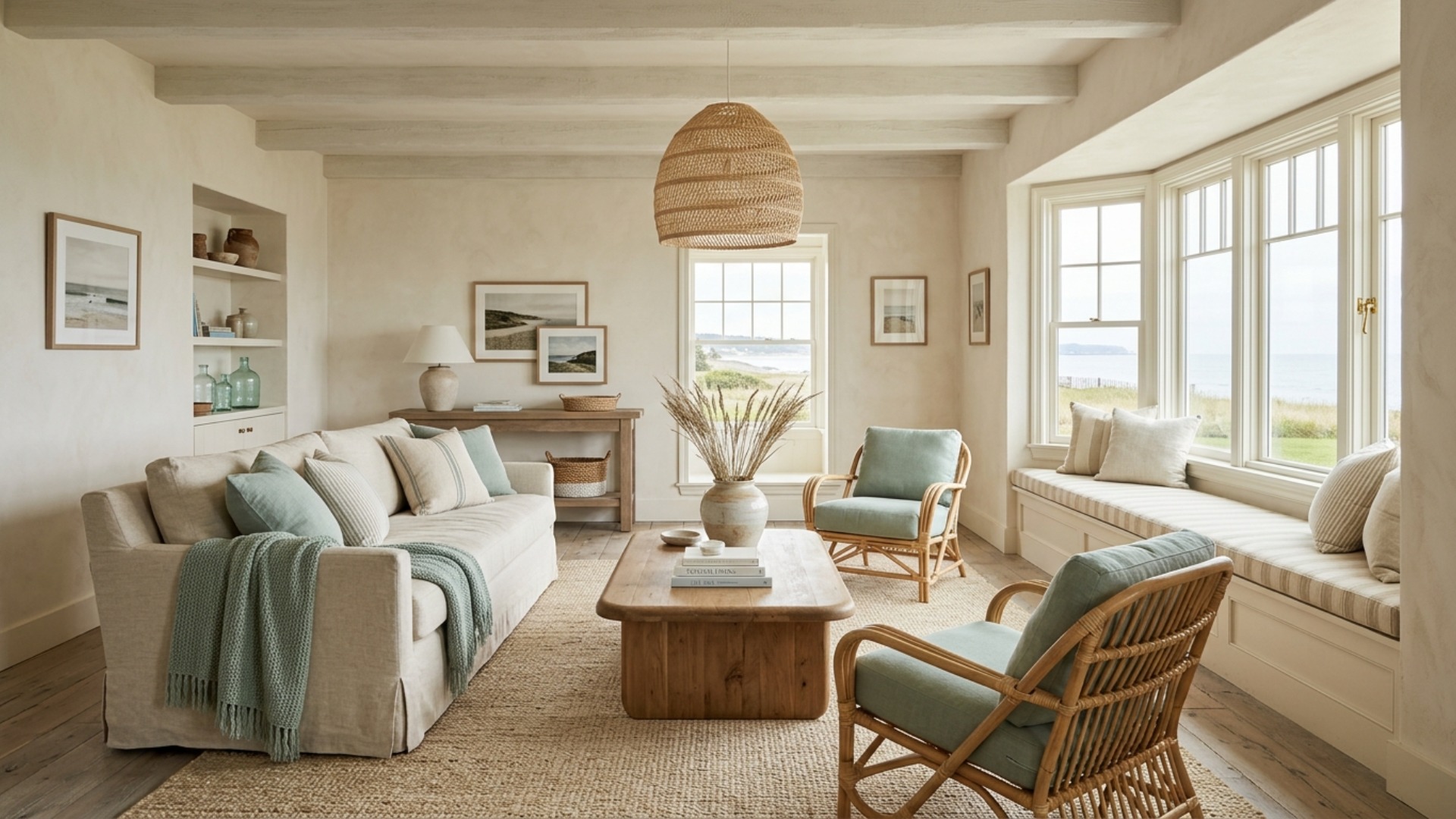
Coastal is the rare style that gets better when children and dogs live in it, because its whole vocabulary is washable, slipcovered, and already a little weathered. This page shows how to refresh a family living room into coastal calm without a renovation or a navy anchor in sight.
The real problem
Why this is harder than it looks
Coastal style has a reputation problem, and the reputation is earned. The version most people picture, navy stripes, rope mirrors, an oar on the wall, a sign that says BEACH, is a theme park, and it dates faster than almost any look you can buy. Families refresh into it, live with it for two summers, and then pay again to take it out.
What coastal actually is, underneath the gift-shop layer, is a palette and a material logic: light-washed wood, linen and cotton you can launder, sand and off-white with one water-glass color, and as much daylight as the windows will give. Notice what that list is: the most child-proof and dog-proof vocabulary in interior design. Slipcovers wash. Jute hides sand and crumbs. Weathered wood cannot be visibly scratched because it already is.
Your starting point in a family refresh is a room that already works structurally, the sofa faces the right way, the TV has its wall, but has silted up with dark furniture, mismatched storage, and toys. The job is not to redesign the room. It is to lighten it: fabrics, rug, paint, and the three big surfaces, then let the existing bones read as coastal because everything on them got paler and washable.
The failure pattern to avoid is buying the theme instead of the palette. Every literal object, anchors, shells in jars, nautical flags, pushes the room toward rental-cottage, and none of them survive a toddler anyway. Spend the same money on one slipcovered sofa and the room will still look right in ten years.
A clear path
How to plan it
-
01
Lighten the three biggest surfaces first
The wall color, the sofa, and the rug decide whether a room reads coastal, so start there. Walls in a warm off-white such as Benjamin Moore White Sand, a slipcovered sofa in washed oatmeal or white linen, and a large jute or wool flatweave underfoot. Everything else is an accent on top of those three.
-
02
Choose fabrics by whether they launder
The family test for every textile is the washing machine: slipcovers that unzip, cotton and linen cushion covers, a couple of machine-washable throws. Performance linen blends from Cisco Brothers, Sixpenny, or IKEA's washable lines take the anxiety out of white, and anxiety-free white is the entire coastal trick.
-
03
Add one water color and keep it just one
Coastal earns its calm by restraint: sand, off-white, and driftwood tones everywhere, plus a single accent drawn from water, sea-glass green, faded aqua, or a soft grey-blue, carried by cushions, one throw, and maybe a vase. The moment a second strong color joins, the scheme tips toward theme.
-
04
Swap shine for texture
Trade glossy and dark surfaces for woven and washed ones: a rattan or woven pendant instead of the builder fixture, a reclaimed or limewashed wood coffee table with rounded corners instead of a glass one, woven baskets as the toy storage. Texture is what separates coastal from plain beige, and every woven object is also lighter and safer around children.
-
05
Preview the refresh in Framehouse before buying
A refresh spends its budget in three or four purchases, so a wrong sofa color or an undersized rug hurts. Photograph the room and preview it in Framehouse first: test White Sand against your actual light, check the slipcover tone against the floor, and confirm the jute rug size holds the seating before anything is ordered.
Built for family home refresh
Moves that pay off
A family refresh succeeds by changing surfaces, not layout, and by sequencing around real life.
- Refresh in order of grime exposure: rug and sofa fabrics first, walls second, decor last, because the first two are what children actually touch.
- Buy the slipcovered sofa once and well; a washable cover extends its life by years and survives every future style change.
- Keep the existing layout unless it is actively broken, since a refresh that moves no furniture finishes in a weekend.
- Put toy storage in closed woven baskets at child height, one per child, and the nightly reset takes five minutes.
- Defer art and shelf styling until the big surfaces are done; the room will need less of it than you think.
- Skip anything that cannot take a spilled juice box: silk cushions, pale velvet, glass tables with corners.
coastal cues
What to keep, what to skip
Coastal lives or dies on the difference between palette and theme, and these cues keep it on the right side.
- Palette: warm off-white, sand, driftwood, and one water accent such as sea-glass, faded aqua, or grey-blue.
- Materials: washed linen, cotton canvas, jute, rattan, limewashed or reclaimed light wood, matte ceramic.
- Light: maximize daylight with sheer or no curtains, and warm woven fixtures after dark.
- Furniture: slipcovered, rounded, low-slung, and pale; nothing glossy, nothing spindly, nothing dark brown.
- One signature: a single woven pendant or one piece of visibly weathered wood carries the coastal read alone.
- Skip: anchors, oars, rope motifs, shell displays, navy-and-white stripes, and any object with a word on it.
Use it for
What people plan with Framehouse
- Test White Sand walls against your room's real light before painting.
- Check an oatmeal slipcover against your floor tone before ordering the sofa.
- See a 9x12 jute rug under the full seating group before sizing down.
- Compare sea-glass against grey-blue as the accent and pick one.
- Show the family the finished room so everyone stops missing the old sofa early.
Quick answers
Common questions
Make a plan you can act on
Skip the spiral of mood boards. Three minutes in the Aura Quiz turns your taste into a direction.
Take the Aura Quiz