Industrial Kitchen Ideas for a Family Home Refresh
Industrial style has a reputation for being cold and hard, which is exactly the wrong instinct for a kitchen a family actually lives in. This page shows how to keep the steel, brick, and concrete while making the room warm, durable, and genuinely kid-proof.
The real problem
Why this is harder than it looks
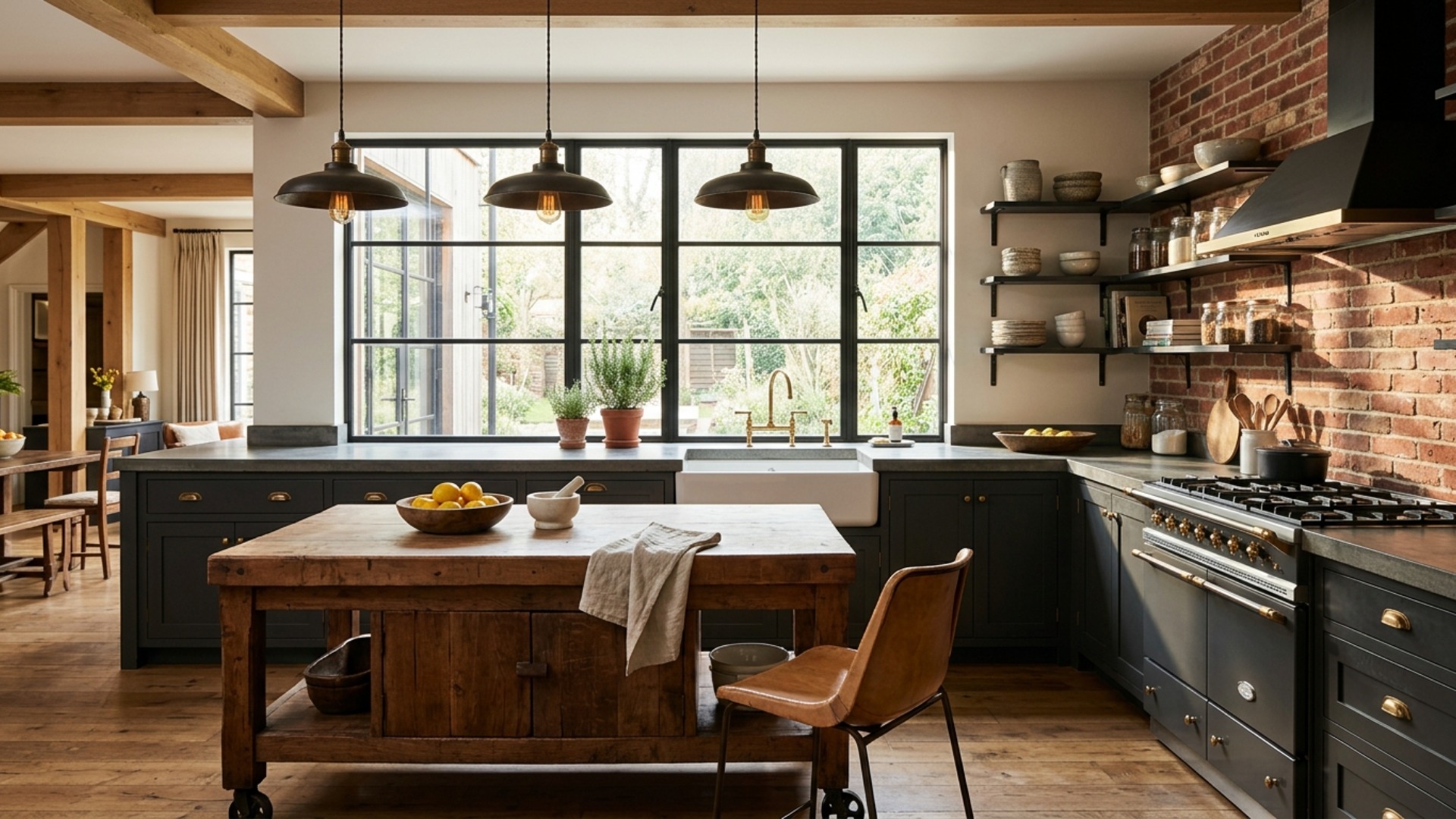
Industrial kitchens photograph as raw lofts: bare concrete, black steel, a wall of exposed brick, one dramatic pendant. That reads beautifully in a childless downtown apartment shot at golden hour. Dropped into a family home, the same palette can feel like a parking garage with a stove in it, and every parent who has wiped syrup off honed concrete learns why fast.
What industrial style is actually about is honesty of materials: showing the structure and the wear rather than hiding it behind trim and paint. That instinct is a gift in a family kitchen, because the surfaces that age well, steel, oak, and brick, are the ones that shrug off a decade of homework and spaghetti. The problem is not the materials. It is treating industrial as a color scheme instead of a set of choices about durability and warmth.
Most family refreshes start from a builder-grade kitchen: oak or white shaker cabinets, a tile backsplash, laminate counters, recessed lights. You are not gutting it. You are deciding which two or three moves shift it toward industrial without turning the one room everyone gathers in into somewhere nobody wants to linger.
The failure pattern is going all-in on cold and hard. All-concrete counters are porous and stain, all-black cabinets show every fingerprint at kid height, and a room of raw metal echoes with four people in it. The fix is to pair each hard material with a warm one, and to spend the budget on the surfaces that get touched rather than the ones that get photographed.
A clear path
How to plan it
-
01
Warm the palette before you add any metal
Industrial goes cold when it is all gray and black. Anchor the room with wood: an oak butcher-block island top, open oak shelving, or a reclaimed-wood range wall, so the steel has something warm to sit against. If cabinets are getting painted, a deep charcoal or forest green reads more industrial and hides small hands better than true black.
-
02
Choose one hard surface as the statement, not all of them
Concrete counters, steel shelving, brick, and blackened cabinets are each striking, and all four at once is a warehouse. Pick one to lead: a concrete-look quartz island that resists stains where the family actually preps, then let brick or steel play a smaller supporting role. Quartz that mimics concrete gives you the look without the sealing and etching real concrete demands in a working kitchen.
-
03
Put the wear where wear belongs
Industrial rewards materials that look better scuffed, so send them to the hardest-working spots. Aged brass or blackened-steel hardware hides fingerprints, a stainless or fireclay farmhouse sink takes abuse, and a wire-brushed oak floor or wood-tone vinyl plank forgives dropped pans. Save delicate finishes for the pantry, not the island.
-
04
Light it warm and layer it
One bare bulb over an island is a photo prop, not lighting for homework and dinner prep. Hang blackened-metal shade pendants with warm 2700K bulbs over the island, add under-cabinet strips for the counters, and skip the Edison-bulb cliche, which flatters nothing you actually do in a kitchen. Warm layered light is what keeps industrial from tipping into austere.
-
05
See it against your real cabinets before you commit
A concrete-look counter and charcoal cabinets can read either handsome or grim depending on your floor, your light, and your backsplash, and a kitchen is the most expensive room to get wrong. Photograph yours and use Framehouse to test the counter, the cabinet color, and the shelving against what you already have before you order a single sample.
Built for family home refresh
Moves that pay off
A family kitchen refresh is about durability and sequencing, not a magazine reveal. Prioritize the changes that survive real life and defer the rest.
- Start with cabinet paint and hardware, the highest-impact change for the least money and mess.
- Choose stain-resistant quartz over real concrete for any counter a child will sit at.
- Add open oak shelving for everyday dishes, but keep upper cabinets for the clutter you do not want on display.
- Pick flooring that hides crumbs and forgives dropped pans before you pick anything decorative.
- Defer the exposed-brick wall; a brick-look veneer or a single painted wall gets most of the effect for far less.
- Leave appliances until last, since good stainless already reads industrial and rarely needs replacing for style alone.
industrial cues
What to keep, what to skip
Industrial lives in honest structural materials and a warm, weathered palette. Hold these and it will not read as a cold loft cliche.
- Palette: charcoal, warm gray, and black, grounded by oak and softened with aged brass or brick red.
- Materials: blackened steel, concrete or concrete-look quartz, brick, oak, and aged leather. Let them show wear.
- One structural signature: an exposed element, whether steel-framed glass, open metal shelving, or a brick wall.
- Mix metals sparingly. Blackened steel plus aged brass is enough; avoid chrome and polished nickel.
- Choose patina over polish. A material that improves as it ages is the whole point.
- What to skip: fake distressing, Edison-bulb overload, and an all-hard palette with no wood or leather to warm it.
Use it for
What people plan with Framehouse
- Test a concrete-look quartz against your existing floor before ordering a slab
- Compare charcoal versus forest-green cabinets in your actual kitchen light
- See whether open oak shelving works before you remove upper cabinets
- Show the family what the refreshed kitchen will feel like at dinner
- Check that blackened hardware reads warm, not stark, against your cabinets
Quick answers
Common questions
Make a plan you can act on
Skip the spiral of mood boards. Three minutes in the Aura Quiz turns your taste into a direction.
Take the Aura Quiz