Coastal Bedroom Ideas for a Family Home Refresh
After a decade of family life the main bedroom is usually the room that got skipped, which is why it feels tired rather than wrong. Coastal is the most forgiving style for that situation, because it hides wear instead of highlighting it.
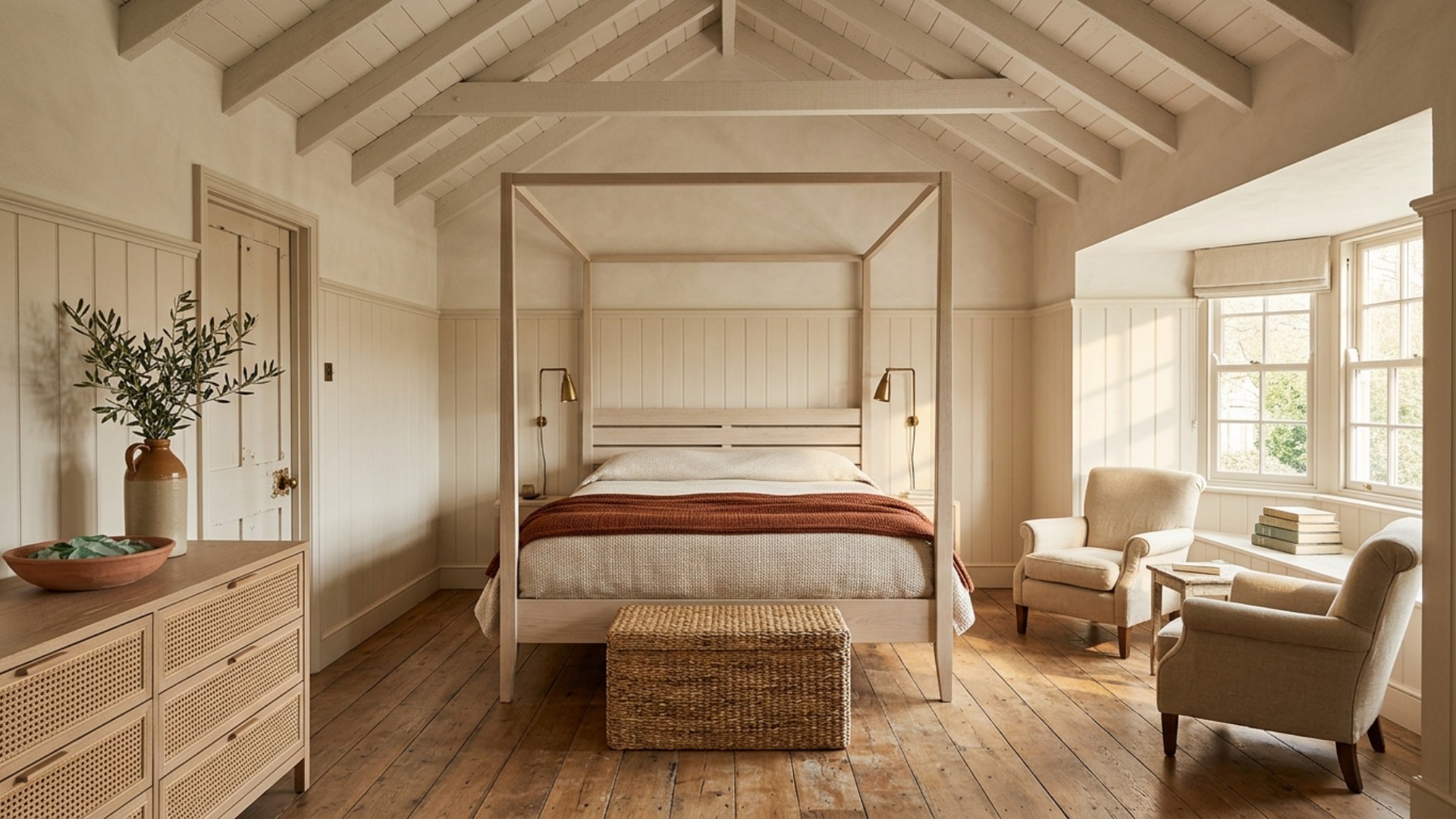
The real problem
Why this is harder than it looks
A main bedroom in an established family home is rarely broken. It is worn. The paint is fine but flat, the bedding is the third set bought in a hurry, the chest of drawers is the one from the first flat, and there is a laundry chair. Nothing about it justifies a renovation, which is exactly why it has been last on the list for eight years and will stay there unless someone gives it a shape.
The useful thing to understand is that tired rooms are almost always a contrast problem rather than a furniture problem. Over a decade, items arrive one at a time and each is a slightly different white, a slightly different wood, a slightly different sheen. Twelve near misses in one room read as visual noise, and noise is what makes a bedroom feel unrestful even when everything in it is perfectly good. Coastal solves that particular problem better than any other style, because it works by pulling everything into one narrow tonal band and letting texture carry the interest.
Coastal also has a practical advantage that nobody mentions. It is a style built on materials that improve with wear. Washed linen, seagrass, soaped oak, and limewashed walls all look better slightly used, which is the opposite of the high gloss and crisp white a refresh usually reaches for. In a house with children, dogs, and one adult who reads in bed with coffee, that matters more than any moodboard.
The failure pattern is treating the refresh as a shopping trip. New bedding, new curtains, new lamps, new art, all bought in an afternoon and all landing on top of the same tired shell. The room ends up busier and no calmer. The order that works is the reverse: unify the shell first, remove roughly a third of what is in the room, and only then buy the two or three things that are genuinely missing.
A clear path
How to plan it
-
01
Repaint the shell in one colour and include the woodwork
This is the highest impact day of work available in a tired bedroom. Take the walls, ceiling, skirting, door, and any panelling in one warm chalky off white: Farrow and Ball Slipper Satin, Little Greene Slaked Lime, or Benjamin Moore White Dove all sit right for coastal. Painting the woodwork the same colour rather than a brighter white is the specific move that removes the visual noise, and it costs nothing extra.
-
02
Remove a third of what is in the room before buying anything
An established bedroom accumulates. Take out the laundry chair, the spare side table, the surplus cushions, and anything on a surface that is not used weekly, and live with the emptier room for a fortnight. Most people find that half of what they thought was missing was actually a symptom of overcrowding, which turns a 2000 dollar refresh into a 600 dollar one.
-
03
Replace the bedding as one set, in three tones of the same colour
Mismatched bedding is the loudest thing in a tired bedroom and the cheapest to fix. Buy a full set of washed linen or heavy cotton in oatmeal, off white, and a soft driftwood taupe, and skip pattern entirely. Washed linen in the 200 to 400 dollar range for a full set will outlast three cheaper sets and looks better creased, which is the point in a room that gets used.
-
04
Cover the worn floor rather than replacing it
Worn boards are an asset in coastal and worn carpet is not. If the boards are scuffed, leave them and add a large flat weave seagrass or wool rug that runs under the bed and out at least 50cm each side. If the carpet is the problem, a large natural fibre rug over the top is a legitimate fix and costs a tenth of replacing it. Neither job needs to happen before the paint.
-
05
Try the refresh in Framehouse before you commit to the paint and the rug
The two decisions with real money attached here are the wall colour and the rug size, and both are hard to judge against furniture you have looked at for ten years. Photograph the room as it is, then use Framehouse to see the woodwork painted out, the rug at two sizes, and a third of the clutter removed. Seeing the emptier version is usually the thing that makes the rest of the plan obvious.
Built for family home refresh
Moves that pay off
A family home refresh is about editing and unifying, not acquiring. The budget goes further than people expect once the shell is consistent.
- Do the paint first and include the woodwork. Everything else looks better afterwards and some of it stops being necessary.
- Edit before you buy. Removing a third of the contents is free and does more than most purchases.
- Replace bedding as a complete set rather than piece by piece, which is how it became mismatched.
- Keep the good old furniture and repaint or rewax the tired pieces. A soaped or limed finish suits coastal better than a new dark one.
- Put the money into one large rug rather than several small purchases spread around the room.
- Do not buy new art, cushions, and curtains in the same trip. The room needs less in it, not a fresher version of the same amount.
coastal cues
What to keep, what to skip
Coastal here is doing a specific job: pulling a decade of mismatched purchases into one calm tonal band.
- Palette: warm off white on every surface including woodwork, oatmeal and driftwood taupe through the middle, one burnt sienna accent.
- Materials: limewashed plaster, soaped or limed oak, bleached ash, washed linen, seagrass, aged brass, unglazed terracotta.
- Signature: one continuous colour across walls, ceiling, and woodwork, which is what removes the noise in an accumulated room.
- Wear: choose materials that improve as they age, since a family bedroom will not stay pristine and should not need to.
- Texture: seagrass underfoot, chunky cotton on the bed, and slubby linen at the window, replacing pattern entirely.
- What to skip: nautical motifs, glossy white woodwork, small scatter rugs, and a matching set of anything.
Use it for
What people plan with Framehouse
- See the woodwork painted out before committing to a colour
- Test how much calmer the room reads with a third of the contents removed
- Compare a seagrass rug against a wool one at your actual room size
- Check whether the old chest of drawers works limed rather than replaced
- Show a partner the refresh before spending a weekend painting
Quick answers
Common questions
Make a plan you can act on
Skip the spiral of mood boards. Three minutes in the Aura Quiz turns your taste into a direction.
Take the Aura Quiz