Scandinavian Kitchen Ideas for an Empty Room
An empty kitchen is the best and most paralyzing starting point: every surface is a decision, and Scandinavian style rewards the ones you leave out. This page is a plan for building a calm, light Nordic kitchen from bare walls without over-buying.
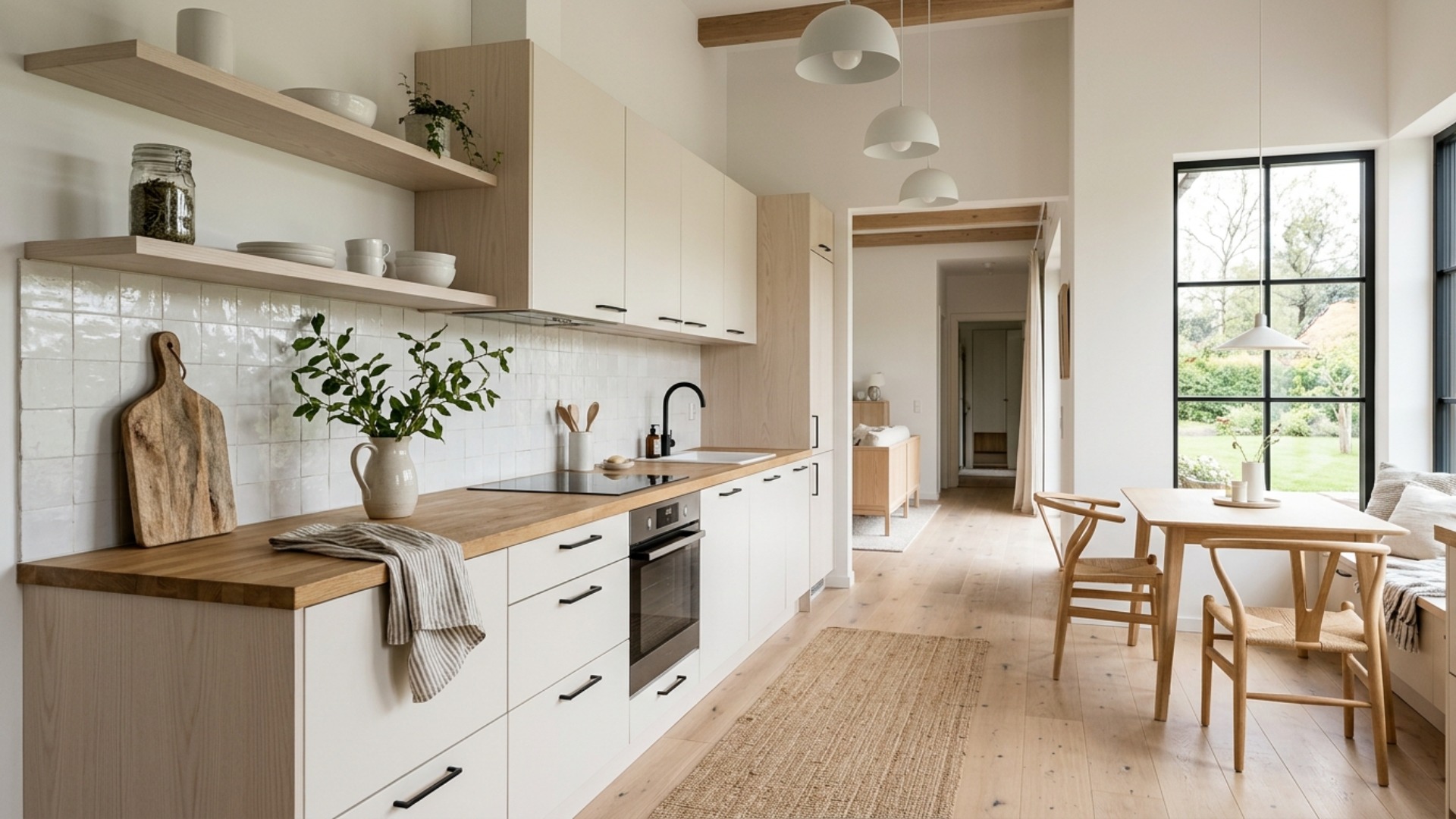
The real problem
Why this is harder than it looks
An empty kitchen feels like freedom until the decisions pile up, and most people respond by importing a Pinterest board wholesale: white cabinets, a bit of wood, a plant, done. What they miss is that Scandinavian design is not a look you add, it is a set of subtractions. The empty room is actually the easiest place to get it right, because you have not bought the wrong things yet.
Scandinavian style works because of light, restraint, and honest materials, not because of any single object. A Nordic kitchen feels calm because the palette is tight, the surfaces are uncluttered, and real wood and stone carry the warmth. Starting from empty, the risk is filling the room to feel finished, when the finished look actually comes from choosing few things and letting them breathe.
You are specifying a kitchen from scratch: cabinet color, counter, backsplash, floor, and lighting, all at once, often on a fixed build budget. This is the moment where the style is won or lost, because these are permanent choices, not accessories. Get the cabinet and wood tones right and everything you add later falls into place. Get them wrong and no styling recovers it.
The classic mistake is chasing contrast and trend: a bold island color, a busy patterned tile, three different metals. Scandinavian kitchens hold together on the opposite instinct, one warm wood, one soft white, one quiet metal, and a lot of daylight. If you find yourself adding a feature to make the room more interesting, that is usually the cue to remove one instead.
A clear path
How to plan it
-
01
Start with the light and the palette, not the cabinets
Before choosing a single finish, look at how much natural light the room gets and lean into it. Scandinavian kitchens want soft white walls, a warm white like Benjamin Moore White Dove or a chalky off-white, and window treatments that stay out of the way. Deciding the palette first, soft white, pale wood, one quiet accent, keeps every later choice in line instead of fighting.
-
02
Choose cabinets in soft white or pale wood, kept simple
Flat-panel or shaker cabinets in a warm white, pale oak, or light ash are the backbone of the look. Avoid high-gloss and cool grays, which read cold, and skip ornate detailing. If the budget allows one upgrade, put it into wood-fronted cabinets or a wood island, since that natural grain is what separates a Scandinavian kitchen from a generic white one.
-
03
Warm it with one honest wood and a natural counter
Repeat a single warm wood, light oak or ash, on open shelves, a butcher block run, or the island, and pair it with a natural or matte counter rather than a busy speckled granite. A light oak butcher block or a honed pale quartz keeps the surfaces quiet. One consistent wood tone throughout is what makes the room feel considered rather than assembled.
-
04
Add restrained black and simple lighting
Scandinavian is not all pale, a little matte black gives it structure: slimline cabinet hardware, black window frames, or a pair of simple pendants over the island. Choose clean, sculptural light fixtures in white, black, or pale wood, and use warm bulbs. Keep hardware minimal and consistent, and let the daylight do most of the work during the day.
-
05
Lay out the whole kitchen in Framehouse before you build
A kitchen is the most expensive room to change your mind about, and finishes read completely differently once they cover real cabinets and catch the room's light. Photograph the empty space and use Framehouse to test the cabinet white against your floor, the oak against the counter, and the pendant placement, before anything is ordered. Moving a cabinet in a render is free, moving one after install is not.
Built for empty room design
Moves that pay off
An empty room is a sequencing problem: lock the permanent choices first, then layer, and resist filling it to feel done.
- Decide the permanent finishes first: cabinets, counter, backsplash, floor. These are the choices you cannot easily undo.
- Buy the layout, not the decor. Where the sink, stove, and island go matters more than any accessory you add later.
- Leave the walls and counters mostly bare at first. Empty space is a Scandinavian feature, not a gap to fill.
- Add one wood tone and stop. A single repeated wood reads intentional, where a mix reads like a clearance sale.
- Invest in light, both natural and fixtures. In an empty room you can still choose where the light lands.
- Hold back budget for the finishing layer: a runner, a few ceramics, a plant. A little goes a long way here.
scandinavian cues
What to keep, what to skip
Scandinavian style is light, warmth, and restraint. These cues keep a from-scratch kitchen Nordic rather than plain.
- Palette: soft white, pale oak or ash, and a single quiet accent, with black used sparingly for line.
- Materials: light natural wood, matte stone or butcher block, linen, and simple ceramic, nothing high-gloss.
- Structure: clean flat-panel or shaker cabinets and uncluttered runs, with open shelving used lightly.
- Signature move: pale wood against soft white, lit by as much natural daylight as the room can give.
- Light: bright and layered, sculptural pendants and warm bulbs, never harsh cool overheads.
- What to skip: cool gray, high-gloss finishes, heavy dark wood, busy patterned tile, and clutter on every surface.
Use it for
What people plan with Framehouse
- Test a soft white cabinet against your floor before ordering the kitchen
- Compare pale oak and light ash for the island and shelving
- See where natural light lands before placing the sink and counters
- Try black hardware and pendants against all that white
- Preview the full layout before you commit to a build
Quick answers
Common questions
Make a plan you can act on
Skip the spiral of mood boards. Three minutes in the Aura Quiz turns your taste into a direction.
Take the Aura Quiz