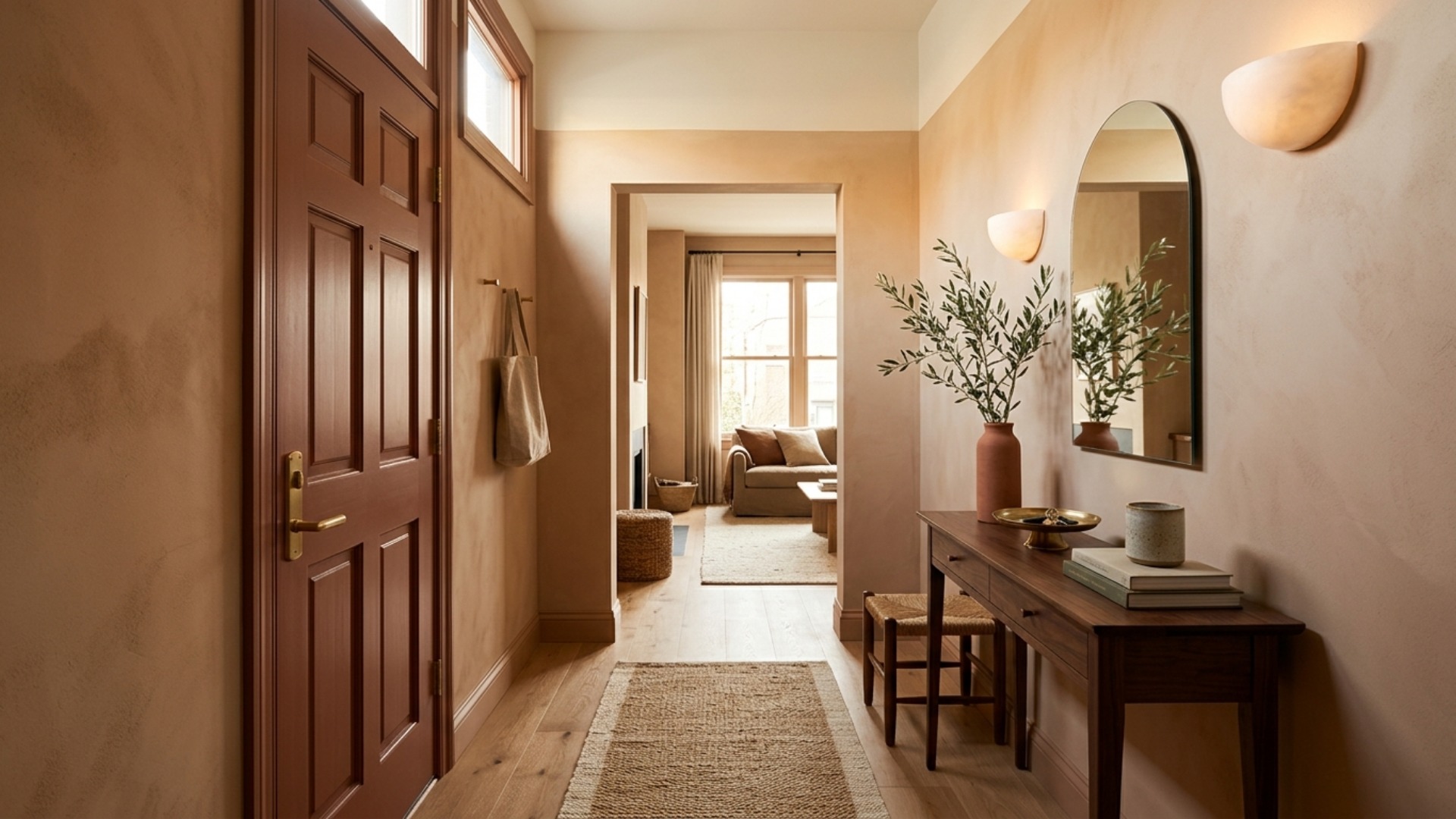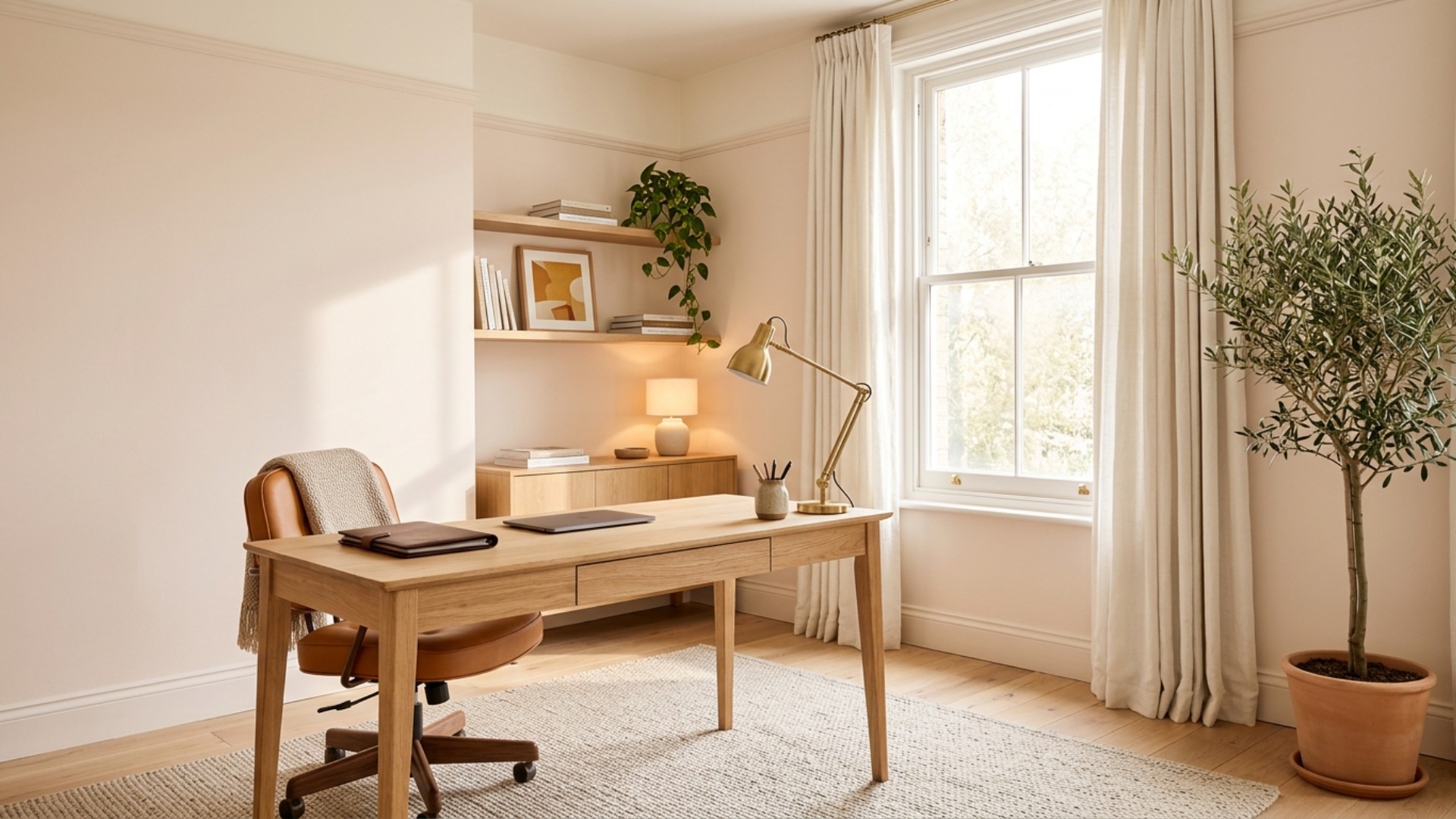
Every rental comes with the same starter kit: beige walls, a dome light in the hallway, blinds that have seen things, and a lease that says "no alterations" in very small type. You want a home that feels like you. Your landlord wants the place back exactly as it was. And your security deposit, often a full month's rent, sits right in the middle.
The good news is that a renter-friendly makeover can change almost everything about how a rental looks and feels without changing anything permanent. The bad news is that plenty of so-called renter-friendly hacks quietly peel paint, leave residue and end up as deductions. This guide fixes that. Every idea below is rated by deposit risk, organized room by room, and paired with the trick that makes it come off clean. And we start with the step most renters skip: seeing the makeover before you buy a single roll of peel and stick.
Step One: See Your Rental Makeover Before You Stick Anything
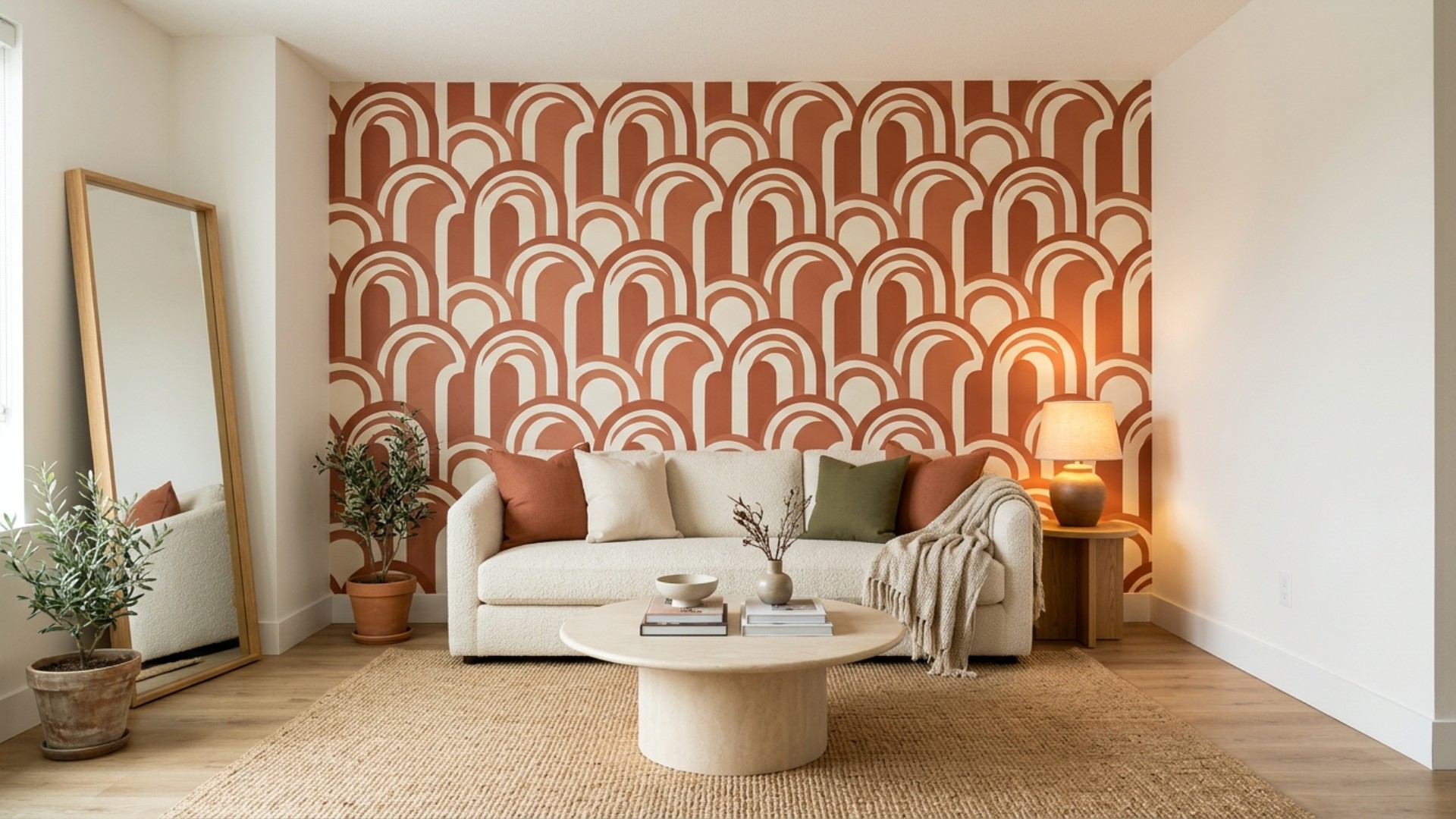
The fastest way to lose money on a rental makeover is not damage. It is buying the wrong thing. The wallpaper that looked chic online and garish on your wall. The rug that is two feet too small. The backsplash you peel off a week later, taking paint with it. Every rip-and-redo is another chance to damage a surface.
That is why the best renter-friendly makeover starts in Framehouse. Snap one photo of your rental, design it with reversible changes only, ask questions about your actual room, and walk away with a plan and products that fit your budget. Buy once, install once, and move out clean. Start with a 3 day free trial, then $9.99 a week or $59.99 a year, on iPhone, iPad and the web.
Visualize and Design: Tell Framehouse What to Keep and What to Change
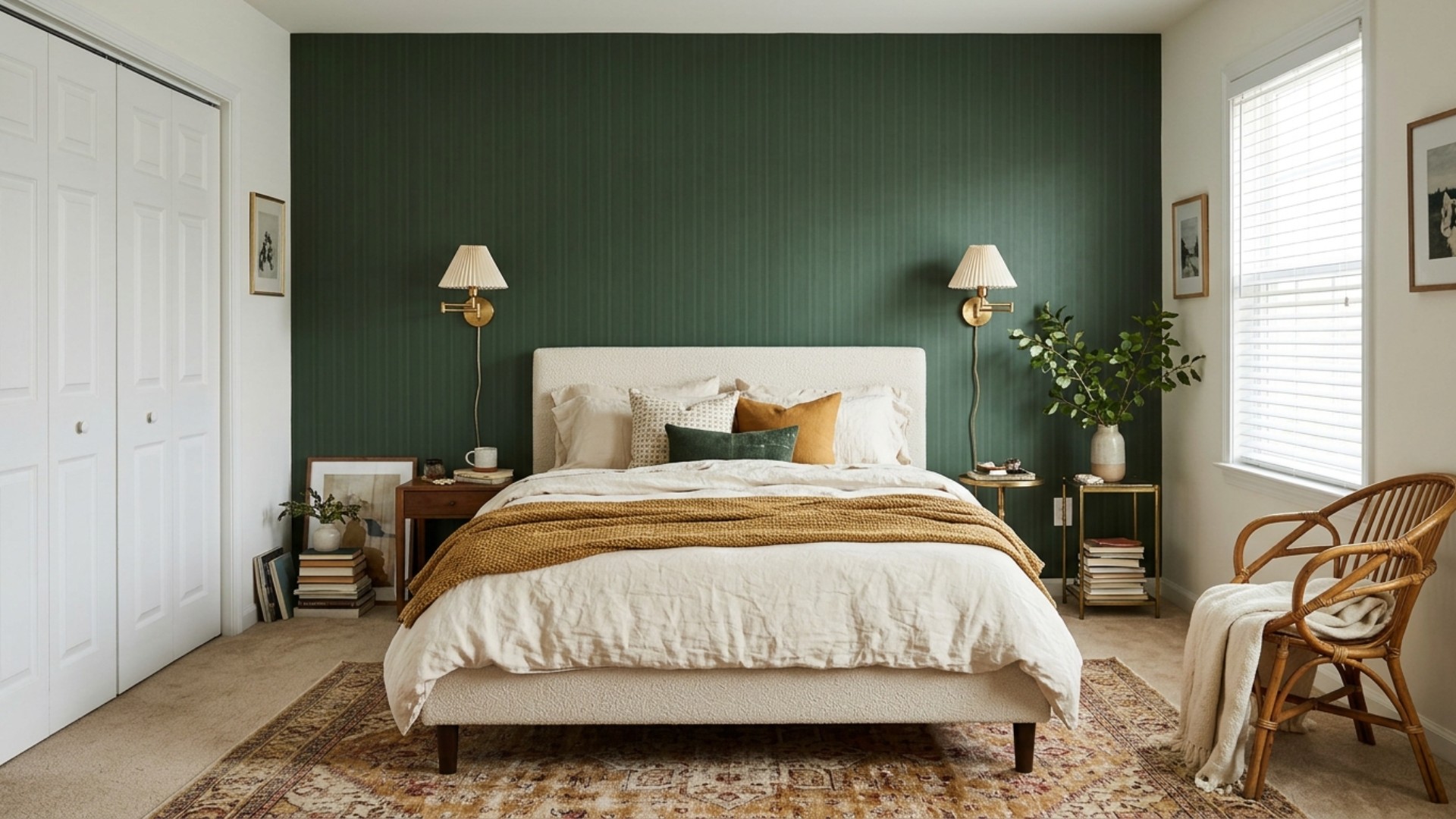
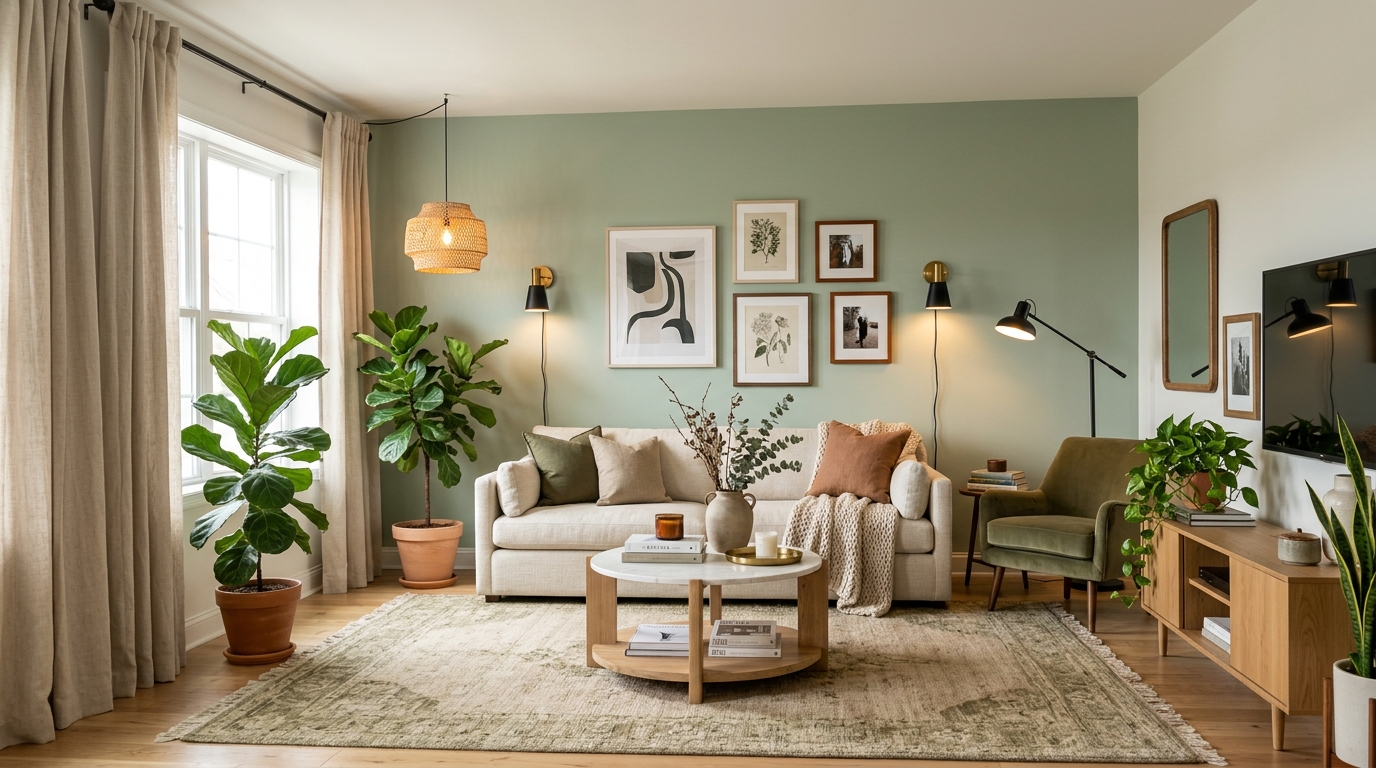
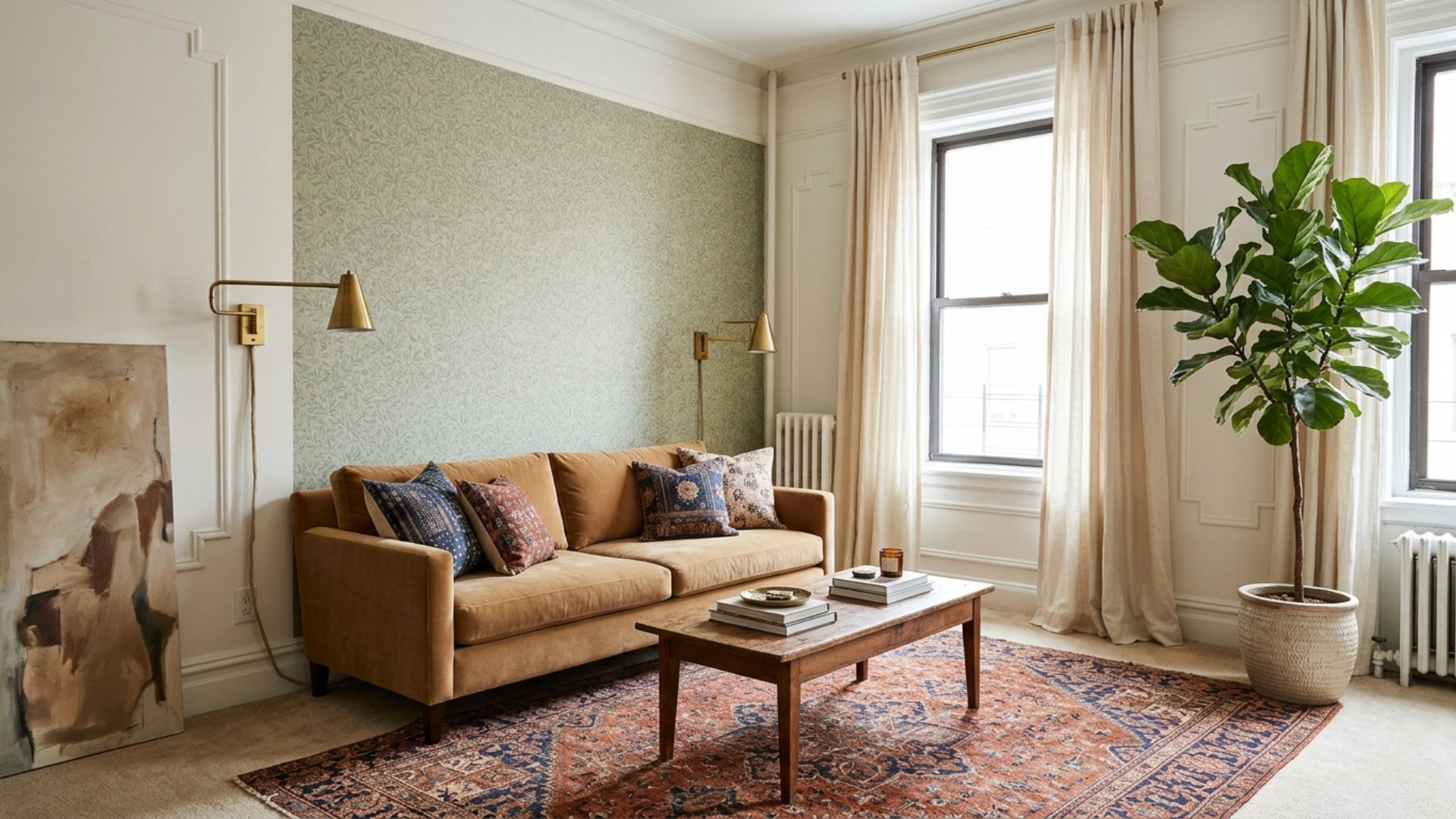
Rentals come with things you cannot touch: the beige carpet, the white cabinets, the hallway light, the tile in the bathroom. Framehouse works with them instead of pretending they are gone. Just type what you want to keep and what you want to change, like "keep the carpet, cabinets and blinds, add a green peel and stick wallpaper wall, plug-in sconces and a warmer rug," and see your real room redesigned in seconds.
Try a studio divider in three different spots, compare a peel and stick backsplash against a mirror backsplash, or see whether a navy accent wall makes your narrow living room feel cozy or cramped. Every version keeps your actual windows, walls and floors, so what you see is what you can really do in a rental.
AI Chat: Ask Every Renter-Friendly Question
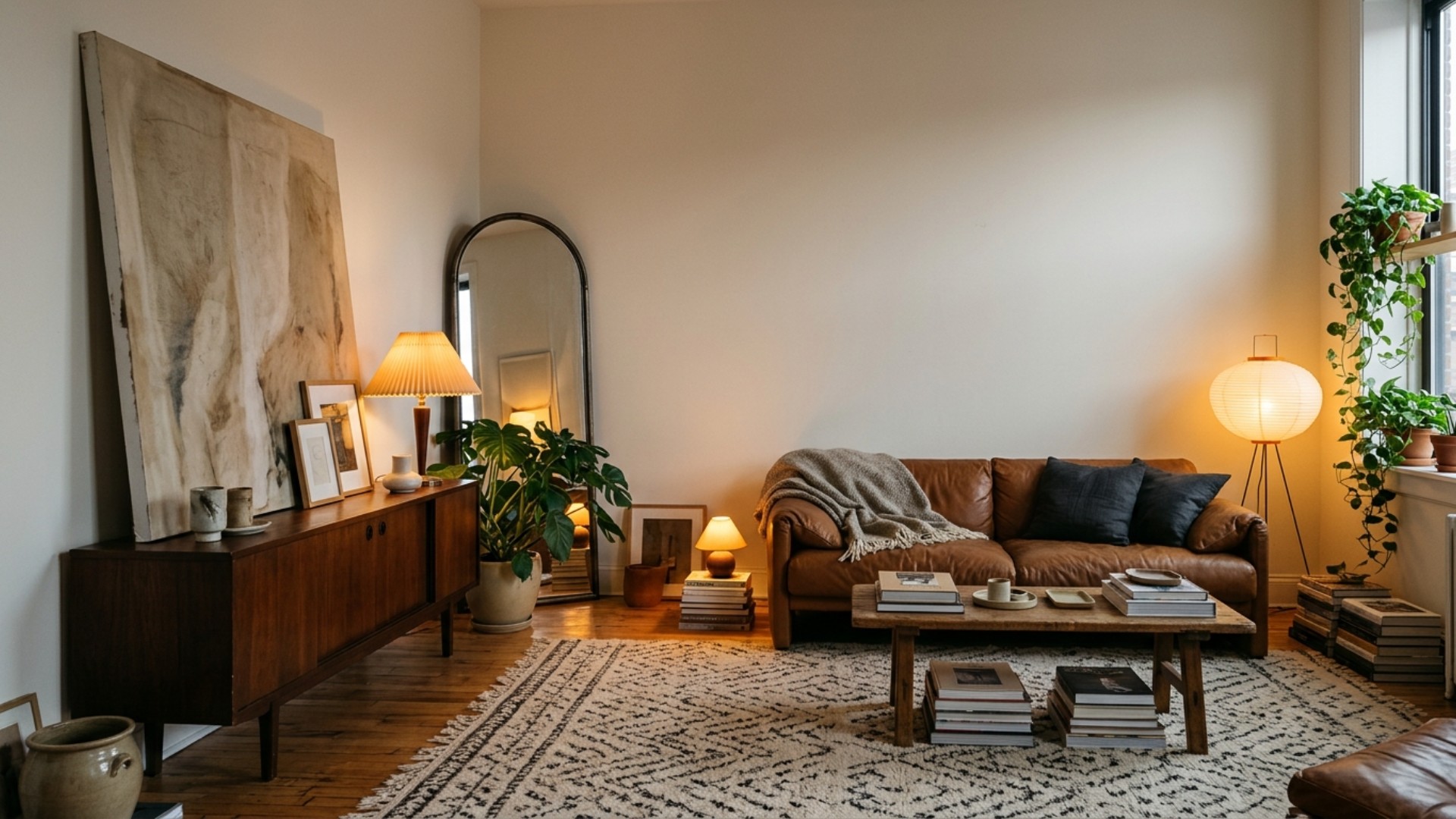
Framehouse chat knows your room and the design you picked, so you can ask the questions renters actually worry about: Will this peel and stick wallpaper damage my paint? What can I hang over the sofa without nails? How do I add light to a room with no overhead fixture? What size rug fits this living room? Is this change something I should get landlord approval for?
It answers for your specific space, flags the riskier moves before you buy, and suggests renter-safe alternatives, like a leaning floor mirror instead of a hung one or a tension-rod curtain instead of brackets. It is like texting a designer who has read your lease.
The Playbook: A Plan and Products on Your Budget
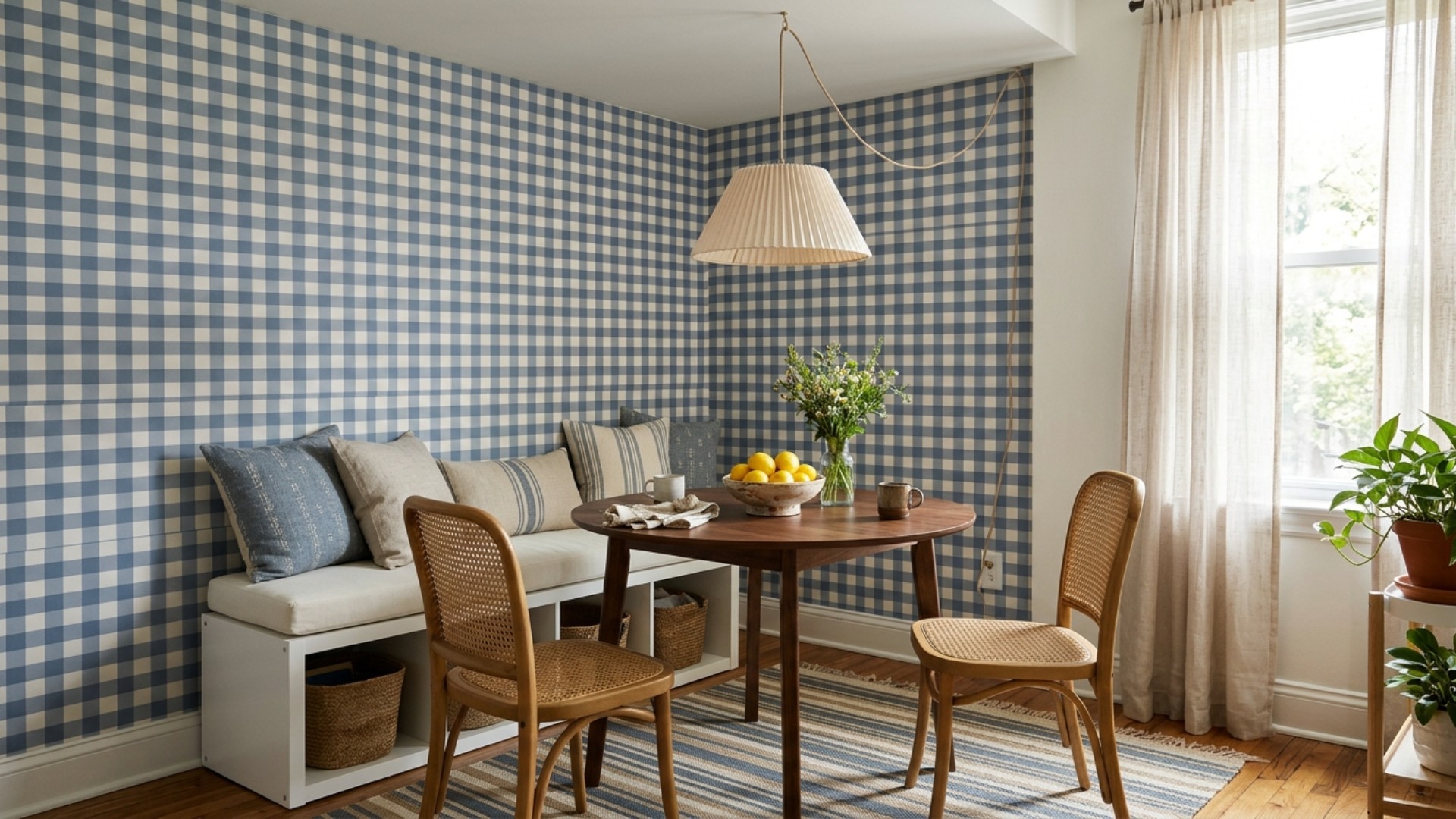
Once you love the look, Framehouse turns it into a Playbook built around your rental and your budget:
- Products to buy, from the exact style of peel and stick wallpaper and backsplash to plug-in sconces, rugs, curtains and freestanding storage.
- A realistic budget, so you know whether the whole makeover lands at $300 or needs a phase two.
- Steps in order, including the test patches, the install and what to keep for move-out.
- Everything removable, so the plan you follow is the plan that gets your deposit back.
Instead of 40 open tabs and a cart full of maybes, you get one plan that fits your space, your lease and your wallet.
Step Zero: Protect Your Deposit Before You Decorate
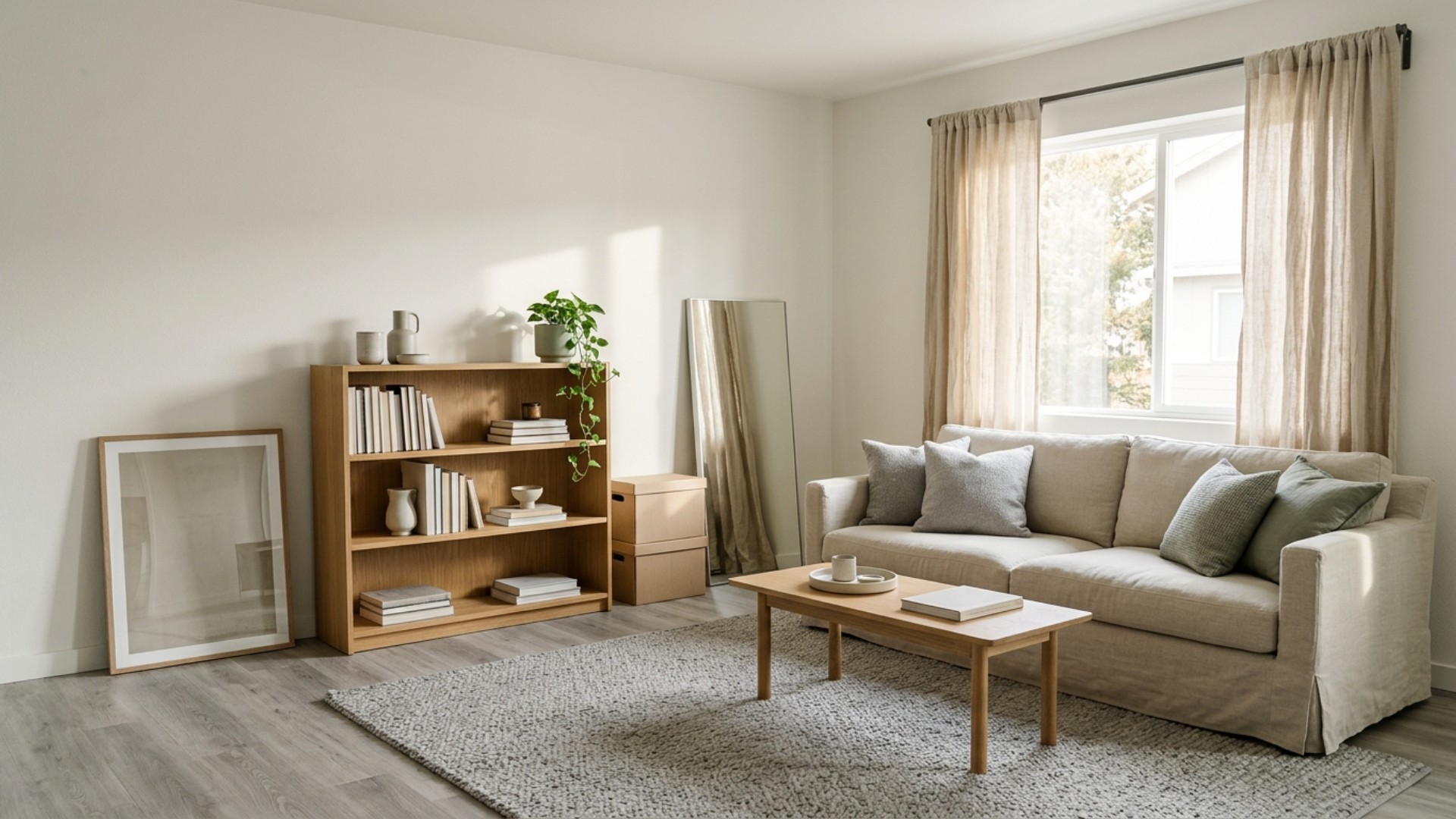
Deposit protection starts on move-in day, not move-out day.
- Document everything. Take a timestamped photo and video walkthrough of every scuff, nail hole, stain and worn fixture before you unpack.
- Read the lease. Many leases prohibit painting without approval and some limit adhesive hooks or wall anchors. Know the rules before you buy.
- Get permission in writing. For anything beyond the low-risk list, email your landlord or property manager and keep the reply.
- Test in a hidden spot. Try any adhesive, strip or peel and stick product inside a closet or behind furniture for a week before you commit.
- Bag the originals. Keep every knob, showerhead, shade and curtain rod you replace in a labeled bag so you can reinstall it at move-out.
| Deposit risk | What it means | Examples |
|---|---|---|
| Low risk | Freestanding or fully reversible | Rugs with pads, lamps, plug-in sconces, slipcovers, tension rods, leaning art and mirrors, plants |
| Medium risk | Reversible if tested and removed correctly | Peel and stick wallpaper and backsplash, adhesive hooks and strips, swapped hardware and showerheads, removable window film |
| Ask first | Needs written landlord approval | Paint, drilling into tile or studs, ceiling fixtures, contact paper on counters, anything wired or plumbed |
Walls: Renter-Friendly Ideas for Beige Boxes
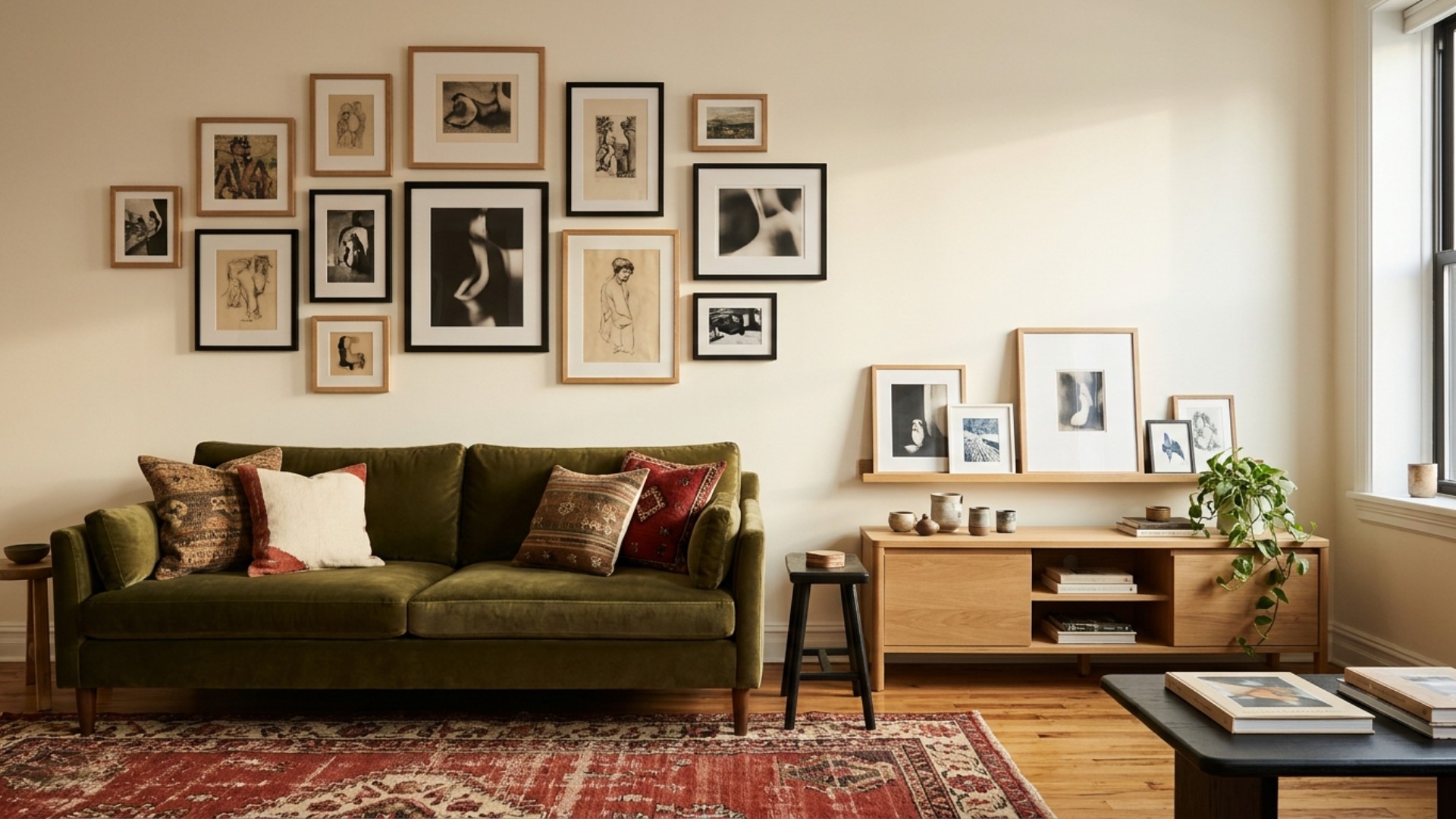
- Peel and stick wallpaper on one wall (medium risk). An accent wall behind the bed or sofa does the most work for the least material. Test on a hidden patch first, since some papers can lift paint on flat or fresh finishes.
- Oversized leaning art (low risk). One big canvas leaning on a dresser or the floor reads more expensive than ten small frames and needs zero holes.
- A floor mirror (low risk). Lean a tall mirror opposite a window to double the light in a dark rental.
- A gallery wall on removable strips (medium risk). Respect the weight rating, use more strips than you think, and do not leave them up for years without checking.
- Fabric or tapestry panels (low risk). Hang a large textile from a tension rod or freestanding ladder to soften a blank wall.
Lighting: The Biggest Upgrade Most Renters Ignore
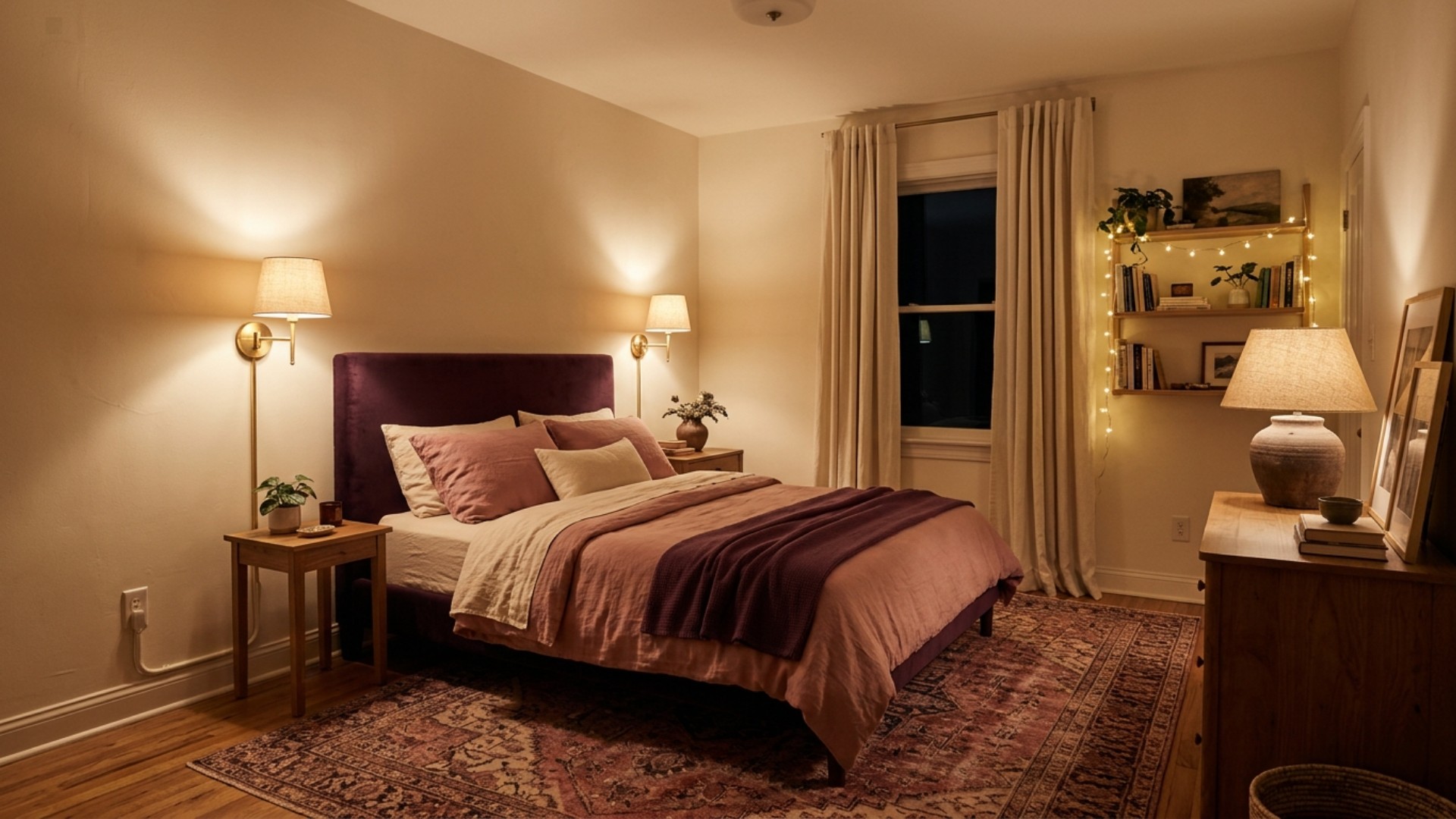
- Plug-in wall sconces (low to medium risk). Mount on adhesive plates or a single small nail hole where allowed, and run a cord cover in a matching color. Instant hotel energy beside a bed or sofa.
- Layer three to five light sources per room (low risk). A floor lamp, a table lamp and a small accent light make the overhead fixture optional.
- Warm bulbs (low risk). Swap cold, blue bulbs for 2700K to 3000K warm white. It is the cheapest makeover on this list.
- Smart bulbs and plug-in dimmers (low risk). Control mood without touching a switch plate.
- A plug-in pendant swag (medium risk). Hang a pendant from a ceiling hook over a dining table, with permission for the hook.
Skip clip-on covers over existing fixtures. Heat can build up and damage the fixture, which costs far more than your deposit.
Renter-Friendly Kitchen Upgrades
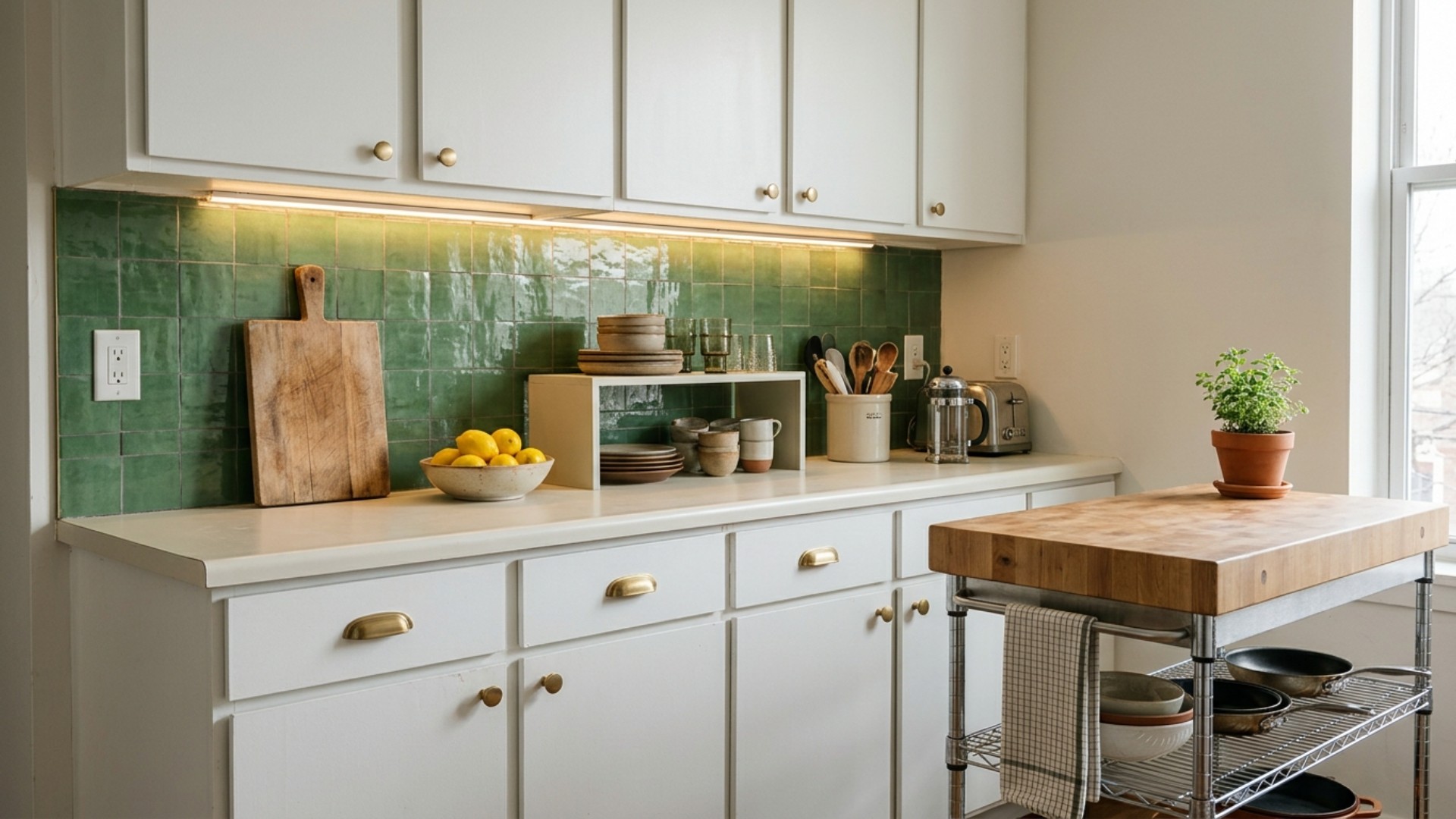
- Peel and stick backsplash (medium risk). One of the most searched rental upgrades for a reason. Choose a quality vinyl or gel tile, apply only over clean, cured, sealed paint or existing tile, and test first. Peel and stick mirror backsplash and stick-on subway tile both photograph beautifully.
- Swap cabinet hardware (medium risk). New knobs and pulls change everything, but only use the existing holes and keep the originals.
- A rolling island or kitchen cart (low risk). Instant prep space and storage you take with you.
- Freestanding open shelving (low risk). A bakers rack or leaning shelf displays pretty dishes without a single bracket.
- Counter styling (low risk). A wood board, a stone tray and one plant make laminate look intentional.
Be careful with stick-on countertop covers and contact paper on counters. Kitchen heat and moisture make removal harder and can damage the surface underneath.
Bathroom Upgrades That Come Off Clean
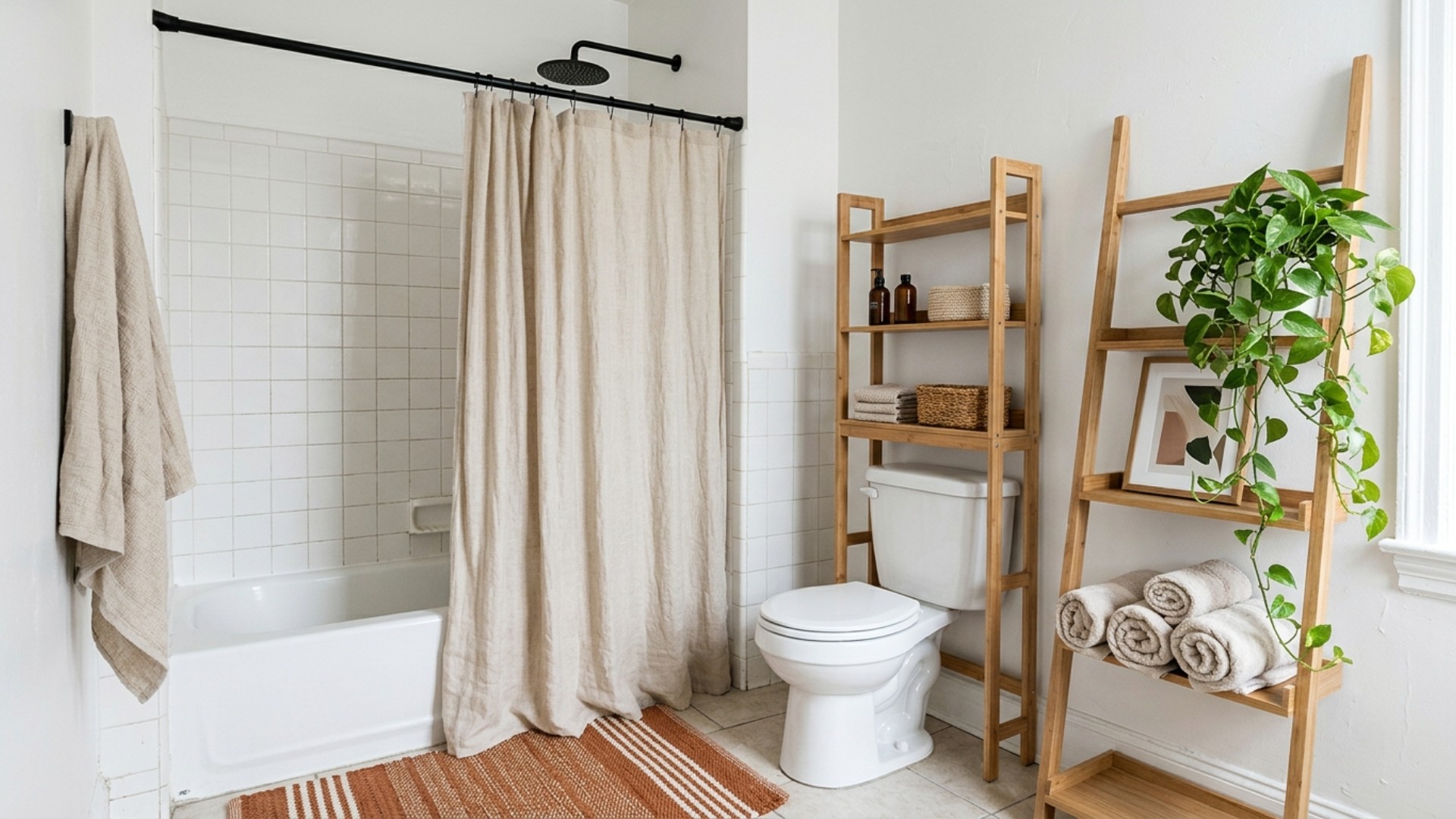
- Swap the showerhead (medium risk). A rainfall or filtered head unscrews and screws back on. Keep the original and use plumber's tape.
- A ceiling-height curved shower rod (low risk). A tension rod hung high with a long linen curtain makes a basic tub look custom.
- Over-the-toilet storage and a leaning ladder shelf (low risk). Storage without drilling into tile.
- Towels, bath mat and a tray (low risk). Matching textiles do more for a dated bathroom than you would believe.
- Peel and stick floor tile (medium to high risk). Only over sound vinyl, only with permission, and only after a test, because removal can lift the floor beneath.
Floors and Windows
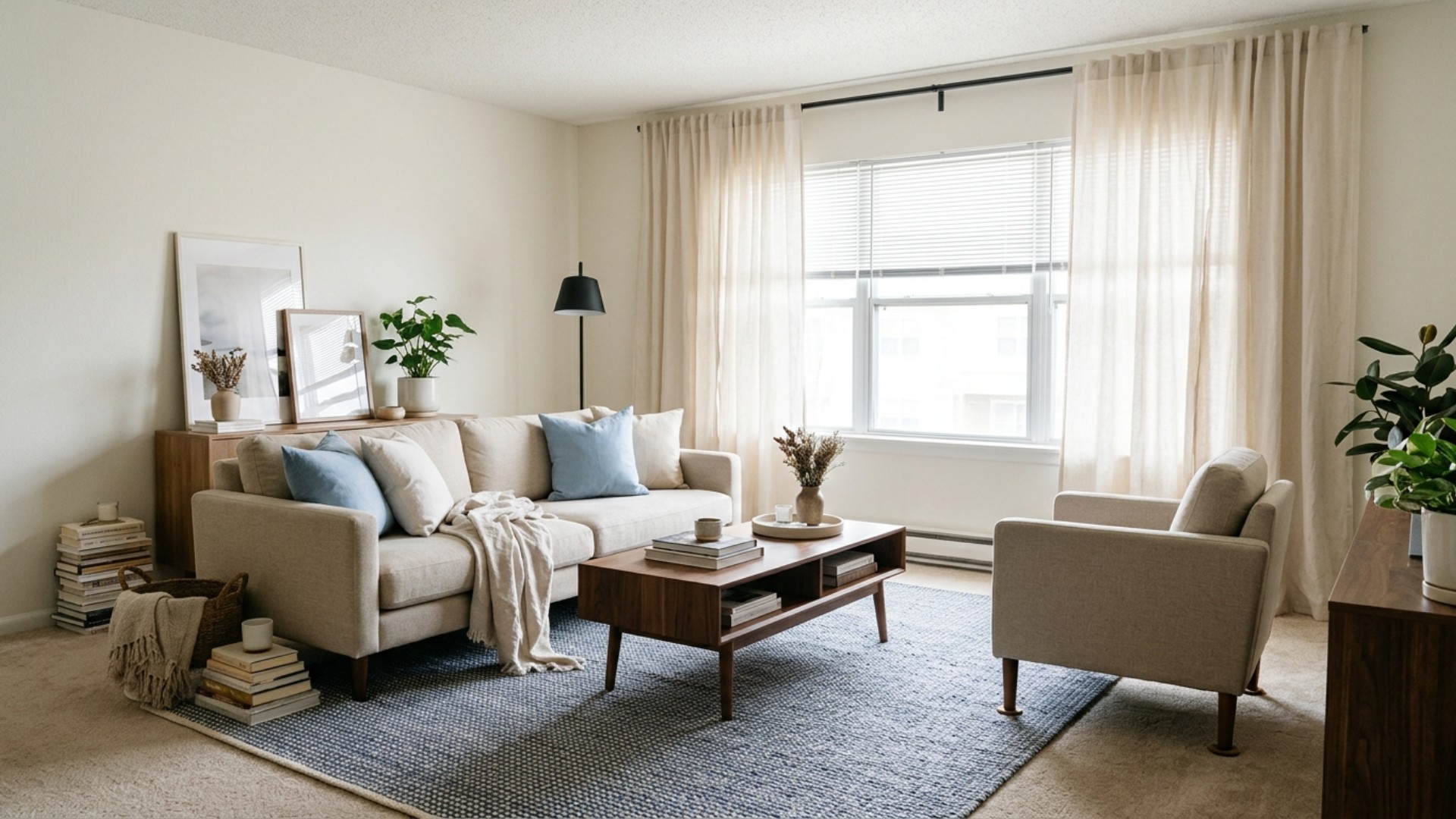
- Area rugs with rug pads (low risk). Size up so the front legs of every seat sit on the rug. Pads protect the floor and keep the rug from creeping.
- Layered rugs over wall-to-wall carpet (low risk). A flatweave over beige carpet changes the whole room.
- Felt pads on every furniture leg (low risk). Scratched floors are one of the most common deposit deductions.
- Tension-rod or no-drill curtains, hung high and wide (low risk). Floor-length curtains make ceilings look taller and replace sad blinds visually without removing them.
- Removable frosted window film (medium risk). Use film made to be removed, never a DIY substitute that can damage the glass.
Small Spaces, Studios and Balconies
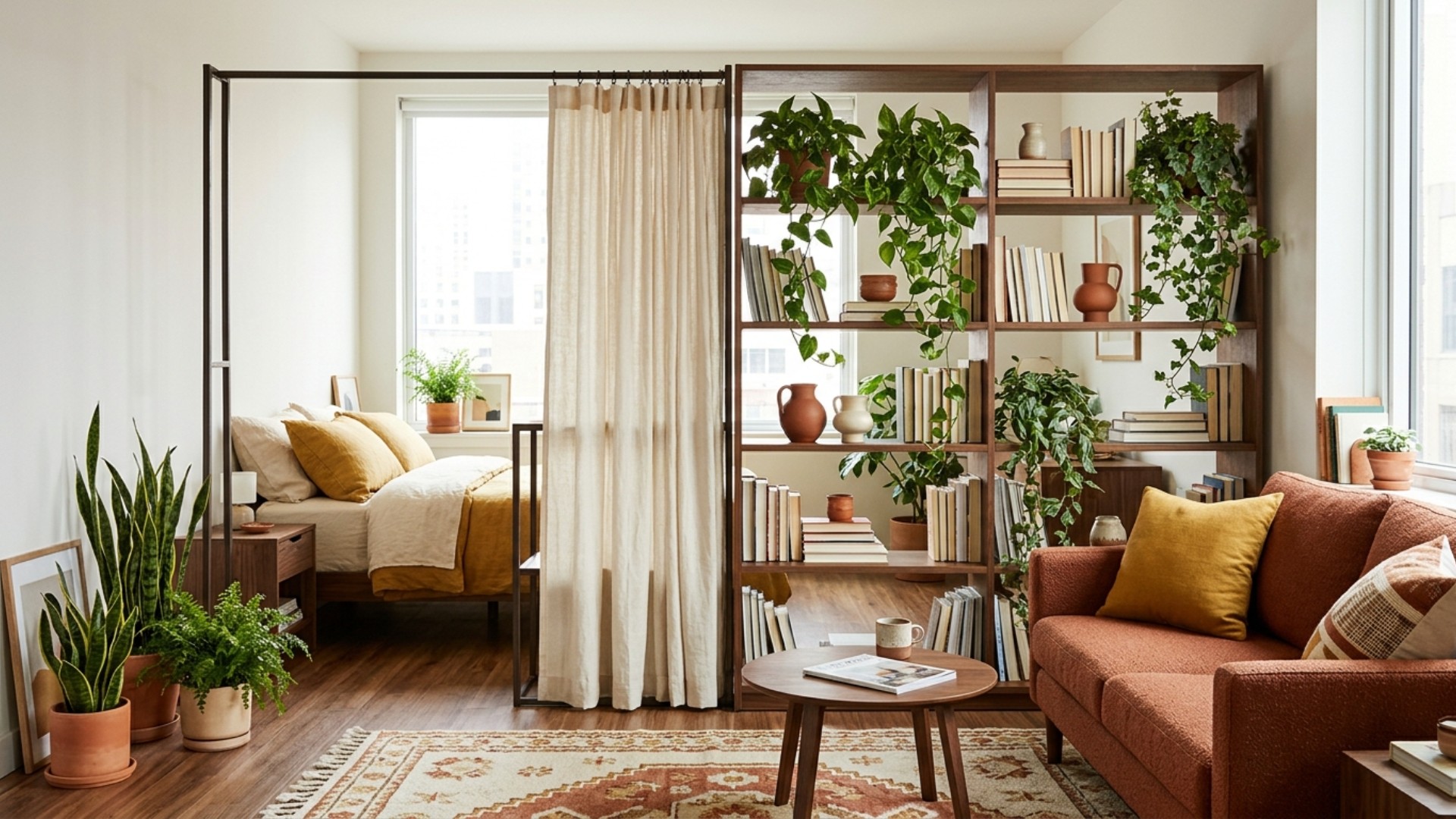
- A studio apartment divider (low risk). An open bookcase, a folding screen or a curtain on a freestanding frame creates a bedroom without walls. Room divider ideas for studio apartments are among the most searched rental questions.
- A smarter layout (low risk). In a small bedroom, try the bed against the long wall with a slim desk under the window. In a narrow living room, float the sofa to create a walkway and a zone for the TV.
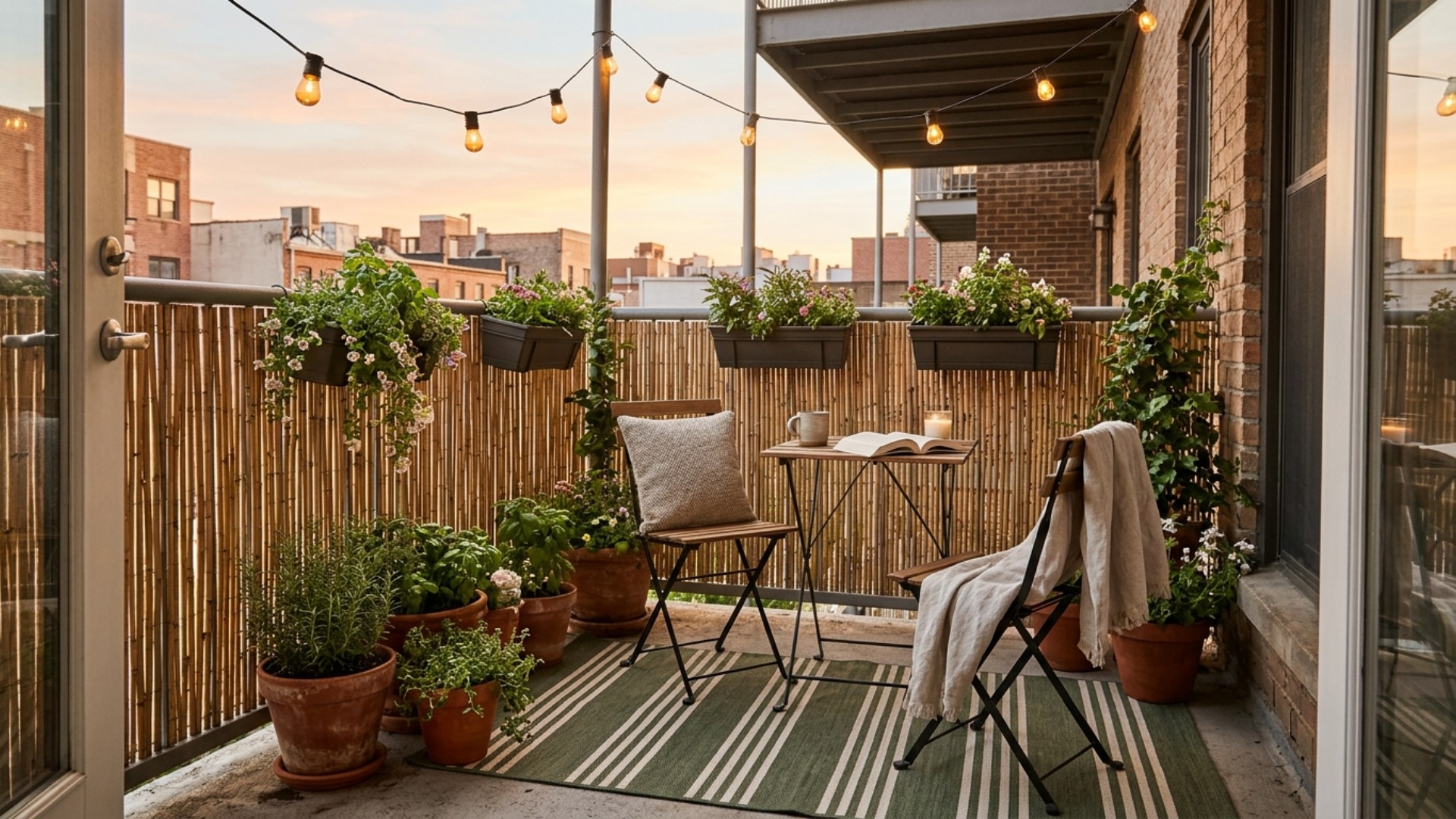
- A balcony privacy screen (low risk). Zip-tie a bamboo or fabric screen to the railing for a low budget balcony privacy fix with no drilling.
- Outdoor rug, planters and solar string lights (low risk). Turn a very small apartment balcony into an outdoor room you will actually use.
- Slipcovers and swappable pillows (low risk). Change the personality of every room each season, then pack it all up when you move.
The Renter-Friendly Hacks That Can Still Cost Your Deposit
Not everything labeled renter friendly is deposit safe. These are the ones to treat with caution:
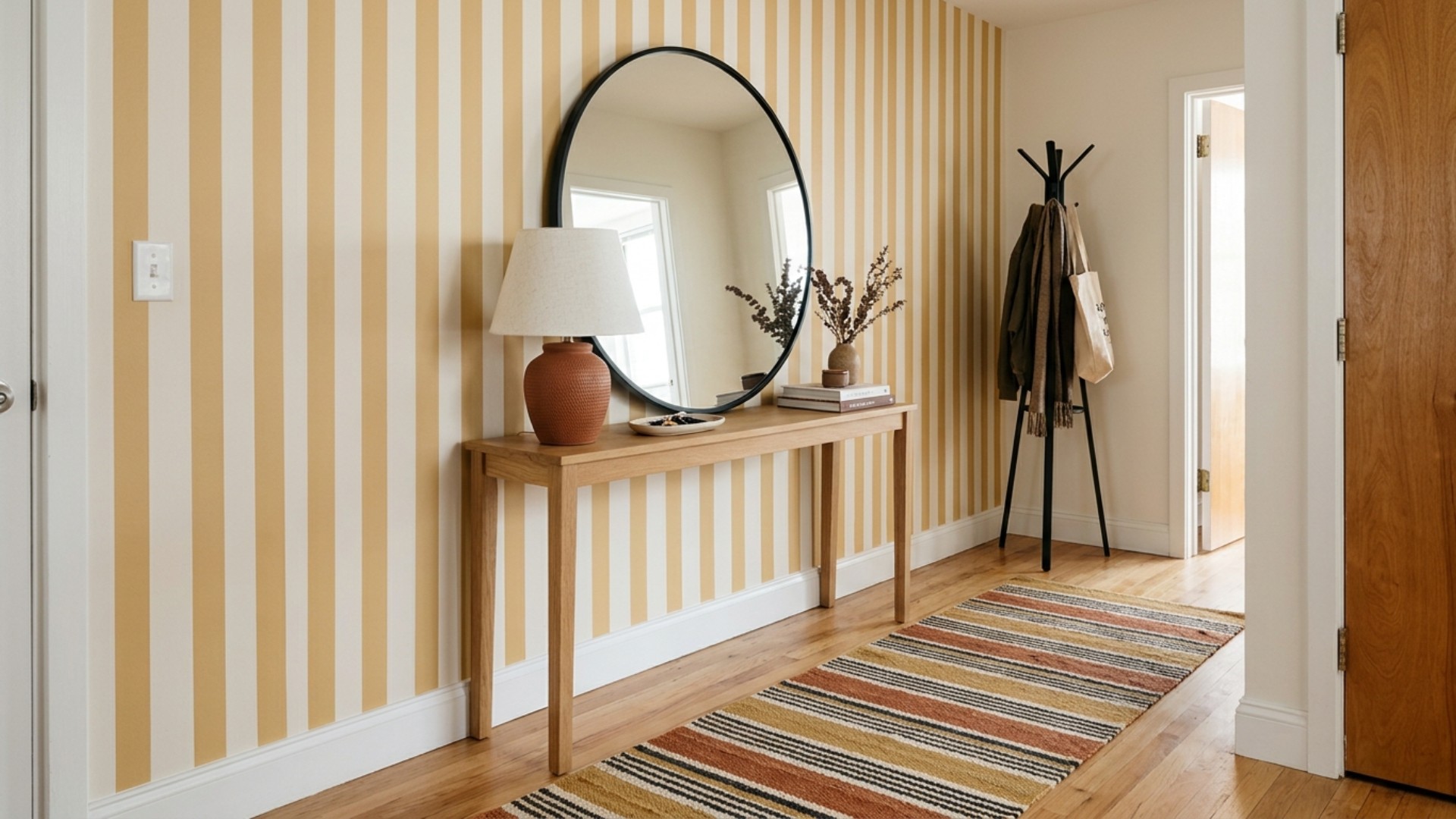
- Peel and stick tile and wallpaper can leave residue or pull off paint, especially on fresh, flat or oil-based finishes.
- Temporary backsplashes applied over unsealed drywall can tear the paper face when removed.
- Adhesive hooks and strips left up for years may not release cleanly and can take paint with them.
- Stick-on countertop covers trap heat and moisture and can damage the counter.
- Light fixture covers can trap heat around the bulb.
- Paint, even a neutral color, can mean paying to repaint at move-out unless you have written approval.
Move-Out Day: How to Remove Everything Without a Trace
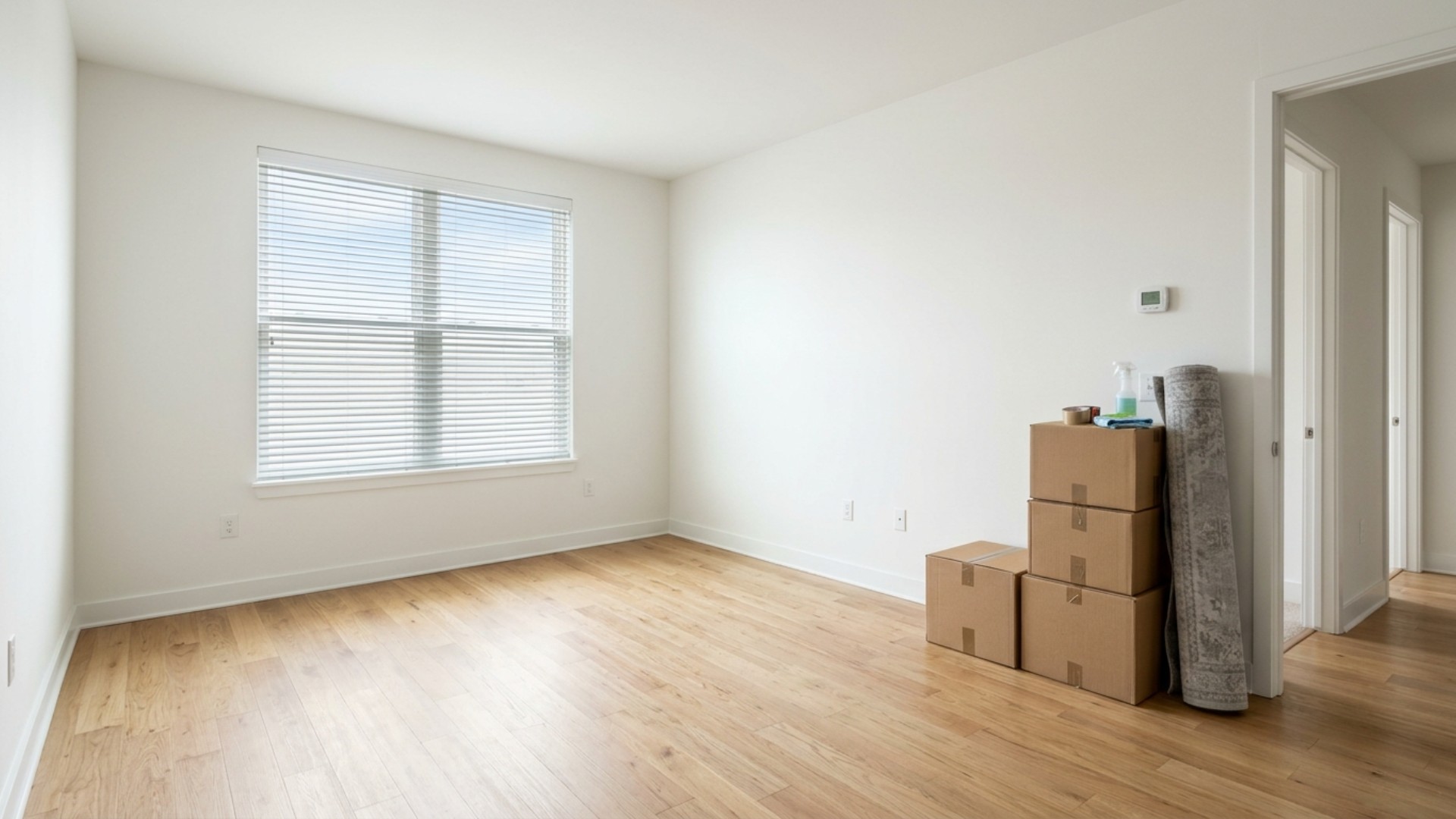
- Warm adhesives first. A hair dryer on low softens most wallpaper, tile and strip adhesive so it releases instead of tearing.
- Pull strips straight down, slowly, along the wall, never out toward you.
- Peel wallpaper at a low angle and stop if paint starts lifting. Re-warm and try again.
- Reinstall every original: knobs, showerhead, shades, blinds and curtain rods.
- Clean residue gently with a mild soap solution, and only touch up paint if your landlord has approved the color and finish.
- Repeat your move-in walkthrough on video so you have proof of the condition you left.
Plan the Whole Rental Makeover With Framehouse
Most renter-friendly guides hand you a list and wish you luck. Framehouse hands you a plan. Type what you want to keep and change and see your real rental redesigned with reversible upgrades. Ask the chat every renter question, from peel and stick safety to no-nail art. Then follow a Playbook with products, budget and steps, so your makeover goes up once, comes down cleanly, and your deposit comes back.
Try Framehouse free for 3 days, then $9.99 a week or $59.99 a year.